
Where to Place Jack Stands on Rear of Car: Safe Placement Guide for 2026
Learn where to place jack stands on rear of car safely with reinforced lift points, axle support tips, and chassis stability guidance for November 2026.
 By Christian Hazel
Updated October 10, 2026

Supporting the back end of a vehicle requires careful planning because raising the drive or trailing axle introduces unique stability challenges. Knowing exactly where to place jack stands on rear of car structures ensures your vehicle remains rock-solid while you service brakes, inspect exhaust piping, or replace suspension components. Most rear-end maintenance tasks demand that you bypass thin sheet metal floor pans in favor of dedicated factory pinch welds, heavy-duty subframe mounts, or solid axle tubes. Rushing this initial setup risks costly rocker panel damage or dangerous chassis slipping during high-torque wrenching.
Vehicle balance changes dramatically once the rear tires leave the pavement, especially since the mechanical parking brake typically locks only the rear wheels. Setting heavy-duty wheel chocks against the front tires and verifying your mechanical support equipment prevents unexpected rollaway accidents before you ever crawl underneath. While some home hobbyists consider permanent shop upgrades after evaluating garage ceiling height for vehicle lifts, standard mechanical stands remain the frontline defense for daily driveway maintenance. Choosing verified support points and letting full vehicle weight settle onto rated stands protects both your undercarriage and your physical safety.
| Award | Product | BJL Score About BJL ScoreThe BJL Score is our own rating from 0 to 10, based on performance, design and build, ease of use, and value. It reflects independent research and is never influenced by manufacturers, retailers, or affiliate commissions. Learn more › | |
|---|---|---|---|
| Best Overall |
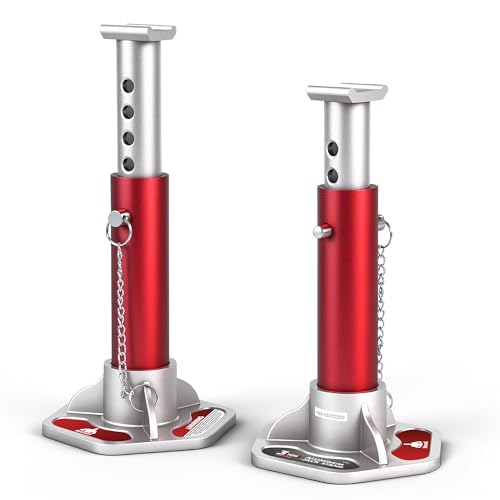
JACK BOSS 3 Ton Aluminum Jack Stands
|
9.1/10 | Buy |
| Best Budget |
 KOERZORE 3-Ton Jack Stands (Pair) |
8.9/10 | Buy |
 Pencil Noise 3 Ton Double-Locking Jack Stands |
8.9/10 | Buy | |
| Best Value |
 SENKEYFE 3-Ton Jack Stands (6,600 lbs Per Pair) |
8.9/10 | Buy |
| Best Premium |
 Amazon Basics 3-Ton Steel Jack Stands |
8.9/10 | Buy |
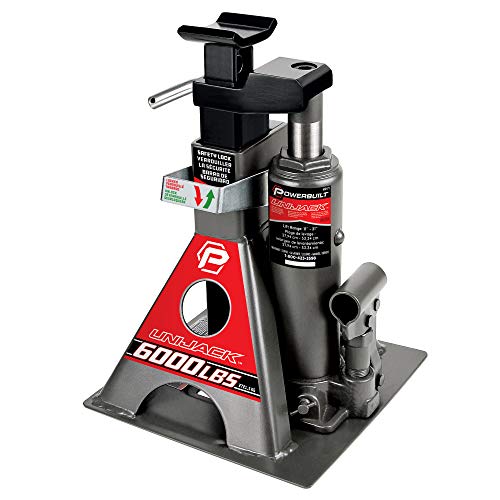 Powerbuilt 3-Ton Unijack All-in-One Hydraulic |
8.9/10 | Buy | |
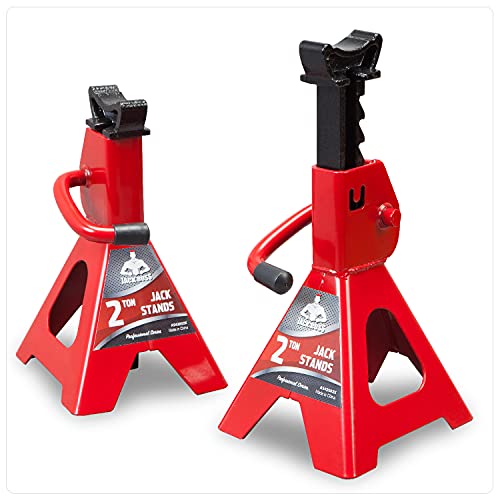 Jack Boss 2-Ton Low-Profile Ratchet Jack Stands |
8.6/10 | Buy | |
 ANTPOWER 3-Ton Double-Locking Jack Stands |
8.4/10 | Buy | |
 PRUTHY 3-Ton Double-Locking Jack Stands |
8.3/10 | Buy | |
 JKWQFBOYAN 3-Ton Double-Locking Jack Stands |
7.8/10 | Buy |
JACK BOSS 3 Ton Aluminum Jack Stands
The JACK BOSS 3-Ton Aluminum Jack Stands provide a combined 6,000-lb static load capacity per pair, utilizing positive-locking support pins for secure vehicle support. Weighing roughly 10.3 pounds for the pair, these lightweight aluminum stands are well suited for DIY garage mechanics and track hobbyists who prioritize easy portability.
Pros
- Lightweight aluminum build weighs approximately 10.3 lbs per pair, making them far easier to carry than standard stamped-steel stands
- Captive locking pin mechanism provides positive, visual mechanical engagement through the center column
- Broad base profile offers a stable platform when placed squarely on level concrete garage floors
- Dual-tone red and silver finish resists garage moisture and workshop fluid exposure
Cons
- Combined 6,000-lb rating applies per pair, meaning each individual stand has a 3,000-lb limit and cannot support heavy commercial or full-size trucks
- Pin-style adjustment requires manual hole alignment, which takes slightly longer to set than quick-ratcheting ductile iron bars
- Bare aluminum saddle contact surfaces may mark or bend thin unibody pinch welds if used without protective rubber adapters
KOERZORE 3-Ton Jack Stands (Pair)
Built for garage maintenance and oil changes, these KOERZORE jack stands feature a dual-locking mechanism and a wide pyramid base to support sedans and midsize SUVs safely.
Pros
- Dual-locking mechanism provides added fail-safe protection
- Wide pyramid base enhances stability on hard surfaces
- Concave saddle securely cradles vehicle frame points
- Lightweight 10.7-pound build allows easy garage portability
Cons
- Maximum 16.75-inch height restricts clearance on lifted trucks
- 3-ton capacity is insufficient for heavy-duty commercial vehicles
Pencil Noise 3 Ton Double-Locking Jack Stands
The Pencil Noise 3 Ton Jack Stands provide static vehicle support with a 6,000 lb total capacity per pair, combining a forged iron ratchet bar with a secondary safety pin. Featuring an 11.4-inch to 16.9-inch height range and a pyramid base, they are a practical choice for DIY maintenance on compact cars, crossovers, and UTVs.
Pros
- Dual-action locking mechanism features both a primary ratchet pawl and a secondary locking pin for redundant mechanical security.
- Sturdy forged iron ratchet bar offers quick height adjustments across multiple indexed locking positions.
- Wide pyramid base geometry delivers solid static stability on smooth, level concrete garage slabs.
- Practical 11.4-inch to 16.9-inch working range fits common DIY garage jobs like brake service, tire rotations, and oil changes.
Cons
- Not recommended or sized for full-size pickup trucks, commercial vans, or heavy off-road SUVs.
- Minimum collapsed height of 11.4 inches may require extra lifting clearance on lowered sports cars before stands can slide underneath.
- Bare metal saddle lacks pre-installed rubber padding, which may risk marring unprotected unibody pinch welds.
SENKEYFE 3-Ton Jack Stands (6,600 lbs Per Pair)
These SENKEYFE 3-ton jack stands deliver a 6,600-pound rated capacity per pair, combining an alloy steel frame with a secondary double-pin locking mechanism and protective rubber saddle covers. Designed for home garage maintainers working on sedans, crossovers, and light SUVs, they offer dependable static support and wide footpads for routine maintenance on level concrete.
Pros
- Secondary double-pin locking system provides mechanical redundancy beyond standard single-locking gravity pawls
- Includes protective rubber saddle covers to safeguard unibody contact points and painted frame surfaces
- Oversized footpads enhance base stability and distribute load weight across level concrete surfaces
- Lightweight design at approximately 11 pounds makes repositioning and garage storage easy
Cons
- Rated static capacity of 3 tons per pair is not suitable for heavy commercial vans or full-size three-quarter-ton pickups
- Maximum extension height of 17 inches may be limited for lifted 4x4 trucks on oversized off-road tires
- Requires smooth, level concrete; soft asphalt or unpaved driveways require heavy-gauge steel load-spreader plates
Amazon Basics 3-Ton Steel Jack Stands
The Amazon Basics 3-Ton Steel Jack Stand Pair delivers 6,000 pounds of reliable vehicle support certified to ASME PASE-2014 standards for portable automotive equipment. Featuring a self-locking ratchet bar and a compact steel footprint, this set is ideal for home garage DIYers servicing passenger cars and urban SUVs.
Pros
- Rated for 3 tons (6,000 lbs) per pair and meets ASME PASE-2014 portable automotive service standards
- Self-locking ratchet bar enables rapid, secure height adjustment without fiddling with separate pins
- Compact 7.5 x 7.0-inch footprint and 12.6-lb total weight make positioning and storage simple
- Protective rustproof coating over a durable steel frame helps resist corrosion from garage fluids
Cons
- 3-ton capacity is tailored for sedans and crossover SUVs, not full-size heavy-duty pickup trucks
- Ratchet assembly does not feature a secondary mechanical cross-locking pin for redundant backup
- Must be used exclusively on flat, solid concrete slabs to prevent uneven weight distribution or base sinking
Powerbuilt 3-Ton Unijack All-in-One Hydraulic
The Powerbuilt 620471 Unijack integrates a hydraulic bottle jack and a mechanical ratcheting jack stand into a single unit, eliminating the danger of hydraulic pressure bleed-off. With a 6,000-pound capacity, an 11 to 21-inch lift range, and a wide steel base, it provides dependable single-point lifting and static holding for trucks and SUVs.
Pros
- Combines hydraulic bottle jack lifting and mechanical jack stand safety into one single-point tool
- Physical ratcheting safety lock prevents accidental vehicle drops caused by hydraulic pressure bleed-off
- Wide 9.88 x 9.75-inch base provides excellent stability on garage concrete and level paved surfaces
- Tall 21-inch maximum extension delivers ample working clearance for high-clearance trucks and SUVs
- Meets ANSI standards for portable automotive service equipment and includes a 1-year factory warranty
Cons
- Minimum collapsed height of 11 inches makes it unusable on low-clearance sedans and sports cars
- At 22.66 pounds per single unit, it is significantly heavier than standard individual mechanical jack stands
- Sold as an individual unit rather than a pair, requiring separate purchases if supporting an entire axle
Jack Boss 2-Ton Low-Profile Ratchet Jack Stands
Designed for compact cars and small unibody vehicles, these Jack Boss low-profile jack stands combine a welded mild steel pyramid base with a ductile iron sawtooth ratchet bar spanning a 9.8-inch to 15-inch height range. They provide a lightweight, compact footprint for DIY garage maintenance, though the manufacturer explicitly advises against using them on trucks, large SUVs, or vehicles requiring over 15 inches of chassis clearance.
Pros
- Low 9.8-inch collapsed height fits easily under small passenger cars and lower unibody lift points
- Ductile iron sawtooth ratchet bar allows fast, tool-free height selection and positive pawl engagement
- Lightweight 10.5-pound overall build makes carrying, positioning, and garage storage simple
- Fully welded mild steel frame with protective powder coating guards against rust and shop grime
Cons
- Maximum 15-inch reach is too short for pickup trucks, full-size SUVs, or lifted off-road vehicles
- Single-pawl ratchet design lacks a secondary captive locking pin or redundant safety stop
- Steel concave saddle does not include rubber protection, which may mar painted unibody pinch welds without an aftermarket pad
ANTPOWER 3-Ton Double-Locking Jack Stands
The ANTPOWER 3-ton double-locking jack stands provide reliable static support for garage maintenance, pairing a ductile iron sawtooth ratchet column with a secondary steel side-locking pin. With an 11.2 to 16.8-inch height range and a fully welded pyramid steel base, they offer solid safety for compact cars, sedans, and light crossovers.
Pros
- Secondary side-pin lock adds physical redundancy alongside the primary ratchet pawl
- High-strength ductile iron ratchet bar provides positive sawtooth height adjustments
- Fully welded mild steel pyramid base delivers stable static support on level concrete slabs
- Protective powder-coated finish helps resist common garage moisture and chemical rust
- Manageable 14.3-pound total weight makes repositioning easy during four-corner vehicle setups
Cons
- Maximum 16.8-inch reach is insufficient for lifted 4x4s, full-size trucks, or vehicles with frame heights over 16 inches
- Bare steel saddle lacks a rubber pad, which may mar painted unibody pinch welds without an aftermarket adapter
- Conflicting product listing text notes both 6,000 lbs per pair and 6,600 lbs per stand, requiring conservative 3-ton pair load planning
PRUTHY 3-Ton Double-Locking Jack Stands
The PRUTHY 3-Ton Jack Stand Pair provides static vehicle support rated up to 6,600 pounds across the pair, combining a ductile iron ratchet bar with an added metal safety pin for dual-locking peace of mind. Featuring an 11.4-inch to 16.9-inch height range and a wide stamped-steel pyramid base, they offer reliable stability for routine garage maintenance on sedans, crossovers, and small SUVs.
Pros
- Secondary metal safety pin adds a positive mechanical backup to the primary ratchet pawl mechanism
- Welded stamped-steel pyramid base provides solid footing and even weight distribution on level concrete floors
- Clear 11.4-inch to 16.9-inch elevation range works well for passenger cars, crossovers, and compact utility trailers
- Forged one-piece ductile iron ratchet column resists fracturing under static load
Cons
- Minimum collapsed height of 11.4 inches may be too tall for lowered sports cars without pre-lifting
- Maximum extension of 16.9 inches will not provide adequate clearance for lifted 4x4 trucks on oversized tires
- Metal saddle lacks included rubber protective pads to shield delicate pinch welds from cosmetic scratches
JKWQFBOYAN 3-Ton Double-Locking Jack Stands
These JKWQFBOYAN 3-ton ratchet jack stands feature a dual-locking setup with a cast iron ratchet bar and secondary metal safety pin supported by a wide carbon steel pyramid base. Designed for DIY maintenance on passenger cars, small trucks, and SUVs, they offer an accessible static support option for budget-conscious home mechanics.
Pros
- Double-locking design combines a ratchet handle mechanism with a metal safety pin for secondary security
- Wide pyramid base features triangular foot pads to distribute static chassis weight across level concrete
- Notched saddle profile helps locate vehicle edges and factory lift points
- Relatively lightweight at under 11 pounds for easy garage positioning and compact shelf storage
Cons
- Minimum collapsed and maximum extended height dimensions are not explicitly specified in the manufacturer data
- Listing notes CE conformity rather than the ASME PASE certification standards typical for U.S. commercial shops
- Notched metal saddle lacks rubber pads, which may require aftermarket pinch-weld protectors to prevent underbody marring
A Mechanical Guide to Rear Chassis Support Points and Jack Stand Positioning
Determining correct placement for vehicle support equipment at the rear of your car requires understanding how suspension loads and frame designs interact with gravity. Lifting the back end removes the primary mechanical anchor of your vehicle, demanding a calculated approach to where each saddle meets steel. Placing stands improperly can buckle unibody seams, crush fuel tank shielding, or lead to dangerous shifting while you work. By focusing on designated structural points and verifying complete mechanical engagement, you ensure your workspace remains entirely secure.
The Critical Physics of Rear Axle Lifting: Chocking and Weight Transfer
Lifting the rear wheels presents an immediate stability hazard that does not occur when raising the front end. In most passenger cars and light trucks, the mechanical parking brake clamps exclusively to the rear brake rotors or drums. Once those rear tires lift off the ground, the parking brake becomes completely useless for holding the chassis in place. Putting an automatic transmission in Park only locks the front axle on front-wheel-drive cars, leaving rear-wheel-drive vehicles free to roll forward on front bearings.
To counteract this sudden loss of holding friction, you must wedge heavy-duty wheel chocks firmly against both sides of the front tires. The ground surface beneath your working area must be flat, smooth concrete rather than soft asphalt or loose dirt. Narrow pyramid-style steel feet can generate intense point pressure capable of sinking into heat-softened asphalt. A level concrete slab ensures that all four base feet of each stand distribute vehicle weight evenly without tilting.
Identifying Rear Support Locations: Unibody Pinch Welds vs. Boxed Frame Rails
Modern passenger vehicles feature unibody chassis construction, where the floor pan and outer body panels form a single load-bearing structure. Along the lower rocker panels, just forward of the rear wheel openings, manufacturers form reinforced pinch welds marked by factory notches. These specific reinforced tabs are engineered to support localized vehicle weight during lifting and service procedures. Placing a stand saddle outside these designated notched zones can easily crumple thin rocker sheet metal or fracture plastic rocker moldings.
Because bare steel jack stand saddles feature curved jaws that can distort thin sheet metal seams, protective adapters are highly beneficial. Utilizing stands equipped with slotted rubber pads, such as the solid tops seen on select SENKEYFE models, cradles the vertical seam without scraping off protective paint. If your stands lack rubber toppers, specialized grooved blocks help distribute contact force across the horizontal chassis flange. Never place a stand directly on the flat floor pan, the spare tire tub, or structural fuel tank straps.
Body-on-frame vehicles like pickup trucks and traditional sport utility vehicles offer thicker structural support points along their heavy-gauge boxed frame rails. For rear chassis support, positioning jack stand saddles directly beneath the flat sections of the longitudinal frame rails provides exceptional stability. You should aim for points along the frame just forward of the rear leaf spring hangers or trailing arm pivot mounts. Always check that the saddle does not pinch brake lines or wiring harnesses routed along the frame channels.
Solid Axle Tube Placement: Positioning Saddles on Trucks and RWD Vehicles
Vehicles equipped with a solid rear live axle provide an exceptionally strong support location directly under the steel axle housing tubes. Supporting the vehicle by its rear axle tubes keeps the suspension loaded at normal ride height, which is ideal for brake jobs or fluid changes. When placing stands under a solid axle, position each saddle as close to the outer wheel hubs as possible, near the lower shock mounts. This wide stance maximizes lateral stability and prevents the axle assembly from teetering while you work.
Saddle geometry plays a vital role when interfacing with cylindrical steel axle tubes. Deep concave saddles cradle the round contour of the axle tube, preventing the vehicle from sliding sideways if lateral force is applied. Stamped or cast saddles with aggressive sawtooth contours must make full, centered contact with the underside of the tube. Avoid placing stand saddles directly under sway bar brackets, flexible brake hoses, or parking brake cables welded to the housing.
Never rest the full vehicle weight on the center differential housing pumpkin when utilizing jack stands for long-term support. While many mechanics use the cast center pumpkin as a temporary hydraulic lifting point, it is far too narrow to support two stands safely. Supporting both sides of the vehicle on the axle tubes creates a broad, stable footprint that mimics the stance of the tires. Taking time to clear away heavy road grit from the tube contact area ensures maximum friction between steel components.
Independent Rear Suspension (IRS): Subframe Mounts vs. Control Arm Pitfalls
Vehicles featuring independent rear suspension systems require far more precision because they lack a rigid beam axle spanning between the rear wheels. In an IRS setup, the rear differential, control arms, and hub carriers mount directly to a structural steel or aluminum rear subframe cradle. The large mounting bushings and reinforced subframe crossmembers where the cradle bolts to the unibody chassis serve as prime support locations. These heavy-gauge structural nodes handle high suspension loads and safely support the dead weight of the vehicle.
A frequent and costly error on independent rear suspension cars is placing jack stands under movable suspension components. You must never place a stand saddle beneath stamped steel lower control arms, toe adjustment links, or aluminum lateral links. These suspension arms are designed to rotate through an arc and cannot handle direct vertical point loads without bending. Bending a control arm ruins suspension alignment instantly and risks component failure when driving under load later.
Trailing arm mounting brackets and reinforced rear crossmember plates can provide viable support points if documented in your factory workshop manual. When inspecting potential IRS contact locations, verify that the stand saddle clears active suspension sensors and electronic parking brake wiring. Enthusiasts considering dedicated home workshop upgrades often compare portable stands against commercial-grade shop car lifts to simplify working on complex independent rear suspensions. For standard garage setups, finding the solid subframe mounting plate ensures your independent suspension hangs freely without taking damage.
Step-by-Step Execution: From Central Lift Point to Mechanical Rest
Executing a safe rear lift begins with locating the designated central rear lifting point specified by the vehicle manufacturer. On rear-wheel-drive trucks, this is frequently the center differential casing, while front-wheel-drive unibodies often feature a reinforced center rear tow hook or crossmember pad. Center your hydraulic floor jack saddle precisely beneath this lifting point and raise the vehicle smoothly until the rear tires clear the ground. Raising the entire rear end evenly allows you to position both jack stands simultaneously without inducing chassis twist.
Slide your jack stands underneath the identified left and right rear support locations, aligning the center of each saddle directly with the factory lift point. Adjust the height of each stand to identical levels, ensuring the ratchet teeth or through-pins click into matching positions on both sides. Double-check that the pyramid base of each stand sits completely flat on the concrete, with no rocking across floor joints. If you are using pin-style stands, insert the safety cross-pin completely through the column and verify that the retention clip locks firmly.
Slowly turn the release valve on your hydraulic floor jack to lower the vehicle chassis onto the jack stand saddles with controlled speed. Watch each contact point closely as the weight transfers to confirm that the saddles cradle the chassis without slipping. Once the full load rests securely on the stands, leave the hydraulic floor jack lightly positioned under the central lift point as an auxiliary safety catch. Never leave the vehicle supported solely by hydraulic pressure, as internal cylinder seals can experience sudden leak-down without warning.
Mechanical Locking Verification and the Non-Negotiable Lateral Push Test
Before crawling beneath any elevated vehicle, you must visually inspect the mechanical locking mechanisms on both rear stands. For ratchet-bar models, inspect the ductile iron pawl to ensure it sits deeply and squarely inside the valley of the center column tooth. On double-locking units like those from KOERZORE or Pencil Noise, ensure the secondary steel safety pin is inserted fully across the ratchet bar. This redundant locking pin mechanically prevents the ratchet pawl from disengaging even if the adjustment handle is bumped accidentally.
Pin-type models like the JACK BOSS aluminum pair utilize solid steel cross-pins that slide directly through machined holes in the center post. Confirm that the pin passes entirely through both sides of the base collar and rests firmly in its seating grooves. Minor post wobble while unloaded is normal in pin-type designs, but the pin locks rigidly into place once vehicle mass bears down. Take a moment to clear away any loose tools or hydraulic hoses from the perimeter of the base legs before testing stability.
The final and most critical safety verification is the physical lateral shake test performed at the rear bumper. Place both hands firmly on the rear quarter panel or bumper structure and vigorously push the vehicle side-to-side and downward. The vehicle and the jack stands should behave as a single, rigid, immobile structure without creaking, shifting, or lifting off the concrete. If you observe any rocking motion or slipping at the saddle interface, immediately raise the hydraulic jack, reposition the stands, and retest until rock-solid stability is achieved.
Equipment Capacity and Height Clearance: Selecting the Right Stand Geometry
Choosing the right equipment for rear axle support requires understanding rated load capacities under ANSI/ASME PASE standards. Under these testing guidelines, jack stand weight ratings apply to the pair rather than to an individual stand. A pair of 3-ton stands, such as standard offerings from Amazon Basics or SENKEYFE, is engineered to support up to 6,000 pounds across both units. Because the rear end of front-engine vehicles carries only thirty to forty percent of total vehicle curb weight, a rated 3-ton pair provides a substantial structural safety margin for passenger cars and crossovers.
Working height range is another crucial factor when positioning stands under rear suspension systems. Low-profile sedans often require a low minimum collapsed collar height, such as the 9.8-inch minimum reach on the Jack Boss 2-ton stands, to slide under low rocker seams easily. High-clearance pickup trucks and lifted sport utilities demand extended maximum reach, often exceeding 16 to 23 inches, to support the frame while rear tires clear the floor. Buyers evaluating home workshop setups often explore heavy-duty vehicle lifting options when standard mechanical stands struggle to provide enough working clearance for deep underbody overhauls.
Innovative hybrid options like the Powerbuilt 3-ton Unijack combine a hydraulic bottle jack and mechanical ratcheting jack stand into a single compact housing. This unique design eliminates the challenge of finding separate hydraulic lifting and stand support points along cramped rear unibody seams. Stamped steel pyramid bases with welded corner foot pads provide maximum stability on concrete, whereas lightweight aluminum models provide excellent portability for paddock tire swaps. Regardless of whether you select ratchet-bar, double-locking, or pin-style units, matching stand geometry to your vehicle ground clearance ensures effortless positioning.
Avoiding Catastrophic Support Errors: Makeshift Risers and Angle Slippage
One of the most dangerous garage practices is placing makeshift wooden blocks, bricks, or paving stones beneath jack stand bases or between the saddle and the chassis. Wood grain can split instantly under concentrated point loads, leading to sudden vehicle drops without warning. Bricks and concrete cinder blocks lack tensile strength and shatter catastrophically under compressive vehicle weight. If your jack stands cannot reach your rear frame rails or axle tubes safely, you must purchase taller stands rather than using unrated spacers.
Angled loading is another critical failure mode that occurs when raising only one side of the vehicle at a time. When one side is lifted excessively high while the opposite side remains low, the jack stand post tilts, creating lateral shear forces that can bend the column. Always lift the rear end evenly from a central point, or raise each side in small increments of one to two inches to keep the chassis level. Ensuring that the saddle makes perpendicular contact with the frame rail prevents the vehicle from sliding down the saddle ramp.
Never perform aggressive suspension maintenance or axle teardowns without keeping an extra layer of mechanical protection nearby. Leaving the unloaded hydraulic jack positioned beneath a crossmember or sliding removed rear road wheels flat beneath the chassis provides critical backup clearance. Regularly inspect your jack stands for bent base legs, cracked weld beads, or wallowed pin holes, retiring any damaged equipment from service immediately. By adhering to designated rear lift points, respecting load ratings, and verifying positive mechanical locks, you can tackle underbody rear maintenance with absolute peace of mind.
About the author
Christian Hazel is an automotive journalist with extensive experience covering four-wheel-drive vehicles, mechanical upgrades, and off-road equipment. His background includes technical reviews, installation features, and project-vehicle coverage, bringing useful context to equipment choices for trucks, Jeeps, and off-road enthusiasts.