
Why Does My Floor Jack Have Such a Short Handle Extension: Practical Guide for 2026
Understand why does my floor jack have such a short handle extension design, hydraulic leverage, and vehicle safety protocols for November 2026.
 By Christian Hazel
Updated October 28, 2026

Garage mechanics and DIY car owners frequently notice significant design variations across hydraulic lifting equipment, particularly when comparing compact trolley models against full-size shop equipment. Positioning a compact hydraulic unit beneath a vehicle chassis often brings up the question of why does my floor jack have such a short handle extension, especially when operating in tight garage bays. A short operating lever, typically measuring between 14 and 15 inches on portable units, directly influences how manual effort translates into hydraulic fluid movement across the internal pump cylinder. Understanding these mechanical boundaries helps operators appreciate how equipment manufacturers balance pumping arc, chassis stability, and portability.
While commercial garage service jacks use elongated two-piece poles to reach central subframes, compact 2-ton and 3-ton horizontal jacks rely on shortened levers to prevent chassis tipping and accidental overload. Understanding this design choice also clarifies when specialized accessories, such as modular saddle risers, are necessary to bridge the gap between collapsed saddle height and vehicle frame rails. Before starting any underbody work or exploring guidelines on how to use a car ramp safely, technicians must recognize that every pump handle and saddle extension serves an intentional structural purpose. Prioritizing correct equipment setup, reinforced lift points, and mechanical jack stand staging ensures that every lifting cycle remains completely secure.
| Award | Product | BJL Score About BJL ScoreThe BJL Score is our own rating from 0 to 10, based on performance, design and build, ease of use, and value. It reflects independent research and is never influenced by manufacturers, retailers, or affiliate commissions. Learn more › | |
|---|---|---|---|
| Best Overall |
 Anglekai 15-Inch Hydraulic Jack Handle |
9.1/10 | Buy |
| Best Budget |
 PKOLSFE 2-Ton Floor Jack Handle (14.57-Inch) |
8.8/10 | Buy |
| Best Premium |
 911 Motorsports Fine Thread Jack Extension |
8.6/10 | Buy |
 YoRise 14.76-Inch Replacement Hydraulic Jack |
8.3/10 | Buy | |
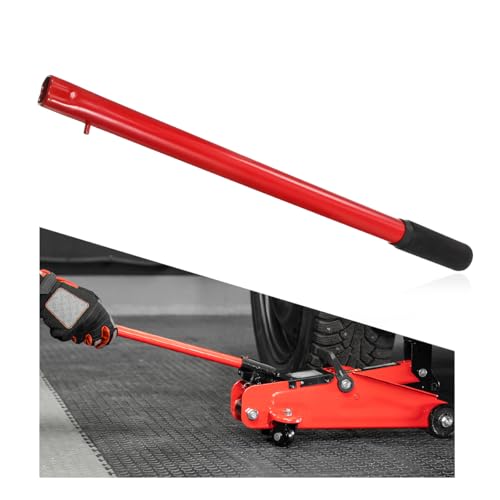 MTRPS 14.6-Inch 2-Ton Floor Jack Handle |
7.8/10 | Buy |
Anglekai 15-Inch Hydraulic Jack Handle
Built for 2-ton horizontal floor jacks and engine hoists, this compact carbon steel replacement handle delivers reliable leverage with a slip-resistant rubber grip. Its 15-inch profile makes it easy to store in a vehicle trunk for roadside tire changes or garage maintenance.
Pros
- Sturdy carbon steel build resists bending under load
- Textured rubber handle prevents slipping during operation
- Compact profile stores easily in trunks or toolboxes
- Plated finish wipes clean of grease and resists rust
Cons
- Short 15-inch length provides modest lifting leverage
- Specifically sized for 2-ton jacks, limiting broader use
- Fixed one-piece design lacks telescoping adjustability
PKOLSFE 2-Ton Floor Jack Handle (14.57-Inch)
Designed as a direct replacement for 2-ton horizontal hydraulic floor jacks, this compact steel lever features a ribbed rubber grip and a secure nut mount for stable lifting. It is a practical spare for roadside tire changes and light garage maintenance.
Pros
- Durable steel build with protective anti-rust finish
- Textured rubber grip provides secure handhold
- Nut connection maintains stable, wobble-free pumping
- Compact length fits easily in trunks or toolboxes
Cons
- Short 14.57-inch reach offers less leverage than longer poles
- Restricted to jacks using compatible nut mounts
911 Motorsports Fine Thread Jack Extension
This heavy-duty adapter converts compatible floor jacks into a versatile raised platform with added lifting clearance. Constructed from A572 steel and DOM tubing, it provides a stable contact point for servicing lifted vehicles.
Pros
- Sturdy steel and DOM tube construction
- Textured polyurethane pad prevents slipping and damage
- Protective zinc plating resists rust
- Adds significant reach for taller vehicles
Cons
- Only fits jacks with fine-thread bolt-on mounts
- Maximum load rating capped at 3 tons
YoRise 14.76-Inch Replacement Hydraulic Jack
The YoRise 14.76-inch replacement jack handle is a lightweight metal lever bar designed to operate compatible 2-3 ton horizontal hydraulic jacks. Featuring a textured anti-slip rubber grip and a compact 0.57-pound profile, it serves as a straightforward replacement for lost or damaged factory pumping poles in automotive trunk or garage kits.
Pros
- Compact 14.76-inch length stows easily behind truck seats, inside spare tire wells, or in portable toolboxes.
- Textured rubberized grip prevents hand slippage when pumping with oily or wet gloves.
- Lightweight 0.57-pound metal build resists bending under standard 2-3 ton lifting leverage.
- High-visibility red finish makes it easy to locate in dim roadside conditions or cluttered shops.
Cons
- Short 14.76-inch length provides limited mechanical leverage compared to longer multi-piece commercial jack poles.
- Socket receiver diameter is not explicitly listed, requiring buyers to verify their specific jack handle sleeve dimensions prior to purchase.
- Intended strictly for compatible 2-3 ton horizontal hydraulic jacks and will not fit larger high-tonnage commercial jacks or bottle jacks with distinct socket linkages.
MTRPS 14.6-Inch 2-Ton Floor Jack Handle
Built as a direct replacement for 2-ton horizontal hydraulic jacks, this steel lever provides dependable operation with a textured, slip-resistant grip. Its compact 14.6-inch frame makes it particularly well suited for vehicle owners seeking an easy-to-stow emergency spare.
Pros
- Rigid steel build resists bending under load
- Textured rubber grip prevents accidental hand slippage
- Corrosion-resistant finish extends overall durability
- Compact size stores conveniently inside small spaces
Cons
- Shorter length provides less leverage than standard poles
- Threaded connection fits only compatible jack sockets

Engineering Reasons and Solutions Behind Short Floor Jack Handle Extensions
Many vehicle owners discover that compact trolley jacks come standard with an operating handle measuring only 14 to 15 inches. This relatively short handle often seems counterintuitive to anyone accustomed to long breaker bars or full-size commercial floor jacks. In reality, equipment manufacturers design these compact levers specifically to match the hydraulic displacement, frame dimensions, and intended duty cycle of portable lifting units. Understanding why does my floor jack have such a short handle extension requires looking at both hydraulic fluid dynamics and structural garage safety.
Hydraulic Advantage Versus Mechanical Lever Length
Hydraulic lifting equipment relies primarily on fluid pressure rather than raw mechanical leverage to elevate thousands of pounds of steel. Inside a standard horizontal trolley jack, the pump mechanism utilizes Pascal’s principle, where a small downward force applied to a narrow plunger piston generates tremendous hydraulic pressure across an incompressible fluid reservoir. Because the surface area of the internal pump piston is tiny compared to the broad hydraulic ram lifting the vehicle arm, the mechanical advantage is generated within the oil chamber itself. A standard 14.5-inch lever, such as the PKOLSFE Horizontal Hydraulic Jack Handle, provides plenty of leverage for a human hand to generate several thousand pounds of hydraulic force without requiring an oversized pole.
If a compact jack utilized a four-foot lever, the downward manual force applied to that tiny hydraulic plunger would be excessively multiplied. That unnecessary leverage could easily overload the internal pump seals or force fluid past internal check ball seats. Instead of requiring massive physical leverage, the system trades stroke distance for mechanical effort, requiring multiple short pump cycles to advance the main lift arm. Replacement units like the MTRPS Horizontal Hydraulic Jack Handle emphasize this balance by maintaining a compact 14.57-inch profile that keeps operating resistance predictable and manageable.
Structural Stability and Overload Prevention on Compact Frames
Chassis stability represents another crucial reason portable horizontal jacks feature short operating rods. Compact 2-ton trolley jacks typically feature narrow wheelbases and lightweight stamped-steel side plates designed for trunk storage and quick tire changes. If an operator attached a four-foot pipe to a lightweight trolley frame, the lateral leverage exerted during an off-center pump stroke could easily tip the entire jack onto its side. A shorter lever keeps the operator working close to the tool, ensuring that downward force remains aligned with the vertical center of gravity.
Structural overload protection also depends heavily on handle geometry. Hydraulic jacks feature internal overload bypass valves designed to prevent the ram from elevating loads beyond their certified working load limits. An excessively long handle would allow an operator to exert excessive manual force that could stress the mechanical pivot pins, lift arm welds, and caster brackets before the internal hydraulic bypass valve could even open. Keeping replacement levers around 14.76 inches, as seen on the YoRise Horizontal Hydraulic Jack Handle, ensures that physical pumping resistance gives the operator clear tactile feedback before components reach structural strain.
Operating Clearances in Confined Workspaces and Roadside Emergencies
Compact floor jacks are specifically built for mobility, emergency tire repairs, and residential garages where space is tightly constrained. In a narrow single-car garage or on the shoulder of a roadway, swinging a long two-piece service handle can be frustrating or completely impossible. A short handle allows an operator to pump the lift arm while kneeling directly beside the vehicle wheel well or quarter panel. This tight working radius prevents the steel rod from striking painted bodywork, low fender flares, or adjacent garage walls during upward and downward strokes.
Portability also dictates handle size, as full-size service equipment is cumbersome to transport in passenger vehicles. Handles like the Anglekai Horizontal Hydraulic Jack Handle are manufactured from thickened carbon steel and measure 14.76 inches, making them easy to pack into a compact trunk kit or tool drawer. These replacement levers include rubberized anti-slip grips featuring vertical ridges to help mechanics maintain positive control even when working with greasy gloves. Quick-detach nut connection structures or spring pins make it straightforward to assemble, operate, and stow the entire apparatus within seconds.
Handle Levers Versus Saddle Extensions: Clarifying Mechanical Roles
Search queries regarding short extensions often reveal a fundamental confusion between the pump handle lever and a lift saddle extension. While a pump handle operates the hydraulic cylinder, a saddle extension is a specialized adapter installed directly onto the lifting arm to bridge vertical clearance gaps. Drivers of raised trucks, SUVs, and off-road vehicles frequently discover that while their compact jack operates properly, the lifting arm cannot reach the frame rail before exhausting its hydraulic stroke. In these situations, extending the saddle rather than the handle is the proper engineering solution.
Modular saddle adapters, such as the Flat Saddle – Short Floor Jack Extension by 911 motorsports, convert standard floor jack saddles into dedicated lifting posts. These assemblies typically bolt into the lift arm using specific fine-thread or coarse-thread configurations, such as standard 1-inch diameter shanks with 1.5-millimeter thread pitch. By integrating a 2-inch base riser with a 6-inch DOM tube extension and a 5-inch flat saddle, these accessories allow jacks rated up to 3 tons to engage high-clearance frame points safely. Using a dedicated saddle adapter preserves proper hydraulic geometry while eliminating dangerous setups like stacking wooden blocks on top of a bare steel saddle.
Comparing Compact Trolley Handles to Commercial Service Jack Mechanisms
Contrasting portable trolley jacks with commercial garage service jacks illustrates why handle dimensions diverge so drastically between categories. Full-size 3-ton and 4-ton commercial floor jacks feature elongated two-piece steel handles measuring between 45 and 50 inches. These shop units feature broad, heavy-duty steel chassis weighing 75 to 100 pounds, providing a broad footprint that easily resists lateral tipping forces. The extended handle length allows a technician to slide the jack deep beneath a long-wheelbase vehicle to reach central engine cradles or differential housings while comfortably pumping from outside the vehicle perimeter.
Release valve operation also highlights significant mechanical differences between these tool styles. Compact horizontal jacks generally use a direct notch, pin, or slotted end on the 14-inch handle that must be physically fitted over the release valve screw to turn it. Commercial service jacks integrate a universal joint gear drive mechanism inside the handle base, allowing the user to twist the upper grip to meter lowering speed progressively. Attempting to force a long service-jack style handle onto a compact trolley mechanism would eliminate this fine control and create sudden, jerky drops during descent.
The Dangers of Using Cheater Bars on Short Pump Levers
Faced with a short handle that requires deliberate pumping effort, some DIY mechanics make the dangerous mistake of sliding a cheater bar or metal pipe over the lever. Adding an improvised pipe extension dramatically increases mechanical leverage at the expense of hydraulic safety and structural integrity. The pump handle socket, hinge pin, and pump piston link on a 2-ton trolley jack are engineered around the maximum manual force a person can exert on a 14.5-inch lever. Multiplying that input force can easily bend the handle bracket, shear hinge pins, or distort the pump piston linkage.
Beyond physical metal deformation, cheater pipes destroy the tactile resistance that alerts an operator when an overload threshold is reached. When lifting an axle, the operator should naturally feel increased resistance if the load exceeds the jack’s working load limit or if the vehicle shifts off balance. If a low-clearance vehicle makes positioning difficult, mechanics should explore alternative elevation methods for low-clearance vehicles rather than modifying a jack handle with unsafe extensions. Respecting the manufacturer’s original lever dimensions keeps the mechanical advantage within the intended safety margins.
Overcoming Lift Height and Suspension Droop on High-Travel Vehicles
When a vehicle owner feels that their jack handle is inadequate, the underlying issue is often that the jack’s total lift stroke is poorly matched to the vehicle’s suspension travel. Solid-axle pickup trucks and lifted four-wheel-drive SUVs feature substantial suspension droop, meaning the springs and shock absorbers expand several inches before the tires lift off the ground. A compact 2-ton trolley jack may reach its maximum extended height of 12 to 14 inches without ever lifting the tire free from the pavement. In this scenario, pumping harder on a longer handle will accomplish nothing because the hydraulic ram has already reached its physical mechanical stop.
Solving suspension travel limitations requires proper equipment sizing rather than altered handle leverage. Mechanics must evaluate total stroke specifications, minimum collapsed height, and axle load distribution to determine whether a high-lift service jack or an engineered saddle riser is required. Reviewing specifications on evaluating how tall car ramps need to be demonstrates how vertical clearance requirements dictate the type of lifting equipment needed for home maintenance. Using an appropriate high-lift unit or a zinc-plated DOM steel saddle extension ensures that the vehicle elevates cleanly without exhausting the hydraulic stroke.
Maintenance, Bleeding Protocols, and Hydraulic Fluid Care
Spongy handle resistance or an apparent lack of lifting power frequently leads users to believe their handle is too short to generate sufficient leverage. In many cases, the true culprit is air trapped inside the hydraulic circuit rather than insufficient lever length. When a jack sits in storage or gets tilted during transport, air pockets can enter the high-pressure chamber, causing the handle to compress aerated fluid rather than pumping hydraulic oil. Purging the system by opening the release valve, cycling the short handle through several rapid strokes, and reseating the oil fill plug will restore crisp mechanical resistance.
Hydraulic fluid maintenance also plays a critical role in preserving proper pump effort and seal longevity. Owners should only refill low reservoirs with clean, anti-foaming ISO VG 22 or ISO VG 32 hydraulic jack oil. Under no circumstances should anyone introduce motor oil, brake fluid, or automatic transmission fluid into a floor jack reservoir. Automotive fluids contain chemical additives and detergents that rapidly degrade nitrile rubber O-rings, U-cup seals, and internal check valves, causing irreversible hydraulic pressure failure.
Mandatory Safety Standards and Mechanical Load Support Protocols
Regardless of whether a floor jack utilizes a compact 14.5-inch lever or an elongated commercial handle, strict garage safety rules must always govern every lift cycle. A hydraulic jack is engineered exclusively as a lifting device, never as a static load-holding tool. Internal hydraulic pressure depends on precision rubber seals and seated check balls, which can weep or fail unexpectedly under sustained load. Operators must never place any part of their body beneath a vehicle supported solely by hydraulic pressure.
Before initiating any lifting stroke, the vehicle must be parked on a level concrete slab with the transmission engaged and the opposing wheels securely chocked. Once the saddle contacts a designated factory lift point, such as a reinforced pinch weld notch or boxed frame rail, elevate the vehicle to the required working height. Immediately position ASME PASE compliant mechanical jack stands beneath primary structural points and gently lower the hydraulic pressure until the stands support the full vehicle mass. Following this weight-transfer sequence ensures that work proceeds safely regardless of the floor jack’s handle design.
Practical Takeaways on Floor Jack Handle and Extension Sizing
A short handle on a horizontal floor jack is an intentional engineering feature designed to balance internal hydraulic advantage, chassis stability, and garage portability. While compact 14.5-inch levers require multiple strokes to raise a vehicle, they prevent catastrophic tip-overs and protect internal bypass valves from manual overload. If greater lift height or deeper chassis access is needed, mechanics should invest in dedicated saddle risers, modular DOM extensions, or full-size commercial service jacks rather than modifying short handles with hazardous cheater bars. Matching the correct lifting tool to the vehicle platform ensures safe, efficient maintenance across every garage project.
About the author
Christian Hazel is an automotive journalist with extensive experience covering four-wheel-drive vehicles, mechanical upgrades, and off-road equipment. His background includes technical reviews, installation features, and project-vehicle coverage, bringing useful context to equipment choices for trucks, Jeeps, and off-road enthusiasts.