
How to Lift a Car With a Floor Jack Without Damage: Practical Guide for 2026
Master how to lift a car with a floor jack without damage in November 2026 with essential guidance on pinch weld adapters, lift point selection, and garage safety protocols.
 By Mike Bumbeck
Updated October 13, 2026


Elevating a vehicle for routine garage service often brings the risk of bent rocker panels, cracked plastic ground effects, and crushed pinch weld seams. Learning how to lift a car with a floor jack without damage requires understanding chassis load distribution, choosing the right hydraulic lifting hardware, and identifying reinforced factory lift points before pumping the handle. Many home mechanics damage delicate underbody sheet metal simply by positioning a bare steel saddle against an unsupported floor pan or neglecting to chock the wheels. Using proper rubber saddle adapters and aligning the lifting cup directly beneath engineered frame points prevents costly body repair while keeping the vehicle perfectly stable throughout maintenance.
Every vehicle platform presents unique structural challenges, ranging from ultra-low rocker clearance on sports cars to long suspension travel on four-wheel-drive trucks. Successful lifting relies on matching your tool working load limit to vehicle axle weight, establishing a level staging area on solid concrete, and immediately transferring vehicle mass onto mechanical supports. While some enthusiasts debate choosing between car ramps and jack stands for fast undercarriage access, a dedicated hydraulic trolley jack provides the distinct flexibility required for suspension servicing and wheel removal. Mastering how to lift a car with a floor jack without damage ensures your chassis stays straight, underbody corrosion coatings remain intact, and every elevation sequence finishes with uncompromising garage safety.
| Award | Product | BJL Score About BJL ScoreThe BJL Score is our own rating from 0 to 10, based on performance, design and build, ease of use, and value. It reflects independent research and is never influenced by manufacturers, retailers, or affiliate commissions. Learn more › | |
|---|---|---|---|
| Best Overall |
TONDA Rubber Floor Jack Pads 2-Pack
|
9.1/10 | Buy |
| Best Budget |
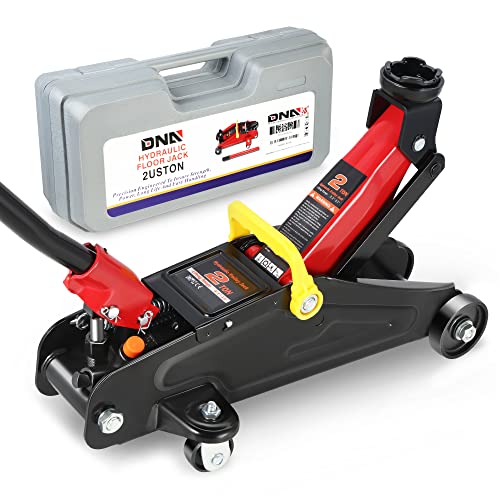 DNA Motoring TOOLS-00234 2-Ton Hydraulic Trolley |
8.8/10 | Buy |
| Best Premium |
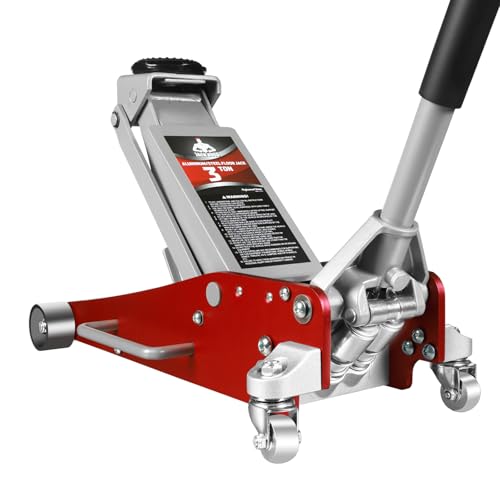 Jack Boss 3-Ton Low Profile Floor Jack |
8.8/10 | Buy |
 AUTOWN 3-Ton Hydraulic Floor Jack |
8.6/10 | Buy | |
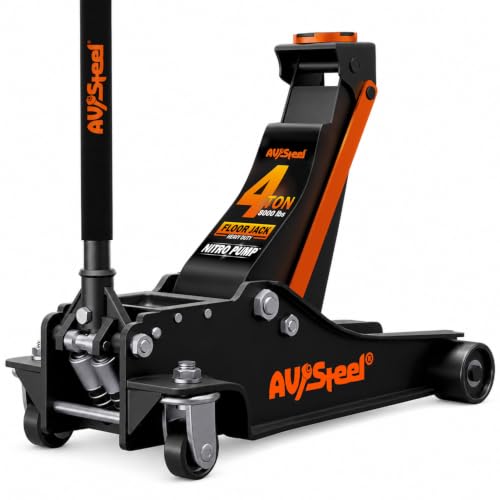 AV Steel 4 Ton Heavy-Duty Hydraulic Floor Jack |
8.3/10 | Buy | |
 AV Steel 3-Ton Low Profile Floor Jack |
8.1/10 | Buy | |
 Maxority 3-Ton Low Profile Floor Jack |
8.0/10 | Buy | |
| Best Value |
 AV Steel 3-Ton Hydraulic Floor Jack |
7.8/10 | Buy |
TONDA Rubber Floor Jack Pads 2-Pack
The TONDA 2-Pack Rubber Floor Jack Pads provide a 0.51-inch slotted groove and 1.29-inch height profile to help protect unibody pinch welds from bending and surface damage during floor jack lifting. Sized with a 2.83-inch diameter for compatible 2-3 ton hydraulic jacks, this set is ideal for DIY mechanics servicing unibody passenger cars and crossovers.
Pros
- Cushions unibody pinch welds to help prevent folded sheet metal, scratched paint, and rust-prone seam damage
- Adds 1.29 inches of effective lifting height to bridge gaps on recessed factory lift points
- Pre-cut 0.51-inch wide by 0.5-inch deep slot aligns smoothly with standard automotive pinch welds
- Solid rubber composition minimizes metal-to-metal contact slippage against hydraulic jack saddles
Cons
- Sized specifically for 2.83-inch saddles and may not fit larger commercial floor jack cups or deep-dished saddles
- Slot dimensions (0.51-inch wide by 0.5-inch deep) may not accommodate oversized, modified, or reinforced truck frame seams
- Rubber pucks are designed for hydraulic jack lifting points and are not a substitute for rated static jack stands
DNA Motoring TOOLS-00234 2-Ton Hydraulic Trolley
The DNA Motoring TOOLS-00234 is a compact 2-ton (4,000 lb) hydraulic trolley floor jack featuring a 5.1-inch to 13-inch lifting span and built-in overload protection. Engineered for DIY mechanics servicing passenger sedans and compact cars, it provides rapid vehicle lifting that must be supported with auxiliary mechanical jack stands.
Pros
- Manageable 4,000 lb capacity easily raises compact and mid-size passenger cars for wheel and brake service
- Built-in hydraulic overload valve prevents internal damage if overloaded beyond the rated capacity
- Rear swivel casters allow quick and precise positioning under factory lift points
- Compact frame footprint fits easily in residential garages with restricted floor space
Cons
- Maximum lift height is capped at 13 inches, limiting workspace depth for heavy underbody repairs
- Minimum 5.1-inch collapsed saddle height may not clear heavily lowered or track-tuned sports cars
- Not rated or recommended for full-size pickup trucks, commercial vans, or large three-row SUVs
Jack Boss 3-Ton Low Profile Floor Jack
Built with a hybrid aluminum and steel frame, this 3-ton floor jack pairs a low 3-15/16-inch minimum clearance with a dual-piston rapid pump. It serves as a versatile lifting solution for low-slung sedans as well as standard SUVs and minivans.
Pros
- Low-profile 3-15/16-inch minimum lifting clearance
- Fast elevation with dual-piston hydraulic pump
- Hybrid aluminum and steel frame construction
- Protective rubber saddle shields vehicle chassis
- Meets rigorous ANSI/ASME PASE safety standards
Cons
- At 58.5 pounds, it remains relatively heavy to transport
- 18-5/16-inch max height may be limiting for lifted trucks
AUTOWN 3-Ton Hydraulic Floor Jack
Built with heavy-gauge alloy steel, this 3-ton jack delivers a high 7.1 to 20.9-inch reach tailored for trucks and SUVs. Its rapid-lift hydraulic system and cross-grooved rubber pad provide stable, efficient lifting during maintenance.
Pros
- Substantial 6,600-pound capacity supports full-size vehicles
- Generous 20.9-inch maximum elevation height
- Fast elevation with minimal handle pumping
- Textured rubber saddle pad prevents frame slipping
- Removable handle allows compact garage storage
Cons
- High 7.1-inch minimum height does not fit low-clearance sedans
- Heavy alloy steel construction makes transport cumbersome
AV Steel 4 Ton Heavy-Duty Hydraulic Floor Jack
The AV Steel 4-ton hydraulic floor jack provides 8,000 lbs of lifting capacity and a 4-1/4-inch to 19-3/4-inch vertical range powered by a rapid dual-piston pump. Built with a rigid 87.3-pound all-steel chassis, it offers home garage mechanics and truck owners dependable lifting strength for standard passenger cars, crossovers, and half-ton pickups.
Pros
- Substantial 4-ton (8,000-lb) capacity easily handles heavy front and rear axle loads on half-ton pickups, large SUVs, and vans.
- Dual-piston rapid pump quickly raises the saddle to chassis contact points with minimal handle pumping strokes.
- Rigid 87.3-pound all-steel frame delivers superior stationary stability on home garage floors.
- Built-in overload protection valve guards the hydraulic cylinder against accidental over-capacity operation.
Cons
- Substantial 87.3-pound gross chassis weight makes vehicle trunk transport or mobile hauling physically demanding.
- Collapsed saddle height of 4-1/4 inches will not clear low-slung sports cars or lowered vehicles without drive-on ramps.
- Maximum lift height of 19-3/4 inches is not designed for lifted 4x4 trucks or long-travel off-road suspensions.
AV Steel 3-Ton Low Profile Floor Jack
Built to clear lowered suspensions and standard passenger cars, this hydraulic steel jack reaches under chassis as low as 3-1/8 inches and extends to nearly 20 inches. A dual-piston pump speeds up lifts, backed by compliance with recognized ANSI/ASME PASE safety standards.
Pros
- Low 3-1/8-inch minimum height fits under low-clearance cars
- Dual-piston pump enables rapid lifting with less effort
- Meets rigorous ANSI/ASME PASE safety standards
- Heavy-duty steel construction ensures solid garage stability
Cons
- All-steel construction makes it considerably heavy to transport
- Long frame requires significant floor space for storage
Maxority 3-Ton Low Profile Floor Jack
The Maxority 3-Ton Low Profile Floor Jack delivers a 6,600-lb rated capacity with an extended-reach chassis and rapid dual-piston hydraulics for residential garage maintenance. Designed for sports cars and passenger vehicles on level concrete without requiring dedicated electrical wiring or permanent anchoring, it is an ideal mobile lifting tool for DIYers who support their vehicles on jack stands for routine service.
Pros
- 6,600-lb (3-ton) rated capacity handles a wide variety of passenger vehicles and sports cars
- Low-profile extended frame provides access beneath lowered vehicles with minimal ground clearance
- Dual-piston rapid pump mechanism minimizes the strokes required to meet the chassis
- High-strength steel construction delivers a sturdy, rigid platform during lifting operations
- Built-in overload protection valve promotes safer hydraulic operation
Cons
- Heavy-gauge steel construction adds physical lifting weight compared to lightweight aluminum racing jacks
- Ships in a random color finish, which may not match specific garage or workshop color schemes
- Requires pairing with appropriately rated mechanical jack stands before performing any under-vehicle maintenance
AV Steel 3-Ton Hydraulic Floor Jack
Built for standard passenger vehicles and light trucks, this heavy steel floor jack delivers a 6,000-pound capacity with a lift range of 5.5 to 18.5 inches. Its built-in overload protection and 360-degree rotating saddle make it a dependable option for routine garage maintenance.
Pros
- Generous 6,000-pound capacity for cars and SUVs
- Solid 5.5-inch to 18.5-inch lift clearance
- Durable all-steel frame ensures maximum stability
- Integrated overload valve prevents accidental over-lifting
- 360-degree rotating saddle aids quick, secure positioning
Cons
- Heavy 63.9-pound weight reduces overall portability
- Single-piston pump requires more strokes to reach height
- Unsuitable for lifted vehicles and heavy-duty trucks
Safe Vehicle Elevation: Engineering Principles and Protection Protocols
Understanding how to lift a car with a floor jack without damage requires recognizing that modern automotive chassis distribute stresses across specific reinforced load paths rather than general underbody panels. Raising vehicle weight demands precise tool positioning, adequate surface cushioning, and an exact awareness of factory pickup points. Rushing the process or guessing saddle placement invariably leads to bent sheet metal seams, cracked rocker moldings, crushed floorboards, or ruptured lines. Approaching every lift with deliberate staging and structural awareness allows home mechanics to complete maintenance cleanly while preserving factory paint and alignment.
Identifying Reinforced Factory Lift Points and Undercarriage Vulnerabilities
Vehicle manufacturers engineer specific locations beneath the chassis designed to withstand concentrated lifting weight. On modern unibody vehicles, these structural zones are stamped along the rocker panel pinch weld seams, marked by notches or tabs located behind the front wheels and ahead of the rear wheels. Solid-frame trucks and body-on-frame SUVs provide robust boxed frame rails, heavy suspension crossmembers, and solid rear axle housings that support heavy loads without deflection. Positioning a floor jack saddle outside these engineered zones invites immediate damage, as unsupported sheet metal easily distorts passenger floor pans under severe point pressure.
Certain undercarriage components must never bear the weight of an elevating floor jack. Steering linkages, front suspension control arms, aluminum oil pans, transmission housings, and drive axles lack the wall thickness required to support dynamic vehicle mass. Placing a lifting saddle beneath thin sheet metal crossmembers can permanently twist subframe geometry or crush critical steering assemblies. Consulting your vehicle factory manual verifies whether a central jacking pad exists for simultaneous axle elevation, preventing unintended structural distortion before applying hydraulic pressure.
The Mechanics of Saddle Protection and Pinch Weld Adapters
Direct contact between a bare steel hydraulic saddle and thin sheet metal pinch welds represents a primary cause of underbody damage. A standard metal saddle features sharp perimeter teeth designed to bite into heavy truck frames, but these teeth can crush or strip protective primers from unibody pinch welds. Once protective factory paint is gouged away, exposed bare steel becomes vulnerable to corrosion from road salt and moisture. Incorporating an elastomeric buffer between metal surfaces distributes mechanical force across a wider surface area while cushioning delicate chassis seams.
Specialized accessories such as slotted rubber pinch weld pads absorb compressive loads while isolating factory pinch flanges inside a central groove. For example, adapters like the TONDA rubber jack pads utilize a precise slot to cradle the vertical weld seam, allowing vehicle weight to rest securely on reinforced rocker backing plates. Similarly, jacks featuring cross-shaped rubber saddle inserts, such as the AUTOWN 3-ton hydraulic floor jack, provide non-slip friction on both flat frame rails and curved axle tubes. These cushioning accessories eliminate metal-on-metal gouging, ensuring that your lifting points remain straight and rust-free over years of service.
Staging the Lift: Surface Stability, Gear Selection, and Wheel Chocking
A damage-free lifting operation begins long before the hydraulic saddle makes contact with the chassis. Staging your vehicle on a flat, level, solid concrete floor is mandatory because asphalt can soften under concentrated loads, allowing jack wheels to sink and tilt. Engaging the emergency parking brake and placing the transmission in park, or in reverse gear for manual gearboxes, locks the driveline and minimizes roll risk. Home mechanics should always position heavy-duty wheel chocks snugly against both sides of the tires remaining on the ground to eliminate fore-and-aft movement.
Surface traction and equipment alignment play critical roles in preventing unexpected chassis shifting. When elevating one corner or an entire axle, horizontal movement naturally occurs as the jack lift arm travels through its upward arc. A service jack must roll forward slightly on its casters to compensate for this changing arc angle, making clean concrete essential. Home mechanics who review techniques for preventing equipment slippage on smooth garage floors will recognize that maintaining steady traction beneath stationary wheels prevents catastrophic vehicle slipping.
Hydraulic Jack Sizing: Working Load Limits, Axle Ratios, and Travel Height
Selecting an appropriately rated floor jack is essential for smooth elevation without hydraulic pump strain or sudden pressure drops. When lifting one end of a vehicle, the jack supports approximately fifty to sixty percent of total vehicle weight concentrated on that elevated axle. Compact sedans and light sports hatchbacks can be serviced using compact units like the DNA Motoring 2-ton hydraulic trolley jack, which provides a compact footprint and reliable safety release valving for basic maintenance. However, heavier crossovers, midsize SUVs, and light trucks demand a 3-ton working load limit to maintain generous hydraulic safety margins.
Full-size utility vehicles, extended vans, and heavier commercial trucks place substantial static loads on hydraulic components that require robust hardware. Using an under-rated jack risks internal hydraulic valve bypass activation, causing the lift arm to stall mid-stroke or creep downward unexpectedly. Full-size heavy-duty trucks frequently benefit from units like the AV Steel 4-ton hydraulic floor jack, which delivers heavy steel frame rigidity and dual-piston pump efficiency under demanding loads. Balancing rated capacity against vehicle weight specifications ensures that the hydraulic system operates comfortably within its engineered threshold.
Step-by-Step Procedure for Damage-Free Lifting
Executing a safe, damage-free lift requires deliberate focus through each stage of hydraulic pump operation. First, close the hydraulic release valve fully by rotating the jack handle clockwise until it seats firmly without excessive force. Roll the floor jack directly beneath the designated factory lift point, ensuring the saddle cup is positioned centrally beneath the reinforced frame structure. If you are using a slotted rubber pinch weld pad, align the seam directly within the rubber groove before raising the lift arm.
Pump the handle smoothly until the saddle contacts the underside of the vehicle, then pause immediately before carrying vehicle weight. Perform a visual and tactile inspection to confirm that the saddle pad is seated squarely against reinforced metal and is not pinching plastic rocker covers, side skirts, or fluid lines. Once alignment is verified, continue pumping with steady strokes to elevate the vehicle to your target working height. If you are lifting one side of a car independently, observe the tilt angle closely to ensure the vehicle does not shift laterally on its remaining contact tires.
Maintain continuous visual surveillance on both the elevating chassis and the floor jack frame as the vehicle rises. The jack should roll forward smoothly on its front wheels to stay centered beneath the lifting point as the lift arm swings through its natural radius. Stop pumping the moment the vehicle reaches sufficient clearance for your secondary safety supports.
Transferring Load to Mechanical Jack Stands Without Chassis Distortion
A hydraulic floor jack is engineered strictly as a dynamic lifting device, never as a static load-holding tool. Internal hydraulic pressure seals rely on pressurized fluid, which can slowly leak past valves or suffer sudden mechanical failure, dropping the chassis without warning. Consequently, you must always transfer vehicle weight onto mechanically locked, ASME PASE compliant jack stands before beginning any maintenance work. Positioning jack stands under secondary reinforced chassis points, such as heavy suspension subframes or dedicated pinch weld notches, ensures stable long-term support.
Lowering the vehicle onto stands demands slow, precise control of the hydraulic release valve to prevent abrupt shock-loading. Rotate the jack handle counter-clockwise by small fractions of an inch, allowing the vehicle to descend gently until the chassis makes complete, solid contact with the jack stand saddles. Once weight rests entirely on the stands, leave the hydraulic jack saddle raised just a fraction of an inch below the lifting point as a secondary safety backup. Give the vehicle bumper a firm lateral shake test while standing clear to verify absolute stability before placing any tool or limb underneath.
Controlled Descent: Universal Joint Modulation and Valve Metering
Lowering an elevated vehicle back to the ground presents just as much potential for underbody damage as the initial lift. Releasing hydraulic pressure too quickly can slam the car down onto its suspension bump stops, jarring alignment components and cracking low-hanging body ground effects. Floor jacks equipped with precision universal joint release mechanisms allow fine micro-metering of hydraulic fluid flow back into the reservoir. This granular control allows DIY mechanics to regulate the speed of descent down to a controlled, millimeter-by-millimeter glide.
To safely lower the vehicle after completing maintenance, first raise the floor jack slightly to take vehicle weight off the mechanical jack stands. Carefully remove the stands and clear the entire underside of tools, drain pans, and creepers before touching the release valve. Slowly twist the jack handle counter-clockwise in minute increments, watching the chassis descend smoothly until all tires rest flat on the garage floor. Once the lift arm is completely collapsed and the saddle clears the underbody, pull the floor jack straight out and store it properly.
Managing Low-Profile Clearances and High-Travel Suspensions
Different vehicle types present vastly distinct clearance requirements that directly affect damage prevention. Sports cars, lowered performance coupes, and vehicles with aftermarket aerodynamics often have minimal ground clearance beneath their factory pinch welds. Attempting to slide a standard, bulky service jack under these vehicles risks scraping front splitters and cracking expensive fiberglass side skirts. Low-profile models like the Jack Boss 3-ton aluminum and steel racing jack, or the AV Steel low-profile jack with its 3-1/8 inch minimum collapsed saddle height, slide smoothly beneath dropped chassis without body contact.
Conversely, lifted four-wheel-drive trucks, full-size crossovers, and SUVs exhibit significant suspension droop that creates an opposite mechanical challenge. When you raise a high-travel truck frame, the suspension expands several inches before the tires break contact with the floor. Standard jacks with limited lift stroke may reach their maximum extension without elevating the wheels, leaving the vehicle perched precariously. Utilizing a high-lift floor jack with an extended stroke over twenty inches, such as the AUTOWN 3-ton jack or the Maxority low-profile steel jack, overcomes suspension travel while keeping the saddle solidly engaged with the chassis.
Hydraulic System Maintenance: Air Purging and Seal Integrity
Reliable, damage-free vehicle lifting depends directly on keeping your hydraulic floor jack properly maintained and free of internal contamination. Air bubbles entrained within hydraulic fluid create a spongy pump handle feel and can cause erratic, jerky arm movement or loss of maximum lifting height. Bleeding trapped air from the hydraulic circuit restores smooth, predictable lift strokes and stabilizes load holding. To purge air, open the release valve counter-clockwise, pump the handle rapidly six to eight times to circulate fluid, and close the valve to verify solid mechanical resistance.
Replenishing hydraulic fluid requires dedicated anti-foaming ISO VG 22 or ISO VG 32 hydraulic jack oil rather than random garage lubricants. Introducing motor oil, automatic transmission fluid, or brake fluid into a floor jack will chemically degrade internal nitrile rubber seals, causing catastrophic pressure failure. Periodically wipe the polished chrome ram cylinder clean of road grit and garage dust to prevent scoring internal wiper seals during stroke cycles. Storing the floor jack with its lift arm fully retracted and release valve lightly closed protects internal hydraulic surfaces from oxidation and keeps the unit ready for safe service.
Mastering the complete elevation sequence transforms routine garage maintenance from an anxious gamble into a controlled, professional procedure. Protecting factory pinch welds with slotted rubber adapters, verifying solid concrete footing, and matching hydraulic working load limits to vehicle axle mass ensures your chassis remains completely free of structural damage. Always remember that a hydraulic jack is exclusively a lifting mechanism, making the immediate transfer of vehicle weight onto rated mechanical jack stands your most vital safety obligation. With proper staging, deliberate pump strokes, and dependable hardware, you can elevate any car with complete confidence and total underbody protection.
About the author
Mike Bumbeck is an automotive journalist and hands-on product evaluator with a long-standing interest in classic vehicles, motorcycles, and practical garage equipment. His work brings a grounded perspective to automotive tools, maintenance products, and the details that matter when choosing gear for real-world use.