
Why Does My Floor Jack Handle Not Rotate 360 Degrees: Mechanical Causes and Fixes
Understand why does my floor jack handle not rotate 360 degrees, exploring handle socket designs, release gears, and garage safety for November 2026.
 By Mike Bumbeck
Updated October 28, 2026

Maneuvering a trolley floor jack beneath a low chassis or positioning it inside a cramped residential garage often requires creative leverage and tight approach angles. When working around suspension components, control arms, and vehicle body panels, DIY mechanics frequently wonder why does my floor jack handle not rotate 360 degrees during normal operation. A standard automotive floor jack is engineered with a directional mechanical yoke designed to translate vertical downward force directly into hydraulic pump pressure. Understanding the physical layout of the handle socket, release valve drive, and pivot retaining pins helps clarify why handle movement is restricted to a dedicated arc.
While rotating handles exist on specialized shop jacks, most standard horizontal hydraulic units lock the handle into a fixed directional socket using heavy-duty retention bolts. If you are exploring alternative elevation tools for routine underbody inspections, reviewing our guide on how to use car ramps properly can provide helpful perspective on garage clearance options. Grasping how your jack handle interfaces with the hydraulic plunger and release valve ensures smooth, controlled vehicle lifting while preventing accidental mechanical binding or seal damage.
| Award | Product | BJL Score About BJL ScoreThe BJL Score is our own rating from 0 to 10, based on performance, design and build, ease of use, and value. It reflects independent research and is never influenced by manufacturers, retailers, or affiliate commissions. Learn more › | |
|---|---|---|---|
| Best Overall |
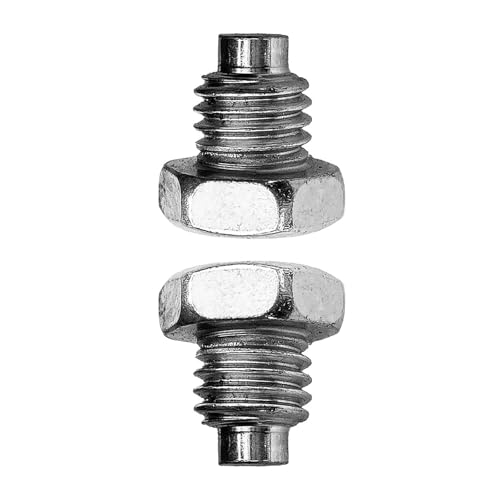 CouTunp 12x1.75 Floor Jack Handle Bolts (2-Pack) |
9.1/10 | Buy |
| Best Value |
 Anglekai 15-Inch Hydraulic Jack Handle |
9.1/10 | Buy |
| Best Premium |
 CC LOT 2-Ton Floor Jack Replacement Handle |
8.9/10 | Buy |
| Best Budget |
 smilfuy 3-Ton/4-Ton Jack Handle Bolts, 2-Pack |
8.4/10 | Buy |
 YoRise 14.76-Inch Replacement Hydraulic Jack |
8.3/10 | Buy | |
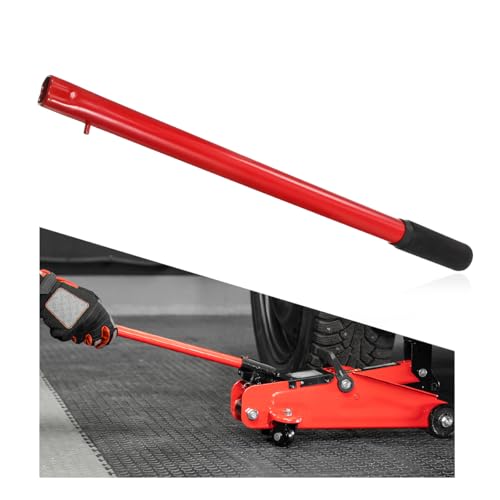 MTRPS 14.6-Inch 2-Ton Floor Jack Handle |
7.8/10 | Buy |
CouTunp 12x1.75 Floor Jack Handle Bolts (2-Pack)
CouTunp provides a pair of replacement 12 x 1.75 fixing bolts designed to secure the pressure rod on horizontal floor jacks. Built from treated rust-resistant metal, they offer an easy direct swap for stripped or lost hardware on compatible 3-ton and 4-ton hydraulic units.
Pros
- Exact 12 x 1.75 thread specification
- Rust and corrosion resistant metal treatment
- Quick and direct hardware replacement
- Pack includes two matching bolts
Cons
- Restricted to 12 x 1.75 thread pitch requirements
- Designed only for compatible horizontal jack configurations
Anglekai 15-Inch Hydraulic Jack Handle
Built for 2-ton horizontal floor jacks and engine hoists, this compact carbon steel replacement handle delivers reliable leverage with a slip-resistant rubber grip. Its 15-inch profile makes it easy to store in a vehicle trunk for roadside tire changes or garage maintenance.
Pros
- Sturdy carbon steel build resists bending under load
- Textured rubber handle prevents slipping during operation
- Compact profile stores easily in trunks or toolboxes
- Plated finish wipes clean of grease and resists rust
Cons
- Short 15-inch length provides modest lifting leverage
- Specifically sized for 2-ton jacks, limiting broader use
- Fixed one-piece design lacks telescoping adjustability
CC LOT 2-Ton Floor Jack Replacement Handle
Crafted from hardened carbon steel with a non-slip rubber grip, this replacement lever restores functionality to compatible two-ton horizontal floor jacks. Its compact footprint makes it convenient to store inside a trunk for roadside emergencies.
Pros
- Sturdy hardened carbon steel construction
- Comfortable non-slip rubber grip
- Rust and corrosion resistant finish
- Compact and easy to transport
- Includes free protective work gloves
Cons
- Designed specifically for 2-ton horizontal jacks only
- Shorter length provides less leverage than long handles
smilfuy 3-Ton/4-Ton Jack Handle Bolts, 2-Pack
These smilfuy replacement handle bolts restore secure operation to compatible 3-ton and 4-ton horizontal hydraulic jacks. Crafted from corrosion-resistant alloy steel, they provide a reliable, threaded anchor for routine vehicle maintenance.
Pros
- Corrosion-resistant alloy steel construction
- Precision threads deliver a secure fit
- Wide compatibility with 3-ton and 4-ton horizontal jacks
- Two-pack provides an immediate spare bolt
Cons
- Only designed for horizontal hydraulic jack styles
- Incompatible with jacks outside 3-to-4-ton ratings
YoRise 14.76-Inch Replacement Hydraulic Jack
The YoRise 14.76-inch replacement jack handle is a lightweight metal lever bar designed to operate compatible 2-3 ton horizontal hydraulic jacks. Featuring a textured anti-slip rubber grip and a compact 0.57-pound profile, it serves as a straightforward replacement for lost or damaged factory pumping poles in automotive trunk or garage kits.
Pros
- Compact 14.76-inch length stows easily behind truck seats, inside spare tire wells, or in portable toolboxes.
- Textured rubberized grip prevents hand slippage when pumping with oily or wet gloves.
- Lightweight 0.57-pound metal build resists bending under standard 2-3 ton lifting leverage.
- High-visibility red finish makes it easy to locate in dim roadside conditions or cluttered shops.
Cons
- Short 14.76-inch length provides limited mechanical leverage compared to longer multi-piece commercial jack poles.
- Socket receiver diameter is not explicitly listed, requiring buyers to verify their specific jack handle sleeve dimensions prior to purchase.
- Intended strictly for compatible 2-3 ton horizontal hydraulic jacks and will not fit larger high-tonnage commercial jacks or bottle jacks with distinct socket linkages.
MTRPS 14.6-Inch 2-Ton Floor Jack Handle
Built as a direct replacement for 2-ton horizontal hydraulic jacks, this steel lever provides dependable operation with a textured, slip-resistant grip. Its compact 14.6-inch frame makes it particularly well suited for vehicle owners seeking an easy-to-stow emergency spare.
Pros
- Rigid steel build resists bending under load
- Textured rubber grip prevents accidental hand slippage
- Corrosion-resistant finish extends overall durability
- Compact size stores conveniently inside small spaces
Cons
- Shorter length provides less leverage than standard poles
- Threaded connection fits only compatible jack sockets

Mechanical Anatomy and Operating Limits of Floor Jack Handles
A horizontal hydraulic floor jack is built around rigid directional leverage rather than multi-directional articulation. When technicians or home mechanics question why does my floor jack handle not rotate 360 degrees, the immediate answer lies in the structural alignment between the pump piston and the handle socket. The jack handle is restricted to a vertical pumping arc and an axial twist to prevent mechanical binding against the hydraulic pump block. Forcing a handle to swing horizontally around the frame risks snapping mounting hardware or stripping the internal release valve drive.
Most commercial and DIY garage jacks utilize a fixed handle yoke mounted directly between the heavy steel side plates of the chassis. This arrangement ensures that every downward stroke delivers maximum hydraulic displacement directly to the lifting arm. While certain compact jacks feature rotating pump assemblies, standard service jacks deliberately eliminate lateral rotation to maintain structural rigidity under load. Understanding these internal linkages clarifies why handle movement is intentionally constrained.
The Core Distinction Between Horizontal Swivel and Axial Rotation
Confusion surrounding handle movement often stems from the difference between swinging around the frame and twisting the handle shaft. A standard floor jack handle rotates along its central axis to open and close the hydraulic release valve. This axial rotation allows users to meter the descent speed of an elevated vehicle with fine precision. However, the handle base cannot swing horizontally in a 360-degree circle relative to the floor jack frame.
The handle socket is pinned into place by horizontal trunnion bolts or pivot pins that only permit up-and-down oscillation. When you pump the lever downward, the socket depresses the hydraulic plunger into the pump base. Because the plunger operates along a fixed linear trajectory, any horizontal rotation would cause severe angular misalignment. That restriction prevents side-loading the small hydraulic piston seals, which would otherwise lead to rapid fluid leakage and pressure loss.
Anatomy of the Handle Yoke and Pivot Assembly
The handle yoke serves as the mechanical bridge between human effort and hydraulic fluid displacement. Cast from heavy-duty ductile iron or formed from thick-plate carbon steel, the yoke cradles the lower section of the handle tube. Heavy horizontal pivot pins pass through the chassis side plates and anchor the yoke firmly to the frame. These mounting points absorb thousands of pounds of reactive torque during high-pressure lifting strokes.
Physical mechanical stops are cast directly into the yoke housing and surrounding chassis brackets. These stops prevent the handle from falling too far forward against the vehicle bodywork or dropping backward onto the garage floor. Strong torsion springs or return springs connect the yoke to the frame, pulling the handle upright after each downward stroke. If the assembly were permitted to spin 360 degrees, these return springs would wrap around the pivot points and snap instantly.
Release Valve Drive Mechanisms and Gear Alignment
Lowering a hydraulic floor jack requires turning the release valve stem counterclockwise to allow pressurized oil to return to the reservoir. On professional and consumer horizontal service jacks, this operation relies on either a universal joint or direct bevel gear drive. The lower tip of the handle features a keyed drive plug, cross-pin, or square drive that meshes directly with the valve linkage. This mechanical connection requires constant axial concentricity to operate smoothly.
If the handle socket could swing horizontally around the jack body, the universal joint would quickly bind or separate from its drive socket. A universal joint can only accommodate moderate operating angles before mechanical lockup occurs. Standard jack designs keep the handle shaft directly aligned with the release valve shaft to maintain reliable metering control. Uncontrolled valve release caused by disengaged drive gears could drop an elevated vehicle suddenly, creating an extreme hazard in the garage.
The Role of Handle Retaining Bolts in Structural Stability
A secure connection between the removable handle pole and the lower socket sleeve is essential for safe operation. Threaded hardware, such as the CouTunp 2PCS Car Floor Jack Handle Bolts, provides a rigid clamping force that holds the tube securely inside the casting. These specialized fasteners typically feature metric thread specifications, such as M12 by 1.75 pitch, engineered to seat deep into the socket body. Without properly torqued retaining bolts, the handle would wobble, cock sideways, and cause uneven mechanical wear.

Similarly, replacement hardware like the smilfuy 2PCS 3 Ton 4 Ton Horizontal Car Floor Jack Handle Bolts is crafted from high-strength alloy steel to resist extreme stretching forces. When an operator applies heavy leverage at the end of a long lever, substantial shear stress concentrates right at the socket fastener. Worn or missing retaining bolts allow the handle to rotate loosely off-center, leading some users to mistakenly believe their jack is broken. Inspecting these pressure rod fixed screws ensures the handle remains firmly seated in its dedicated operating channel.
Swivel-Pump Specialty Jacks Versus Fixed-Chassis Service Jacks
Certain specialty lifting tools on the market do feature a handle that rotates in a full circle around the pump base. These designs are commonly found on specialized high-lift transmission jacks, toe jacks, or compact commercial bottle jacks with rotating pump sleeves. On those tools, the pump piston assembly sits on an integrated rotating collar with circular fluid porting. This engineering enables technicians to pump the hydraulic cylinder from any angle in exceptionally cramped vehicle bays.
In contrast, standard horizontal trolley floor jacks utilize fixed dual-piston or single-piston pump blocks bolted directly between the chassis rails. Adding a 360-degree rotating pump base to a long horizontal floor jack would dramatically increase structural complexity and manufacturing costs. It would also introduce multiple rotary hydraulic O-rings that could degrade, weep oil, or introduce air into the circuit over time. For general passenger vehicle maintenance, a fixed directional handle provides far superior leverage and long-term durability.
Diagnosing Handle Binding, Resistance, and Movement Restrictions
If your floor jack handle will not rotate along its axis or feels physically jammed, several mechanical issues could be responsible. Road grit, metal shavings, or dried grease frequently pack into the base of the handle socket and jam the universal joint gears. Backing out the handle retaining bolt and removing the pole allows you to inspect the mating teeth for contamination or sheared drive pins. Cleaning the socket and applying a light coat of lithium grease often restores fluid rotation.
Another frequent culprit is an over-tightened or galling release valve screw inside the hydraulic block. Forcing the handle with excessive hand torque can twist the lower drive pin or round off the square socket. If the release valve was jammed closed during a previous lift, loosen the valve gently with an external wrench rather than snapping the handle linkage. Periodic lubrication of the yoke pivot pins prevents corrosion that mimics internal hydraulic binding.
Replacement Poles and Ergonomic Leverage Requirements
When an original floor jack handle bends under excessive force or gets lost, choosing an appropriate replacement pole is crucial for ease of operation. Products like the Anglekai Horizontal Hydraulic Jack Handle provide a sturdy carbon steel tube measuring approximately 14.76 inches long. This length generates sufficient mechanical leverage to actuate standard 2-ton hydraulic cylinders without requiring excessive operator effort. The durable paint plating and textured rubber grip ensure firm, non-slip hand control during repetitive lifting strokes.
Similarly, alternatives like the 2 Ton Floor Jack Handle Replacement from CC LOT and the YoRise Horizontal Hydraulic Jack Handle deliver thickened metal construction tailored for garage durability. The YoRise unit features prominent vertical non-slip ridges across the handle sleeve, allowing mechanics to maintain a secure grip even when hands are coated in motor oil. Another dependable option is the MTRPS Horizontal Hydraulic Jack Handle, which measures 14.57 inches and utilizes high-strength steel to resist flex. These compact replacement handles fit neatly into trunks or toolboxes for mobile repair work.
Operational Best Practices and Garage Safety Protocols
Working beneath a raised automobile demands strict adherence to non-negotiable safety protocols regardless of the lifting equipment used. A hydraulic floor jack is engineered strictly as an elevating device and must never be treated as a static load-holding support. Hydraulic seals can fail without warning, and slight thermal fluid contraction can cause the lifting arm to creep downward over time. Vehicle weight must always be transferred onto mechanical jack stands rated appropriately for the vehicle curb weight.
Before initiating a lift, always position the jack on a smooth, level concrete surface and chock the wheels remaining in ground contact. If you prefer avoiding hydraulic setups entirely for routine oil changes or underbody inspections, consider car ramps for oil changes and routine servicing as a stable mechanical alternative. Remember that a floor jack typically supports roughly 50 to 60 percent of a vehicle’s total mass during an axle lift. Maintaining this safety margin and honoring handle mechanical limits ensures safe, predictable garage operations.
Long-Term Maintenance and Hydraulic System Preservation
Proper maintenance of the handle assembly and hydraulic circuit prevents premature component failure and keeps the tool operating smoothly. Regularly inspecting the M12 socket bolts and pivot trunnions prevents elongation of the mounting holes in the frame. If you notice spongy pumping resistance or incomplete arm extension, trapped air inside the hydraulic cylinder may require purging. Bleeding the system by opening the release valve and pumping the handle several times restores full fluid displacement.
When replenishing fluid, use only clean, dedicated ISO VG 22 or ISO VG 32 anti-foaming hydraulic jack oil. Never introduce motor oil, brake fluid, or automatic transmission fluid into the reservoir, as these fluids chemically degrade internal nitrile rubber seals. Storing the jack with the lift arm fully lowered and the release valve lightly closed prevents moisture from corroding the polished ram. Keeping the handle socket clean and lubricated ensures your floor jack remains a dependable workhorse for every lifting task.
About the author
Mike Bumbeck is an automotive journalist and hands-on product evaluator with a long-standing interest in classic vehicles, motorcycles, and practical garage equipment. His work brings a grounded perspective to automotive tools, maintenance products, and the details that matter when choosing gear for real-world use.