
Is My Floor Jack Really Suitable for Trucks or an Suv? Practical Guide for 2026
Determine if is my floor jack really suitable for trucks or an suv by checking stroke height, axle weight limits, and chassis safety for November 2026.
 By Larry Carley
Updated October 13, 2026
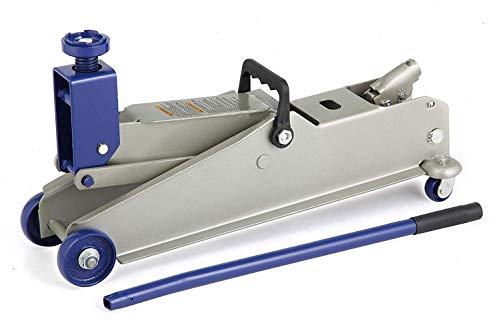

Raising a heavy vehicle requires a clear understanding of hydraulic limits, frame geometry, and weight distribution. Many garage owners store a standard service jack intended for passenger cars, only to wonder if is my floor jack really suitable for trucks or an suv when routine maintenance arises. Using an undersized lifting tool risks dangerous hydraulic failure, bent underbody sheet metal, or leaving the tires pinned to the ground because the lift arm runs out of upward travel. Light trucks and full-size crossovers carry higher curb weights and taller ground clearance, demanding specific mechanical capabilities from your lifting gear.
Lifting equipment must match the vehicle chassis design and axle load limits to ensure stable operation. Before sliding a hydraulic saddle under a truck frame rail or unibody crossmember, you need to verify both the rated working load limit and the total extension stroke. When assessing your garage equipment or deciding whether to choose mechanical jack stands or drive-on ramps for elevation support, verifying equipment geometry is the first step toward avoiding dangerous garage accidents. The following guide examines the mechanical specifications required to lift high-clearance vehicles safely.
| Award | Product | BJL Score About BJL ScoreThe BJL Score is our own rating from 0 to 10, based on performance, design and build, ease of use, and value. It reflects independent research and is never influenced by manufacturers, retailers, or affiliate commissions. Learn more › | |
|---|---|---|---|
| Best Overall |
LiftMaster 3-Ton High Lift Floor Jack
|
9.1/10 | Buy |
| Best Budget |
 Jack Boss 3-Ton Hydraulic Floor Jack |
9.1/10 | Buy |
| Best Value |
 Jack Boss 3 Ton Fast Lift Steel Hydraulic Floor |
9.1/10 | Buy |
 AV Steel 2-Ton Low Profile Floor Jack |
8.9/10 | Buy | |
| Best Premium |
 Jack Boss 3-Ton Low Profile Floor Jack |
8.8/10 | Buy |
 Jack Boss 4-Ton Low Profile Hydraulic Jack |
8.4/10 | Buy | |
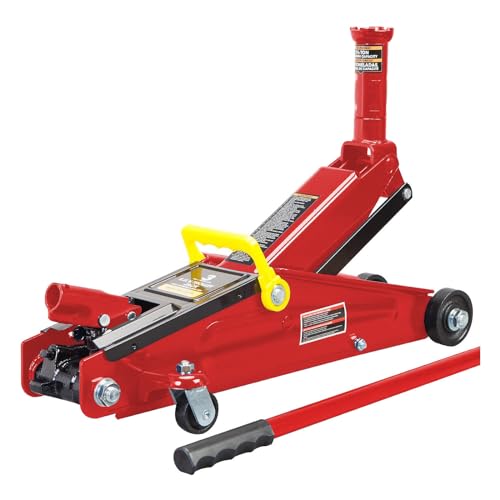 BIG RED T83006 3-Ton Floor Jack |
8.3/10 | Buy | |
 Winturbor 3-Ton Low-Profile Floor Jack |
8.1/10 | Buy |
LiftMaster 3-Ton High Lift Floor Jack
Engineered for taller vehicles, this 3-ton trolley jack delivers up to 21 inches of elevation for SUVs, pickups, and 4x4s. Its 35.8-pound frame offers a practical balance of lifting range and garage portability.
Pros
- High 21-inch lift reaches elevated SUV lifting points
- Solid 3-ton rating supports larger passenger vehicles
- Relatively lightweight frame simplifies transport around the garage
- Compact footprint stores easily in tight workshop spaces
Cons
- Narrower stance offers less base width than professional service jacks
- Nearly 36-pound weight still requires two-handed lifting
Jack Boss 3-Ton Hydraulic Floor Jack
Built for lifting trucks and SUVs, this Jack Boss 3-ton hydraulic floor jack features an extended neck design to access high-clearance vehicles easily. Full 360-degree swivel casters deliver smooth maneuverability for routine garage maintenance.
Pros
- Heavy-duty 6,000-pound capacity handles large vehicles reliably
- Extended neck eliminates the need for extra riser blocks
- Hydraulic system offers stable and controlled lifting action
- 360-degree casters allow effortless garage maneuverability
Cons
- Minimum 5-7/8-inch height cannot clear low-profile sports cars
- 17-1/4-inch maximum height may limit heavily lifted trucks
Jack Boss 3 Ton Fast Lift Steel Hydraulic Floor
The Jack Boss 3-ton fast lift hydraulic service jack delivers a 6,600-pound capacity with a working range of 5.15 to 18.3 inches. Built with heavy-duty steel and a precise universal joint release valve, it provides dependable lifting for garage maintenance, trucks, and SUVs.
Pros
- Robust 3-ton (6,600 lb) working load limit suitable for cars, SUVs, and light trucks
- Versatile 5.15-inch to 18.3-inch lifting range provides ample reach for brake and suspension service
- Universal joint release mechanism allows smooth, gradual descent control
- 360-degree rear swivel casters and rigid steel front wheels allow easy positioning under vehicle lift points
- Certified to meet ANSI/ASME PASE safety standards
Cons
- 5.15-inch collapsed height may not clear ultra-low ground clearance or lowered sports cars
- Heavier steel chassis footprint is best suited for garage floors rather than compact roadside storage
- Requires a smooth, firm concrete surface to roll and position safely without sinking
AV Steel 2-Ton Low Profile Floor Jack
Built for sedans and low-clearance sports cars, this hydraulic floor jack features a 3-3/8-inch minimum saddle height and a dual-piston pump for quick lifting. With a 2-ton capacity, it handles routine garage maintenance with ease, though it cannot accommodate taller trucks or SUVs.
Pros
- Low saddle height easily fits low-clearance vehicles
- Dual-piston pump enables rapid vehicle lifting
- Built-in safety overload protection valve
- Rear swivel wheels allow smooth garage repositioning
- Rotatable saddle enhances vehicle contact stability
Cons
- Not compatible with trucks, SUVs, or lifted vehicles
- Heavy steel construction weighs over 50 pounds
- Limited to a 2-ton maximum capacity
Jack Boss 3-Ton Low Profile Floor Jack
Built with a hybrid aluminum and steel frame, this 3-ton floor jack pairs a low 3-15/16-inch minimum clearance with a dual-piston rapid pump. It serves as a versatile lifting solution for low-slung sedans as well as standard SUVs and minivans.
Pros
- Low-profile 3-15/16-inch minimum lifting clearance
- Fast elevation with dual-piston hydraulic pump
- Hybrid aluminum and steel frame construction
- Protective rubber saddle shields vehicle chassis
- Meets rigorous ANSI/ASME PASE safety standards
Cons
- At 58.5 pounds, it remains relatively heavy to transport
- 18-5/16-inch max height may be limiting for lifted trucks
Jack Boss 4-Ton Low Profile Hydraulic Jack
Delivering an 8,800-pound rated lifting capacity with a 3.9-inch to 20-inch working range, the Jack Boss 4-Ton Low-Profile Hydraulic Jack utilizes a dual-piston pump to raise vehicles quickly. Its low starting clearance and wide stance make it well-suited for servicing passenger cars, SUVs, and light-duty pickup trucks in garage environments.
Pros
- Low 3.9-inch starting height easily slips beneath low vehicle lift points and dropped suspension perches
- Substantial 4-ton (8,800 lbs) rated capacity provides ample lifting strength for light trucks, SUVs, and passenger cars
- Dual-piston hydraulic pump speeds up unloaded lift reach compared to standard single-piston setups
- Wide stance and substantial frame deliver solid stability on smooth, level concrete garage floors
- Broad lifting range up to 20 inches helps clear extended suspension droop when changing tires
Cons
- Substantial dry weight of roughly 100 pounds makes mobile transport and roadside emergency carrying impractical
- Large 28-inch chassis footprint requires significant dedicated storage space in home garages or service bays
- Heavy frame is best suited for smooth concrete surfaces and may be difficult to maneuver on dirt or loose gravel
BIG RED T83006 3-Ton Floor Jack
Engineered for high-riding trucks and SUVs, the BIG RED T83006 delivers up to 20-7/8 inches of lift height with an extended saddle neck. Its 6,000-pound capacity and integrated overload bypass provide reliable lifting power for routine garage maintenance.
Pros
- Generous 20-7/8 inch maximum lift height
- Extended saddle neck reaches high truck frames quickly
- Built-in safety bypass valve prevents overloading
- Smooth 360-degree swivel casters ease garage positioning
Cons
- Minimum 5-7/8 inch height is tall for low-profile cars
- Single-piston pump requires more strokes than dual-piston models
Winturbor 3-Ton Low-Profile Floor Jack
Built for both low-slung sports cars and larger SUVs, this hydraulic jack slides under clearances as low as 3.35 inches while supporting up to 6,000 pounds. A dual-piston pump speeds up every lift, making it a dependable option for garage maintenance and roadside tire changes.
Pros
- Low 3.35-inch profile fits under lowered vehicles
- Rapid dual-piston hydraulic lifting mechanism
- Includes tubeless tire repair kit and rubber pads
- Built-in safety overload protection valve
Cons
- Heavier steel frame weighs nearly 52 pounds
- Large 25.6-inch footprint requires ample storage space
Evaluating Floor Jack Compatibility for High-Clearance Trucks and SUVs
Determining whether your existing service jack can handle a pickup truck or sport utility vehicle comes down to two primary specifications: rated lifting capacity and maximum lift height. A jack that lacks sufficient tonnage risks blowing internal hydraulic seals or triggering an internal overload bypass valve under heavy load. At the same time, a jack with plenty of tonnage capacity might still fail if its lift arm cannot reach high enough to lift the tires off the floor. Both factors must align with your vehicle specifications before attempting any elevation procedure.
Understanding Working Load Limits and Axle Weight Distribution
Automotive service jacks are rated by working load limit, typically measured in tons. A common misconception among home mechanics is that a floor jack must match or exceed the total curb weight of the entire vehicle. In practice, a hydraulic floor jack lifts only one corner or one axle at a time, meaning it generally supports between 50 percent and 60 percent of the vehicle gross weight during a two-wheel lift. For instance, a half-ton pickup truck weighing 5,500 pounds places approximately 3,300 pounds on the front axle, which falls well within the limits of a standard 2.5-ton or 3-ton hydraulic service jack.
Relying on a 2-ton jack for large pickups or heavy three-quarter-ton platforms leaves virtually no safety margin. Certain lightweight models, like the AV Steel Low Profile Floor Jack 2 Ton, explicitly carry manufacturer warnings stating they are designed for passenger cars and sports coupes rather than trucks, SUVs, or RVs. Operating near the absolute mechanical ceiling of a hydraulic cylinder causes accelerated seal wear and raises the risk of pressure creep. Selecting a service jack rated for 3 tons (6,000 pounds) or 4 tons (8,800 pounds) provides the necessary structural buffer for heavy-duty garage service.
Heavy battery packs in modern electric SUVs and diesel powertrains in heavy-duty pickups push curb weights far beyond traditional benchmarks. An electric crossover can easily weigh over 6,000 pounds, shifting unexpected axle loads onto the lifting saddle. Always consult the door jamb tire and loading placard to identify the gross axle weight rating (GAWR) for both the front and rear axles. Comparing that verified figure against your jack rating prevents overloading the hydraulic cylinder during routine service.
The Suspension Droop Factor: Overcoming High Wheel Travel
Suspension travel represents the single biggest obstacle when using a standard passenger car jack on a truck or SUV. Off-road suspensions, independent front setups, and solid rear axles feature generous droop travel designed to keep tires planted across uneven terrain. When the hydraulic saddle engages the vehicle frame rail and begins pushing upward, the vehicle chassis rises several inches before the coil springs or leaf packs fully extend. During this initial upward movement, the tires remain firmly seated on the garage floor while the jack consumes a substantial portion of its total stroke.
A passenger car floor jack with a maximum reach of 14 to 16 inches will often top out completely before the truck tire breaks contact with the concrete slab. This leaves the suspension fully extended with zero clearance to remove a flat tire or slide a secondary support stand into position. Attempting to compensate by stacking wooden blocks or makeshift shims on top of the saddle creates a severe tipping hazard. A dedicated truck jack must offer extended vertical travel to overcome long suspension travel while maintaining vertical stability.
Understanding your suspension geometry determines the best contact point. Lifting directly beneath a solid rear axle tube requires far less stroke because the axle housing raises the tire immediately without unloading the suspension springs. Lifting from a central front crossmember or perimeter frame rail, however, unloads the entire suspension assembly and demands maximum lift stroke. Reviewing determining required vehicle lift clearance provides useful perspective on how chassis height dictates the elevation range necessary for maintenance.
Maximum Lift Height Thresholds for Full-Size Rigs
To service modern sport utility vehicles and light pickups without clearance headaches, a hydraulic jack should offer a maximum lifting height of at least 18 to 21 inches. Compact garage jacks designed for sedans frequently stop short at 15 to 17 inches, which is insufficient for tall tire sidewalls. Models engineered specifically for high-clearance platforms, such as the Liftmaster 3 Ton SUV High Lift Floor Trolley Jack and the BIG RED Hydraulic Trolley Service Floor Jack, provide maximum lift heights reaching 20-7/8 to 21 inches. That extra vertical range ensures the wheels clear the ground with room to spare.
Some service jacks incorporate an extended saddle neck or high-lift extension to bridge the vertical gap between the ground and the truck frame. The Jack Boss 3 Ton Hydraulic Floor Jack uses an elongated neck design that acts as an integrated extension, allowing the saddle to contact elevated frame rails earlier in the stroke cycle. This design preserves the full hydraulic stroke for actual wheel elevation rather than wasting pump cycles simply reaching the contact point. Without adequate maximum height, completing brake pad replacements or tire rotations becomes nearly impossible.
Lift height must always be balanced against collapsed saddle height. If your garage houses both a lowered passenger sedan and a full-size SUV, a versatile unit must fit under low rocker panels while still extending high enough for off-road chassis rails. Low-profile high-lift jacks, such as the Jack Boss 4 Ton Floor Jack Hydraulic Low Profile, feature a low collapsed profile of roughly 3.9 inches paired with an upper extension reaching 20 inches. This wide operational window allows a single service jack to handle diverse garage duties safely.
Chassis Reach and Underbody Clearance Considerations
Trucks and large SUVs possess long front overhangs, deep engine crossmembers, and bulky differential housings that are set far back from the bumper fascia. A short-wheelbase trolley jack often cannot reach central lifting points beneath the engine cradle without the pump handle striking the front bumper or aerodynamic valence. Long-reach chassis geometry provides the forward clearance needed to position the saddle securely beneath deep structural subframes. This allows the user to operate the pump handle through its full arc without damaging painted body panels.
Accessing rear differential housings on solid-axle pickups requires similar reach. While differential pumpkins provide a convenient central jacking point on many light trucks, rolling a short jack into position can force the handle beneath the spare tire hoist or rear bumper. A longer steel chassis ensures the rear casters remain accessible and stable during alignment. Wide-stance front rollers also distribute the dynamic vehicle mass across a broader surface, preventing the jack frame from twisting or deflecting under offset axle loads.
Ground clearance under the vehicle body also affects where you can place mechanical stands. Attempting lifting one side of a vehicle safely requires careful attention to lateral weight shifts and chassis balance. When a floor jack raises one side of a tall frame rail, the vehicle tilts, placing angled lateral force on the jack saddle. A heavy-duty service jack with a wide chassis stance tracks smoothly on its casters as the vehicle pivots, preventing dangerous side-loading against the lifting arm.
Saddle Diameter, Frame Rail Contact, and Vehicle Protection
The physical interface between your hydraulic jack and the vehicle underbody is the lifting saddle. Passenger cars commonly utilize reinforced sheet metal pinch welds along the rocker panels, which require slotted saddles or grooved rubber adapters to prevent crimping. Light trucks, in contrast, feature boxed steel ladder frames or solid steel axle tubes capable of supporting concentrated point loads. A standard car jack equipped with a narrow, smooth metal saddle can easily slip off a painted truck frame rail under load.
A capable truck jack should feature a broad saddle diameter, typically 4 inches or wider, equipped with raised perimeter traction lugs. The Jack Boss Floor Jack 3 Ton Fast Lift utilizes a robust 4-inch diameter saddle that seats securely against wide truck frame sections. Adding a dense vulcanized rubber pad cushions the contact point, prevents gouging the vehicle protective undercoating, and increases frictional resistance against slippage. Exposed bare metal saddles sliding along smooth, wax-coated truck frames create unnecessary hazard.
Modern crossover SUVs blur the line between unibody construction and off-road chassis design. Many modern crossovers utilize reinforced pinch welds beneath plastic rocker moldings rather than exposed steel frame rails. Placing a heavy-duty truck saddle with aggressive metal teeth directly against a unibody pinch weld will crush the sheet metal flange and damage the rocker trim. Using a rubber-padded saddle or a dedicated pinch weld adapter protects thin rocker seams while still delivering the necessary lifting force.
Hydraulic Pump Mechanics and Controlled Release Control
Pumping efficiency directly impacts user safety and operational control when raising heavy vehicles. Single-piston hydraulic mechanisms require dozens of handle strokes just to bridge the gap between the floor and an elevated truck frame. Dual-piston rapid-pump systems, found on models like the Jack Boss 3 Ton Low Profile and the winturbor 3 Ton Low Profile Floor Jack, utilize two separate pump plungers to move larger volumes of hydraulic fluid per stroke. This rapidly raises the lift arm to the chassis contact point in just a few pumps, saving significant physical effort.
Once contact is established, the hydraulic system shifts focus from displacement speed to mechanical leverage. Raising thousands of pounds of truck axle weight requires smooth, consistent pressure without handle kickback or fluid aeration. Built-in overload protection valves automatically prevent the jack from lifting loads beyond its rated capacity, protecting internal seals from catastrophic rupture. If a floor jack handle feels spongy or fails to lift under heavy load, air bubbles may be trapped inside the hydraulic fluid, requiring a standard system purge.
Lowering a raised truck requires exceptional metering control to prevent sudden vehicle drops. Quality service jacks utilize a universal joint (U-joint) gear release mechanism connected to the pump handle. Unlike basic friction-pin release valves that can open abruptly, a gear-driven universal joint allows micro-metered rotation. This provides smooth, progressive fluid release, letting the operator lower a heavy truck chassis onto mechanical support stands with absolute precision.
Frame Construction: Steel Durability Versus Hybrid Portability
Floor jacks are constructed from heavy-duty carbon steel, aircraft-grade aluminum, or hybrid combinations of both metals. All-steel service jacks deliver maximum structural rigidity, lateral strength, and resistance to frame twisting under off-center loads. Their substantial mass makes them ideal for stationary garage environments where the jack rolls smoothly across finished concrete slabs. Steel construction easily withstands the rigorous demands of lifting heavy pickup trucks and full-size sport utility vehicles week after week.
The primary drawback of an all-steel truck jack is physical weight, with heavy-duty 3-ton and 4-ton units often weighing between 70 and 100 pounds. Maneuvering an all-steel unit across rough driveways or lifting it into a truck bed requires substantial effort. Hybrid designs, such as the Jack Boss 3 Ton Low Profile Aluminum and Steel Racing Floor Jack, combine a thick aluminum body with welded steel lift arms and reinforced side plates. This hybrid approach significantly reduces overall tool weight while preserving structural rigidity at high-stress pivot points.
Pure aluminum racing jacks excel at portable track duty and mobile service, but buyers must verify their structural ratings before tackling large vehicles. An aluminum jack used on a full-size truck must carry appropriate working load limit ratings and comply with ANSI/ASME PASE safety standards. For standard residential garages where the jack remains parked beneath a workbench, heavy-gauge welded steel provides the ultimate long-term durability and deflection resistance for heavy automotive platforms.
Non-Negotiable Safety Protocols and Stand Transfer Procedures
A hydraulic floor jack is exclusively a lifting device, never a static load-holding support. Hydraulic pressure relies on rubber O-rings and internal check valves that can weep or fail unexpectedly under continuous static load. Never place any part of your body beneath an elevated truck supported solely by a hydraulic jack. Before starting any tire change, brake service, or underbody inspection, the dynamic vehicle weight must be fully transferred onto properly rated mechanical jack stands.
Prior to lifting, park the vehicle on a flat, level concrete surface and engage the parking brake. Place heavy-duty wheel chocks securely on both sides of the tires remaining in contact with the ground to prevent rolling. Center the jack saddle squarely beneath a factory-approved structural lift point, such as a reinforced frame rail or solid axle tube. Raise the vehicle smoothly until the tires clear the ground and there is adequate height to position your mechanical stands beneath reinforced chassis points.
Slowly twist the jack handle counterclockwise to lower the chassis until it rests securely on the jack stand saddles. Keep the hydraulic jack saddle lightly engaged just beneath the lift point as an added mechanical backup without carrying static weight. Give the vehicle bumper a firm, cautious push to verify total stability before reaching under the chassis. Verifying your floor jack tonnage, maximum stroke height, and structural condition ensures your lifting gear is genuinely suited for truck and SUV service.
About the author
Larry Carley is an experienced automotive technical writer and editor with more than four decades of work covering vehicle diagnostics, repair procedures, and automotive technology. His extensive technical writing helps readers understand mechanical systems, maintenance decisions, and the importance of accurate information when working on vehicles.