
Can the Bolt for My Floor Jack Handle Be Accidentally Thrown Away: Practical Guide for 2026
See if can the bolt for my floor jack handle be accidentally thrown away during unboxing and how to replace missing jack hardware safely in November 2026.
 By Hank O'Hop
Updated October 25, 2026


Unpacking a brand-new hydraulic service jack often creates a messy workspace filled with cardboard scraps, zip ties, and protective foam blocks. During this busy unpacking process, many garage mechanics wonder if can the bolt for my floor jack handle be accidentally thrown away without realizing its critical role in tool assembly. This small piece of hardware frequently arrives threaded loosely into the base yoke or tucked inside a clear plastic bag that resembles packing trash. Discarding this essential retaining screw leaves the handle collar unstable, creating dangerous movement whenever you attempt to position the saddle under a vehicle lifting point.
Operating hydraulic shop equipment demands reliable mechanical connections to maintain full control over vehicle elevation and descent. If your handle retainer goes missing, the pump lever can slide out unexpectedly during rapid strokes or fail to engage the internal release valve gear. Reliable workshop safety always requires pairing proper lifting tools with dedicated garage support equipment rather than trusting hydraulic pressure alone. Understanding how this fastener functions helps you quickly identify factory hardware, locate suitable replacements, and prevent dangerous handling mishaps in your home garage.
| Award | Product | BJL Score About BJL ScoreThe BJL Score is our own rating from 0 to 10, based on performance, design and build, ease of use, and value. It reflects independent research and is never influenced by manufacturers, retailers, or affiliate commissions. Learn more › | |
|---|---|---|---|
| Best Overall |
GAOLAOSY Floor Jack Handle Bolts (2-Pack)
|
9.2/10 | Buy |
| Best Value |
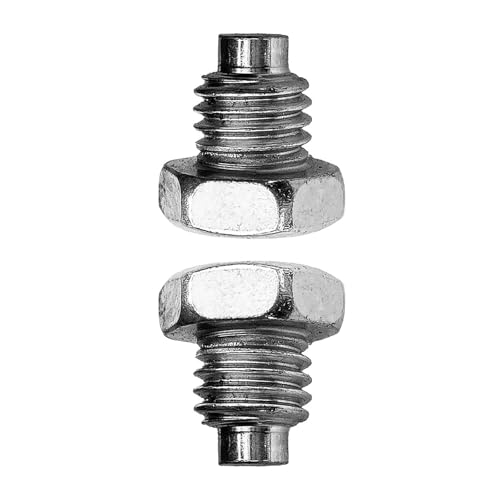 CouTunp 12x1.75 Floor Jack Handle Bolts (2-Pack) |
9.1/10 | Buy |
| Best Premium |
 smilfuy 4-Pack Floor Jack Handle Bolts |
8.9/10 | Buy |
| Best Budget |
 Pxobiug Floor Jack Handle Bolts (2-Pack) |
8.4/10 | Buy |
 smilfuy 3-Ton/4-Ton Jack Handle Bolts, 2-Pack |
8.4/10 | Buy | |
 YoRise 14.76-Inch Replacement Hydraulic Jack |
8.3/10 | Buy | |
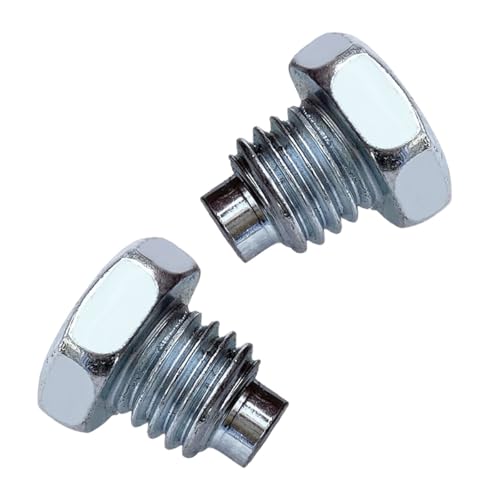 QEUOBUE Floor Jack Handle Bolts (2-Pack) |
7.8/10 | Buy |
GAOLAOSY Floor Jack Handle Bolts (2-Pack)
Machined from alloy steel, these replacement bolts provide a rigid, rust-resistant connection between the handle and horizontal floor jacks. They serve as a practical hardware fix for home mechanics and shop owners maintaining 3-ton or 4-ton lifting equipment.
Pros
- Durable alloy steel resists corrosion and rust
- Precise threads ensure a snug, wobble-free fit
- Compatible with standard 3-ton and 4-ton floor jacks
- Includes two bolts for an immediate spare
Cons
- Incompatible with vertical or bottle-style hydraulic jacks
- Specific 0.76-inch size may not fit non-standard threads
CouTunp 12x1.75 Floor Jack Handle Bolts (2-Pack)
CouTunp provides a pair of replacement 12 x 1.75 fixing bolts designed to secure the pressure rod on horizontal floor jacks. Built from treated rust-resistant metal, they offer an easy direct swap for stripped or lost hardware on compatible 3-ton and 4-ton hydraulic units.
Pros
- Exact 12 x 1.75 thread specification
- Rust and corrosion resistant metal treatment
- Quick and direct hardware replacement
- Pack includes two matching bolts
Cons
- Restricted to 12 x 1.75 thread pitch requirements
- Designed only for compatible horizontal jack configurations
smilfuy 4-Pack Floor Jack Handle Bolts
Designed as direct replacements for 3- and 4-ton horizontal hydraulic jacks, these smilfuy alloy steel handle bolts restore secure operation to loose handles. The four-piece pack provides corrosion-resistant spares for routine automotive maintenance.
Pros
- Durable alloy steel construction
- Precision threading provides a tight hold
- Corrosion-resistant for shop environments
- Four-pack includes convenient extra spares
Cons
- Only fits horizontal hydraulic jacks
- Replacement hardware only, no tools included
Pxobiug Floor Jack Handle Bolts (2-Pack)
Designed as direct replacements for 3-ton and 4-ton horizontal hydraulic jacks, these steel bolts securely fasten the pressure rod to prevent handle slippage. Their compact, corrosion-resistant build makes them a practical fix for routine garage maintenance.
Pros
- Durable high-strength steel construction
- Corrosion-resistant coating protects against wear
- Easy installation with a hex wrench
- Convenient two-pack provides a spare bolt
Cons
- Designed only for 3-ton and 4-ton horizontal jacks
- Requires a separate hex wrench for installation
- Specific 0.46-inch thread size limits universal compatibility
smilfuy 3-Ton/4-Ton Jack Handle Bolts, 2-Pack
These smilfuy replacement handle bolts restore secure operation to compatible 3-ton and 4-ton horizontal hydraulic jacks. Crafted from corrosion-resistant alloy steel, they provide a reliable, threaded anchor for routine vehicle maintenance.
Pros
- Corrosion-resistant alloy steel construction
- Precision threads deliver a secure fit
- Wide compatibility with 3-ton and 4-ton horizontal jacks
- Two-pack provides an immediate spare bolt
Cons
- Only designed for horizontal hydraulic jack styles
- Incompatible with jacks outside 3-to-4-ton ratings
YoRise 14.76-Inch Replacement Hydraulic Jack
The YoRise 14.76-inch replacement jack handle is a lightweight metal lever bar designed to operate compatible 2-3 ton horizontal hydraulic jacks. Featuring a textured anti-slip rubber grip and a compact 0.57-pound profile, it serves as a straightforward replacement for lost or damaged factory pumping poles in automotive trunk or garage kits.
Pros
- Compact 14.76-inch length stows easily behind truck seats, inside spare tire wells, or in portable toolboxes.
- Textured rubberized grip prevents hand slippage when pumping with oily or wet gloves.
- Lightweight 0.57-pound metal build resists bending under standard 2-3 ton lifting leverage.
- High-visibility red finish makes it easy to locate in dim roadside conditions or cluttered shops.
Cons
- Short 14.76-inch length provides limited mechanical leverage compared to longer multi-piece commercial jack poles.
- Socket receiver diameter is not explicitly listed, requiring buyers to verify their specific jack handle sleeve dimensions prior to purchase.
- Intended strictly for compatible 2-3 ton horizontal hydraulic jacks and will not fit larger high-tonnage commercial jacks or bottle jacks with distinct socket linkages.
QEUOBUE Floor Jack Handle Bolts (2-Pack)
Crafted from high-strength alloy steel, these replacement bolts secure the pressure rod handle on most 3 to 4 ton hydraulic floor jacks. They offer a straightforward fix for DIY mechanics and shop owners needing to restore a stable grip on their lifting equipment.
Pros
- Durable alloy steel resists impact and rust
- Precision threading prevents loosening during lifts
- Easy manual installation and removal
- Convenient two-piece package
Cons
- Designed primarily for 3 to 4 ton jacks
- Small size makes parts easy to misplace
Everything You Need to Know About Floor Jack Handle Bolts
Losing the small retaining screw that anchors your floor jack handle happens far more often than most car owners realize. A brand-new hydraulic horizontal floor jack arrives packed in layers of heavy cardboard, molded styrofoam, and loose accessory bags. In the rush to assemble the heavy lifting arm and inspect the hydraulic pump, mechanics frequently mistake the handle retaining screw for disposable transit packaging. Discarding this fastener creates significant operational problems, but understanding its mechanical role makes finding a reliable replacement straightforward.
Why Floor Jack Handle Retaining Bolts Get Thrown Away
Packaging layouts used by automotive tool manufacturers are the most common cause of accidental bolt disposal. Heavy hydraulic trolley jacks arrive nestled between protective foam inserts, while small hardware components are sealed in clear plastic bags taped beneath packing cardboard. DIY mechanics focused on maneuvering a seventy-pound steel chassis out of the carton often overlook these transparent pouches. When the packaging materials are thrown into the recycling bin, the essential handle retaining bolt disappears with the scrap.
Visual similarity between functional hardware and temporary shipping restraints also leads to mistaken disposal. Factory packaging frequently includes zip ties, plastic collar plugs, and disposable transit brackets designed solely to protect hydraulic components during overseas freight. Garage owners unboxing their equipment sometimes categorize the handle socket bolt as another temporary shipping clip meant for the trash. Once the handle slides into the yoke collar without immediate resistance, the user assumes the tool is fully assembled, leaving the bolt in the discard pile.
Mobile tool transport between job sites and home garages creates another frequent path to accidental hardware loss. Carrying a service jack in a pickup truck bed or trunk subjects the handle collar to continuous road vibration. If the pressure rod retaining screw is not tightened securely against the handle tube, the fastener gradually backs out of its tapped hole. The loose bolt falls into truck bed debris, floor clutter, or driveway gravel, where it gets swept up and thrown away during shop cleanups.
The Mechanical Role of the Handle Socket Retaining Bolt
The handle retaining bolt serves as the primary mechanical anchor between the operating lever and the pivoting base yoke. Inserting a tubular steel handle into the jack base slides the lower shaft directly into a cylindrical receiver collar. The bolt threads through the collar wall, exerting clamping force against a recessed notch, detent hole, or flat groove on the lower handle tube. This solid mechanical interlock prevents the handle from sliding upward or rotating out of position during intense pumping cycles.
Pumping strokes generate immense upward, forward, and lateral leverage across the handle socket assembly. Dual-piston rapid-pump systems and single-piston hydraulic mechanisms require consistent downward force to depress the hydraulic plungers smoothly. Without a secured retaining screw, the handle tube wobbles inside the receiver sleeve, introducing mechanical play that dissipates your physical pumping effort. This unwanted slop reduces fluid displacement per stroke, forcing you to pump repeatedly to achieve the desired saddle height.
Horizontal floor jacks route release valve control directly through the handle shaft to regulate hydraulic lowering. Rotating the knurled upper handle turns the internal pressure rod and gear drive assembly, opening the hydraulic release valve at the base of the pump block. If the retaining fastener is missing, the handle tube can disengage from the release drive mechanism entirely. This disengagement leaves you unable to control hydraulic fluid return, preventing you from safely lowering an elevated vehicle back to the floor.
Operational Hazards of Jacking Without a Handle Bolt
Attempting to elevate a motor vehicle without a secured handle bolt introduces immediate physical hazards for the operator. Pumping up a multi-ton vehicle requires firm downward physical pressure against the operating lever. If the handle tube suddenly pulls free from the receiver collar during a downstroke, the user can lose balance and fall across the vehicle fender or garage floor. Sudden loss of mechanical resistance during heavy lifting frequently leads to severe wrist strain or facial impact.
Uncontrolled vehicle descent represents an even more dangerous consequence of operating with an unfastened handle. Lowering an automobile requires progressive, micro-metered rotation of the universal joint release valve to bleed hydraulic pressure gradually. When an unanchored handle shifts out of alignment with the release valve drive pin, the operator cannot meter fluid bypass accurately. This lack of control can cause the valve to snap open, causing the elevated vehicle to drop abruptly onto suspension components.
Operating with a loose handle also inflicts progressive structural damage on the hydraulic pump casting and yoke bushings. Lateral play allows the lower handle shaft to strike the receiver walls at improper angles, concentrating load unevenly across the pump plunger rollers. Over repeated shop cycles, this skewed pressure can bend the pump pistons, deform the pivot pins, and tear internal rubber scraper seals. Investing in replacement retaining hardware prevents premature equipment wear and protects your garage investment.
Identifying Thread Pitch and Sizing for 3-Ton and 4-Ton Jacks
Finding the correct replacement fastener requires understanding the standard metric dimensions used across modern horizontal floor jacks. Most commercial 3-ton and 4-ton hydraulic service jacks utilize an M12 thread diameter with a standard 1.75 mm thread pitch. Product specifications for hardware such as CouTunp 2PCS Car Floor Jack Handle Bolts confirm this 12 x 1.75 metric profile, which aligns with common hydraulic horizontal jacks.
Overall fastener length typically spans between 0.70 and 0.80 inches to ensure complete thread engagement without bottoming out prematurely. Dimensions measuring approximately 0.76 inches in length, as documented on Pxobiug and GAOLAOSY replacement bolts, provide optimal thread purchase within the cast yoke wall. A thread diameter of 0.46 inches aligns with standard M12 specifications, providing sufficient cross-sectional area to withstand high shear forces. Selecting a bolt with the proper thread length guarantees that clamping force concentrates directly against the handle tube.
Verifying your jack socket dimensions with a simple thread pitch gauge or digital caliper avoids purchasing mismatched hardware. Measuring the internal diameter of the threaded yoke hole confirms whether the collar accepts a standard 12 mm shank. When evaluating vehicle elevation for maintenance, reviewing single-side vehicle lifting safety reinforces why solid, level support on all contact points is vital. Never force an imperial half-inch fastener into a metric M12 threaded collar, as mismatched threads quickly ruin the cast handle yoke.
Material Hardness and Structural Integrity for Replacement Fasteners
Selecting replacement hardware manufactured from high-strength alloy steel is essential for safe long-term operation. Floor jack handle bolts endure repetitive cyclic shock, vibrational stress, and heavy lateral shear loads whenever the lever raises heavy vehicle axles. Replacement options such as smilfuy and QEUOBUE handle screws utilize high-strength alloy steel specifically engineered to resist bending under substantial mechanical pressure. Premium alloy materials maintain structural shape without deforming, ensuring consistent clamping force across years of regular garage service.
Standard hardware store fasteners constructed from untreated mild steel often lack the necessary tensile strength for lifting applications. A soft grade-two bolt can bend inside the socket collar when subjected to heavy pumping leverage, wedging the handle permanently inside the sleeve. Under severe shock loading, an inferior fastener can shear off flush with the cast collar surface. Extracting a sheared bolt from a threaded blind hole requires precision drilling and screw extractors, creating unnecessary workshop downtime.
Surface finishes on replacement bolts provide crucial protection against corrosive automotive fluids and ambient moisture. Quality fasteners feature durable black oxide coatings, zinc plating, or specialized anti-rust treatments to prevent oxidization inside the tapped collar threads. Untreated hardware quickly develops surface rust from damp garage floors, making future handle removal difficult during maintenance. Corrosion-resistant coatings ensure that hex wrenches engage cleanly and that screws turn smoothly whenever handle disassembly is required.
Replacing Fasteners Versus Installing a Complete Handle Assembly
Determining whether to replace only the retaining bolt or install a complete handle assembly depends on the condition of your existing lever tube. If the original screw simply worked loose and fell out without damaging the handle socket, ordering a two-pack or four-pack of replacement bolts solves the problem efficiently. Multi-pack options from brands like smilfuy and GAOLAOSY supply practical spares that can be stored securely inside your automotive toolbox. Having backup screws ready ensures you are never caught unprepared during mobile repairs or track day events.
Extended operation with a loose or missing retaining bolt frequently damages the lower tubular shaft beyond safe reuse. Pumping a loose handle causes the steel tube to slam violently against the socket collar, creating deep gouges, flat spots, or wall ovalization. Burrs and distorted tubing prevent replacement bolts from seating flush against the inner shaft walls, resulting in persistent handle wobble. If visual inspection reveals cracked tubing or severe wall deformation, replacing only the fastener is no longer a safe option.
Upgrading to a complete replacement handle restores full mechanical stability and improves operator leverage during heavy lifting. Products such as the YoRise Horizontal Hydraulic Jack Handle provide a 14.76-inch heavy-duty metal lever designed for 2-ton and 3-ton horizontal jacks. This replacement assembly includes an integrated rubber anti-slip grip with vertical surface stripes to maximize hand traction even when working with oily hands. A fresh lever guarantees clean alignment with new retaining hardware and ensures smooth operation of the internal release valve mechanism.
Step-by-Step Installation and Fastener Retention Techniques
Proper installation of a replacement floor jack handle bolt begins with thorough cleaning of the threaded socket collar. Spray aerosol brake cleaner or solvent into the threaded hole to flush out accumulated road dirt, metal shavings, and dried grease. Use a clean lint-free shop towel or nylon brush to clear the internal threads, ensuring that the new fastener can screw in smoothly without binding. Inspect the lower end of the handle tube to confirm that the locking groove or hole is clean and free of burrs.
Slide the handle tube fully into the receiver sleeve until it seats firmly against the internal base stop. Look through the threaded collar hole to verify that the retaining notch on the handle shaft aligns directly with the bolt pathway. Thread the replacement bolt into the hole clockwise by hand, feeling for smooth thread engagement to avoid accidental cross-threading. Once the fastener is hand-tight against the inner tube, use a hex wrench to tighten the bolt securely until the handle shows zero rotational play.
Applying a few drops of medium-strength blue thread-locking compound to the fastener threads prevents accidental loss from road vibration. Blue threadlocker cures within the thread gaps to resist loosening during mobile transport while still allowing removal using standard hand tools when needed. Avoid high-strength red thread-locking formulas, as red compounds require intense heat application that can damage handle rubber grips and internal hydraulic seals. Checking fastener tightness as part of your routine pre-lift inspection ensures that your handle remains firmly anchored before every garage project.
Safe Vehicle Elevation and Weight Management Protocols
A hydraulic floor jack is strictly an elevating mechanism and must never be relied upon as a static load-holding device. Hydraulic systems depend entirely on fluid pressure contained behind nitrile rubber O-rings, internal check valves, and polished steel cylinder walls. Mechanical seals can experience gradual pressure bleed-down or sudden seal failure under heavy automotive loads. Every vehicle lifting procedure must conclude with transferring the vehicle weight onto properly rated mechanical jack stands before any inspection or repair work begins.
Always position your floor jack on a clean, level, solid concrete surface to provide a rigid foundation for safe lifting. Soft asphalt, loose gravel, or uneven driveways can cause the jack wheels to sink, tilting the frame and shifting the load off the saddle center. Place heavy-duty rubber wheel chocks firmly against both sides of the tires remaining in contact with the ground to prevent vehicle roll-away accidents. Verify that the vehicle transmission is set to park or reverse gear and that the parking brake is fully engaged before positioning the saddle.
Position the jack saddle exclusively beneath reinforced factory lift points such as unibody pinch welds, boxed frame rails, or solid suspension crossmembers. Placing a bare metal saddle directly against thin floor pans or rocker panel sheet metal will crush bodywork and cause costly structural damage. Confirming that your handle retaining bolt is tight and functional allows you to micro-meter the release valve smoothly when lowering vehicle weight onto secondary stands. Maintaining your equipment hardware and following non-negotiable safety rules ensures that every home garage project proceeds safely and smoothly.
About the author
Hank O'Hop writes about automotive tools, hands-on repairs, and the challenges of maintaining and improving project cars. His published work covers workshop equipment, engine hoists, power tools, and garage upgrades, offering practical insights for readers who prefer to understand their equipment before putting it to work.