
Do You Need Jack Stands Why You Should Never Trust a Floor Jack Alone: A Practical Safety Guide for 2026
Do You Need Jack Stands Why You Should Never Trust A Floor Jack Alone explained for November 2026. Learn why hydraulic lift tools require mechanical support before vehicle repair.
 By Larry Carley
Updated October 25, 2026

Elevating a vehicle on a concrete garage slab requires absolute respect for mechanical physics and fluid dynamics. When you prepare for underbody maintenance, tire rotations, or brake pad servicing, determining do you need jack stands why you should never trust a floor jack alone is the single most critical safety distinction you can make. A hydraulic trolley jack generates immense upward force through pressurized oil, yet it remains an active mechanical pump rather than a static load-bearing foundation. Understanding that hydraulic pressure fluctuates under load reinforces why relying entirely on a floor jack creates an unacceptable hazard during DIY automotive repair.
Many home mechanics consider comparing ramps to jack stands when evaluating garage equipment, but service jacks remain the primary tool for lifting specific axles. Hydraulic floor jacks rely on internal rubber O-rings, check balls, and bypass valves that can leak down or drop unexpectedly due to sudden seal degradation. Pairing your lifting setup with dedicated mechanical supports guarantees a fixed physical lock against catastrophic failure. By establishing safe lifting protocols, you protect your vehicle frame rails and safeguard your personal safety every time you slide beneath the chassis.
| Award | Product | BJL Score About BJL ScoreThe BJL Score is our own rating from 0 to 10, based on performance, design and build, ease of use, and value. It reflects independent research and is never influenced by manufacturers, retailers, or affiliate commissions. Learn more › | |
|---|---|---|---|
| Best Overall |
JACK BOSS 3 Ton Aluminum Jack Stands
|
9.1/10 | Buy |
| Best Value |
 Jack Boss 2-Ton Low-Profile Ratchet Jack Stands |
8.6/10 | Buy |
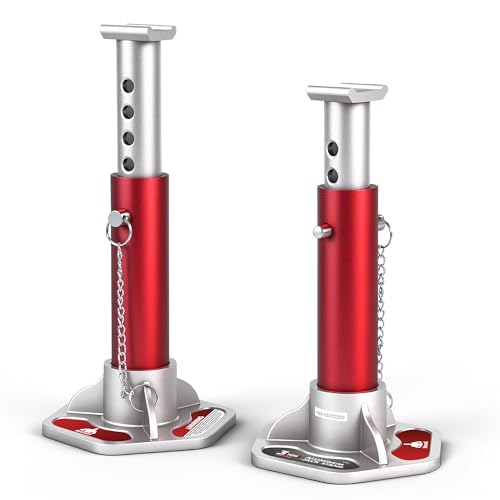
JACK BOSS 3 Ton Aluminum Jack Stands
The JACK BOSS 3-Ton Aluminum Jack Stands provide a combined 6,000-lb static load capacity per pair, utilizing positive-locking support pins for secure vehicle support. Weighing roughly 10.3 pounds for the pair, these lightweight aluminum stands are well suited for DIY garage mechanics and track hobbyists who prioritize easy portability.
Pros
- Lightweight aluminum build weighs approximately 10.3 lbs per pair, making them far easier to carry than standard stamped-steel stands
- Captive locking pin mechanism provides positive, visual mechanical engagement through the center column
- Broad base profile offers a stable platform when placed squarely on level concrete garage floors
- Dual-tone red and silver finish resists garage moisture and workshop fluid exposure
Cons
- Combined 6,000-lb rating applies per pair, meaning each individual stand has a 3,000-lb limit and cannot support heavy commercial or full-size trucks
- Pin-style adjustment requires manual hole alignment, which takes slightly longer to set than quick-ratcheting ductile iron bars
- Bare aluminum saddle contact surfaces may mark or bend thin unibody pinch welds if used without protective rubber adapters
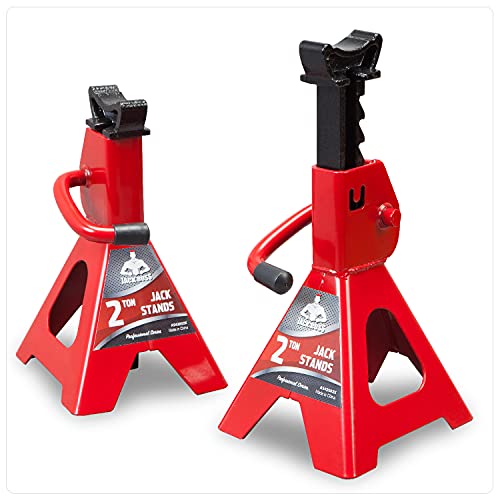
Jack Boss 2-Ton Low-Profile Ratchet Jack Stands
Designed for compact cars and small unibody vehicles, these Jack Boss low-profile jack stands combine a welded mild steel pyramid base with a ductile iron sawtooth ratchet bar spanning a 9.8-inch to 15-inch height range. They provide a lightweight, compact footprint for DIY garage maintenance, though the manufacturer explicitly advises against using them on trucks, large SUVs, or vehicles requiring over 15 inches of chassis clearance.
Pros
- Low 9.8-inch collapsed height fits easily under small passenger cars and lower unibody lift points
- Ductile iron sawtooth ratchet bar allows fast, tool-free height selection and positive pawl engagement
- Lightweight 10.5-pound overall build makes carrying, positioning, and garage storage simple
- Fully welded mild steel frame with protective powder coating guards against rust and shop grime
Cons
- Maximum 15-inch reach is too short for pickup trucks, full-size SUVs, or lifted off-road vehicles
- Single-pawl ratchet design lacks a secondary captive locking pin or redundant safety stop
- Steel concave saddle does not include rubber protection, which may mar painted unibody pinch welds without an aftermarket pad
Essential Engineering Breakdown: Why Hydraulic Jacks Require Mechanical Stands
Working beneath a raised automobile introduces severe mechanical hazards if the vehicle rests solely on a hydraulic lifting mechanism. The straightforward answer to whether you need jack stands is an unconditional yes. A hydraulic floor jack operates as a lifting device engineered to elevate an axle or corner temporarily, whereas jack stands serve as mechanical holding devices designed to support static weight securely. Placing any portion of your body under a vehicle supported only by a hydraulic jack violates fundamental automotive safety guidelines and invites catastrophic structural risks.
The Fundamental Physics of Hydraulic Pressure Versus Mechanical Locks
Hydraulic floor jacks rely directly on Pascal’s law to multiply human effort into thousands of pounds of upward lifting force. When you pump the jack handle, a small displacement piston drives hydraulic fluid through internal check valves into a larger ram cylinder, forcing the lift arm upward. This entire elevation depends upon maintaining continuous hydrostatic pressure against internal rubber seals and finely machined steel check balls. If that pressurized fluid escapes or bypasses a seal by even a fraction of a cubic centimeter, the mechanical arm immediately begins to descend.
Mechanical jack stands eliminate reliance on trapped fluid by substituting solid physical barriers beneath the chassis. Whether utilizing a cast ductile iron ratchet bar or high-strength aluminum tubes with steel locking pins, jack stands transfer the vehicle weight directly through metal columns to a broad base. Solid steel and aluminum components do not experience sudden pressure loss, internal fluid cavitation, or thermal shrinkage while you work. When vehicle weight rests on mechanical stands, gravity pushes against hardened metal that cannot bleed down without physical structural destruction.
Critical Hydraulic Failure Modes You Cannot Predict
Internal hydraulic seal failure represents the most common reason a floor jack suddenly drops without advance warning. Hydraulic rams contain flexible nitrile rubber O-rings, polyurethane backup rings, and cup seals that degrade over time through age, contamination, and thermal cycling. A seal can experience micro-tears or blow out completely under heavy load, allowing pressurized fluid to rush back into the low-pressure reservoir instantly. When an internal bypass failure occurs, the jack saddle drops silently and rapidly without giving you any auditory warning or visible external fluid puddle.
External mechanical disruptions present another frequent cause of unexpected hydraulic collapse in home garages. Service jacks feature release valves controlled by twisting the handle or opening a geared universal joint, which releases pressurized fluid back to the reservoir. A dropped tool, an accidental kick of the handle, or a curious pet brushing against an unsecured jack can crack the release valve open. Internal check balls within the hydraulic manifold can also fail to seat properly if tiny metal shavings or contaminated debris lodge against the brass seat, triggering rapid ram descent.
Ratchet Bar Mechanics Versus Pin-Lock Aluminum Engineering
Mechanical support equipment generally falls into two distinct design categories: cast ratchet bar designs and pin-lock support towers. Models such as the Jack Boss Jack Stands Low Profile 2 Ton(4000 LBs) utilize a welded mild steel pyramid frame paired with a multi-position ductile iron ratchet bar. The ductile iron bar features angled sawtooth notches that engage a spring-loaded mechanical locking pawl inside the collar. As weight bears down on the saddle, the downward force drives the pawl deeper into the ratchet tooth, creating a self-locking mechanical wedge that cannot disengage while loaded.
In contrast, lightweight options such as the JACK BOSS 3 Ton (6000 lbs) utilize high-strength aluminum construction coupled with solid steel locking support pins. Rather than relying on cast ratchet teeth, these aluminum stands feature precision-drilled vertical columns through which a heavy-duty steel safety pin passes completely. The vehicle load transfers directly onto the shear strength of the steel pin and the aluminum collar, eliminating any moving pawl mechanism. Both designs provide absolute mechanical reliability, provided you verify that the pawl fully seats into the tooth or the safety pin locks completely through both walls.
Calculating Vehicle Axle Loads and Required Stand Tonnage
Choosing adequate support capacity requires understanding the difference between total vehicle curb weight and axle load distribution. A midsize sedan might register a total curb weight of 3,600 pounds, but that weight does not distribute evenly across all four tires. Front-wheel-drive passenger vehicles frequently carry 60 percent of their mass over the front transaxle and engine bay, resulting in roughly 2,160 pounds resting across the front wheels. When elevating the front axle for a brake inspection, each individual front corner must support over 1,000 pounds of static force.
Jack stand ratings are typically labeled per pair or per individual unit, so checking manufacturer specifications is vital before loading. For instance, the low-profile two-ton stands from Jack Boss feature a working load limit of two tons (4,000 pounds) per single stand, making a pair rated to hold up to four tons across an axle. Selecting a pair of three-ton rated aluminum stands provides an even wider safety buffer for compact trucks and crossover SUVs. Operating with at least a 30 to 50 percent reserve margin beyond the calculated axle load ensures your stands never approach their structural fatigue thresholds.
Vehicle Lift Points and Chassis Structural Integrity
Placing support hardware beneath improper undercarriage locations can buckle sheet metal, puncture fluid lines, or collapse cabin floor pans. Modern unibody passenger cars feature designated reinforced pinch weld seams located along the rocker panels directly behind the front wheels and ahead of the rear wheels. These factory pinch weld notches feature multiple welded sheet metal laminations engineered specifically to bear concentrated vertical weight. Positioning a wide concave saddle directly beneath unsupported floorboards or steering linkages will bend structural components and cause expensive mechanical damage.
Body-on-frame vehicles, including full-size pickup trucks and classic rear-wheel-drive platforms, offer heavy boxed steel frame rails that serve as prime support targets. When positioning jack stands beneath a solid rear axle housing or a heavy front subframe crossmember, you must ensure the saddle sits centered beneath the load. Placing the vehicle contact point on the outer edge of a jack stand saddle creates lateral shear stress that can cause the stand to tip or skid. Utilizing slotted rubber saddle pads helps protect pinch weld seams from crushing while increasing mechanical friction between metal surfaces.
Step-by-Step Procedure for Elevating and Setting Jack Stands
Safe vehicle elevation begins on a completely flat, solid concrete garage floor before you ever grab a hydraulic service tool. Never attempt to elevate an automobile on sloped driveways, loose gravel, or soft asphalt, as the narrow feet of lifting equipment can sink and shift. Place the vehicle transmission in park or reverse gear, engage the emergency parking brake firmly, and install heavy-duty wheel chocks around the tires that remain on the ground. Chocking both the front and rear of the grounded wheels prevents fore-and-aft rolling while the opposite axle elevates into the air.
Slide your hydraulic trolley jack beneath the reinforced central crossmember or designated factory lift point, ensuring the saddle centers directly under the steel. Pump the handle smoothly to elevate the chassis until the tires clear the concrete by several inches, providing adequate working clearance. Slide your mechanical jack stands directly beneath the reinforced pinch welds or frame rails, adjusting the ratchet bars or aluminum columns to an identical height setting. Understanding the risks of using ramps on one side illustrates how uneven vehicle elevation creates dangerous lateral forces, making level, paired support indispensable.
Once you align the stands squarely under the factory lift points, slowly turn the hydraulic jack release valve counterclockwise to begin a controlled descent. Feather the release valve to lower the vehicle millimeter by millimeter until the entire axle weight settles firmly onto the jack stand saddles. Keep the hydraulic floor jack positioned beneath the lift point with the saddle raised just an eighth of an inch below the chassis as a secondary backup. Before crawling underneath, vigorously shake the vehicle from the bumper or fender to confirm absolute stability on the stands.
Common Myths and Deadly Habits in DIY Automotive Maintenance
The most dangerous misconception in home mechanics is the belief that quick maintenance tasks do not warrant setting up jack stands. Statements like “I am only reaching under to loosen the oil filter” have led to countless severe injuries and garage fatalities over decades of automotive repair. A hydraulic failure takes less than half a second to drop thousands of pounds of steel onto an unprotected chest or skull. The time required to slide a pair of stands beneath the chassis is inconsequential compared to the permanent risks of a collapsing hydraulic circuit.
Another widespread mistake involves leaving the hydraulic floor jack fully pressurized to hold vehicle weight simultaneously with the jack stands. While keeping the jack positioned as a non-contact safety catch is sound practice, allowing it to bear partial weight can cause shifting. If the hydraulic jack slowly leaks down over twenty minutes, the load redistributes unevenly across the chassis, potentially rocking a stand off balance. Reviewing a proper car ramp height guide shows how stable foundations must hold total static weight independently rather than sharing load with shifting tools.
Evaluating Frame Materials: Lightweight Aluminum Versus Welded Mild Steel
Deciding between aluminum and steel stands involves balancing mobility, garage duty cycles, and storage footprints against physical frame attributes. Welded mild steel units, exemplified by the Jack Boss two-ton low-profile stands, provide exceptional density and lateral rigidity for stationary garage setups. The complete welded frame design features red powder coating for rust prevention, paired with a broad pyramid foot base that anchors solidly on concrete floors. Weighing approximately 10.5 pounds, these mild steel models offer a compact lifting range from 9.8 inches to 15 inches, ideal for passenger cars and low-profile sports autos.
Aluminum options like the Jack Boss three-ton pair cater to mobile mechanics, track-day enthusiasts, and homeowners who prioritize effortless transport. High-strength aluminum construction drastically cuts carrying weight while delivering a robust 6,000-pound capacity rating suitable for compact cars, crossovers, and light pickups. Aluminum stands feature broad, flat circular bases that resist sinking into semi-hard surfaces and prevent surface marring on coated garage floors. The removable locking steel support pins provide straightforward, visible confirmation of mechanical engagement without relying on internal spring pawls.
Inspection and Preventative Maintenance for Lifting Hardware
Routine inspection of your mechanical support stands ensures they remain completely dependable across years of demanding garage service. Before every use, examine the welded seams along the pyramid base and upper collar of steel stands to detect hairline stress cracks. On ratchet bar models, inspect the sawtooth cast teeth for chipped edges, rounding, or excessive corrosion that could compromise pawl engagement. If you utilize aluminum pin-lock models, verify that the steel safety pins remain perfectly straight and free from bends, notches, or shear deformation.
Hydraulic floor jacks also require strict preventative maintenance to maintain safe lifting action before load transfer occurs. Check the polished hydraulic ram for surface scoring, pitting, or fluid weeping around the main cylinder seal pack. When replenishing low fluid levels, use only dedicated anti-foaming ISO VG 22 or ISO VG 32 hydraulic jack oil through the rubber fill plug. Never introduce motor oil, brake fluid, or automatic transmission fluid into a floor jack, as their chemical additives destroy internal nitrile O-rings and cause rapid cylinder failure.
Garage safety ultimately hinges on recognizing that every automotive tool serves a specialized, non-interchangeable function during vehicle maintenance. A hydraulic floor jack exists exclusively to provide temporary lifting muscle, while mechanical jack stands provide unchanging, fail-safe stability once elevation is achieved. Establishing a disciplined routine of wheel chocking, factory lift point alignment, and double-checked mechanical locking ensures your undercarriage workspace remains safe on every project.
About the author
Larry Carley is an experienced automotive technical writer and editor with more than four decades of work covering vehicle diagnostics, repair procedures, and automotive technology. His extensive technical writing helps readers understand mechanical systems, maintenance decisions, and the importance of accurate information when working on vehicles.