
Why Your Floor Jack Wont Lift Causes Fixes: Causes and Practical Fixes for 2026
Learn why your floor jack wont lift causes fixes in this updated November 2026 guide to resolve hydraulic pressure loss, low fluid, air pockets, and faulty seals safely.
 By Peter Nelson
Updated October 28, 2026


Pumping a service jack handle only to watch the lifting arm remain stationary or drift down under load creates immediate frustration in any workshop. Hydraulic floor jacks rely on a sealed fluid circuit to transfer mechanical force into lifting pressure, and even a minor operational disruption can prevent the lift arm from rising. Identifying why your floor jack wont lift causes fixes starts with understanding how hydraulic pressure, check valves, and fluid levels interact inside the cylinder assembly. Before considering equipment replacement, exploring basic diagnostic steps often reveals simple maintenance issues that garage owners can resolve quickly.
Common culprits range from trapped air pockets inside the pump chamber to an improperly seated release valve or low reservoir fluid. Working with automotive lifting equipment demands strict adherence to safety protocols, because a compromised hydraulic unit must never support vehicle weight during service. When organizing your garage lifting setup, reviewing whether comparing car ramps with jack stands suits your workspace helps reinforce safe vehicle elevation habits. Taking time to diagnose the root cause restores reliable lifting performance and ensures your garage equipment operates dependably.
| Award | Product | BJL Score About BJL ScoreThe BJL Score is our own rating from 0 to 10, based on performance, design and build, ease of use, and value. It reflects independent research and is never influenced by manufacturers, retailers, or affiliate commissions. Learn more › | |
|---|---|---|---|
| Best Overall |
TONDA 1.5-Ton Hydraulic Floor Jack
|
9.1/10 | Buy |
| Best Value |
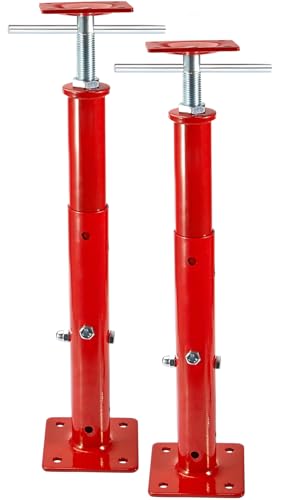 B4B BANG 4 BUCK 2-Pack House Floor Jacks |
8.8/10 | Buy |
| Best Budget |
 Pro-LifT F-2315PE 3000 LBS Hydraulic Trolley Jack |
8.3/10 | Buy |
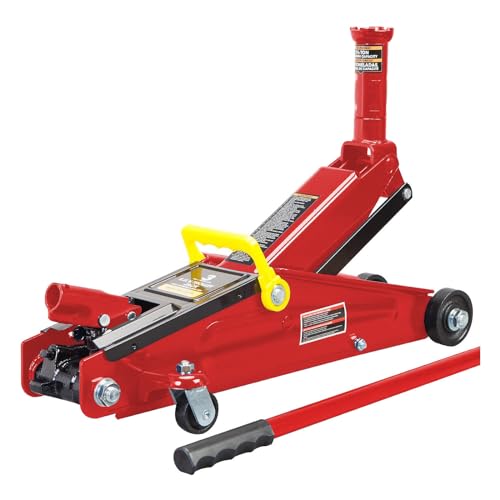 BIG RED T83006 3-Ton Floor Jack |
8.3/10 | Buy | |
| Best Premium |
 Pro-Lift 2-Ton Low Profile Floor Jack |
8.3/10 | Buy |
 DriveUpTools 2.5-Ton Low Profile Floor Jack |
8.1/10 | Buy | |
 Road Dawg 3-Ton Low-Profile Floor Jack |
7.8/10 | Buy |
TONDA 1.5-Ton Hydraulic Floor Jack
Weighing under 15 pounds, this compact steel floor jack offers a 3,000-pound capacity for basic garage maintenance and tire rotations. Its 4.9-inch to 11.8-inch lift range and integrated carry handle make it a practical option for owners of compact cars and sedans.
Pros
- Lightweight construction at roughly 15 pounds
- Integrated carry handle for convenient transport
- Built-in bypass valve prevents accidental over-extension
- Swivel casters provide smooth positioning under vehicles
Cons
- Limited 11.8-inch maximum lift height
- 1.5-ton capacity unsuitable for trucks or SUVs
- 4.9-inch minimum clearance cannot fit ultra-low vehicles
B4B BANG 4 BUCK 2-Pack House Floor Jacks
The B4B BANG 4 BUCK 2-Pack House Floor Jacks provide heavy-duty mechanical leveling support with an 11,023-lb capacity per post and a 21-inch to 43-inch height range. Built from Q235 steel with top swivel plates and 8-inch fine-tuning screws, they are ideal for homeowners and garage builders stabilizing structural beams and joists.
Pros
- Massive 11,023-lb static load capacity per post provides sturdy mechanical support for structural shop framing and garage headers
- Swiveling top plate adapts well to angled joists and slightly uneven contact surfaces without binding
- Combination of 3 preset pin positions and an 8-inch threaded adjustment rod ensures accurate height positioning between 21 and 43 inches
- Heavy Q235 steel construction with M22 locking hardware eliminates worries of hydraulic pressure bleed-down or fluid leaks
Cons
- Strictly a mechanical structural support post, not a rolling hydraulic trolley jack designed for lifting road vehicles
- Manual rotation of the threaded adjustment rod requires moderate physical effort when fine-tuning under existing structural load
- Minimum 21-inch collapsed height is far too tall to fit underneath automotive chassis or standard vehicle lift points
Pro-LifT F-2315PE 3000 LBS Hydraulic Trolley Jack
The Pro-LifT F-2315PE is an 18-pound portable hydraulic trolley jack rated for 3,000 pounds with a 5.25-inch to 12-inch lift range and an included blow-molded case. It is ideal for residential DIYers, mobile mechanics, and car owners seeking a compact, reliable tool for quick tire changes and brake service on passenger vehicles.
Pros
- Compact 18-pound steel chassis and integrated carrying handle make transport and positioning effortless
- Included hard-shell blow-molded case protects against dust, moisture, and fluid mess during transport
- All-welded steel frame provides dependable structural rigidity over lightweight stamped alternatives
- Rear swivel casters ensure smooth maneuverability on level concrete garage floors and paved driveways
Cons
- Maximum lift height of 12 inches limits working clearance and is not suitable for high-clearance trucks or tall SUVs
- Minimum saddle height of 5.25 inches may not clear lowered sports cars without auxiliary drive-on helper ramps
- The 3,000-lb capacity restricts use strictly to corner lifting on lightweight passenger cars and small crossovers
BIG RED T83006 3-Ton Floor Jack
Engineered for high-riding trucks and SUVs, the BIG RED T83006 delivers up to 20-7/8 inches of lift height with an extended saddle neck. Its 6,000-pound capacity and integrated overload bypass provide reliable lifting power for routine garage maintenance.
Pros
- Generous 20-7/8 inch maximum lift height
- Extended saddle neck reaches high truck frames quickly
- Built-in safety bypass valve prevents overloading
- Smooth 360-degree swivel casters ease garage positioning
Cons
- Minimum 5-7/8 inch height is tall for low-profile cars
- Single-piston pump requires more strokes than dual-piston models
Pro-Lift 2-Ton Low Profile Floor Jack
Built for vehicles with minimal ground clearance, this compact floor jack slips beneath chassis as low as 3-3/8 inches. Its solid steel construction and dual safety valves make it a practical option for routine passenger car maintenance.
Pros
- Low minimum clearance fits under lowered vehicles easily
- Patented bypass device prevents damage from over-pumping
- Heavy-duty steel construction provides solid durability
- Built-in safety valve prevents lifting beyond capacity
Cons
- 15-inch maximum lift height limits use on taller vehicles
- Two-ton limit is unsuitable for large trucks or SUVs
DriveUpTools 2.5-Ton Low Profile Floor Jack
Built with a slim 3.3-inch clearance, this compact hydraulic jack easily slips under lowered chassis and standard sedans. Its solid steel construction safely manages up to 5,500 pounds, making it a dependable choice for routine DIY maintenance.
Pros
- Low 3.3-inch clearance fits lowered vehicles easily
- Sturdy steel frame provides dependable lifting stability
- Rubber saddle pad protects undercarriage contact points
- Compact footprint simplifies garage and trunk storage
Cons
- 15-inch maximum lift height limits high-clearance trucks
- Steel construction weighs 25.4 pounds to carry
Road Dawg 3-Ton Low-Profile Floor Jack
With an expansive 3.86-inch to 30.12-inch lifting range, this heavy-duty hydraulic jack effortlessly transitions between low-clearance sedans and tall offroad trucks. A dual-piston pump and reinforced foldable arm deliver swift, stable lifting for multi-vehicle garages.
Pros
- Unusually wide 3.86 to 30.12-inch lift range
- Fast elevation via dual-piston hydraulic mechanism
- Robust 3-ton capacity suitable for heavy trucks
- Safety overload protection and locking arm pins
- Foam handle bumper protects vehicle paint
Cons
- Extremely heavy at over 102 pounds to maneuver
- Large 31.7-inch footprint requires ample garage storage
Troubleshooting Hydraulic Floor Jack Lifting Failures
When a hydraulic floor jack refuses to lift, the failure almost always stems from a loss of hydraulic pressure containment rather than complete mechanical destruction. Hydraulic service jacks operate on Pascal’s principle, where an incompressible fluid transfers force from a small pump piston into a larger power ram cylinder. If air enters the sealed circuit, if fluid levels drop, or if internal valves fail to seat tightly against their ports, the pump handle will stroke freely without transferring force to the lifting saddle. Systematically checking these hydraulic components restores operational capability and clarifies whether your jack requires simple maintenance or retirement.
Understanding How Hydraulic Service Jacks Build Lifting Force
A standard hydraulic service jack uses a mechanical pump piston driven by the handle to force fluid through a one-way check valve into the primary lift cylinder. This action pushes the main ram outward, pivoting the steel lift arm upward to elevate the saddle. During this phase, a closed release valve prevents hydraulic fluid from escaping back into the low-pressure fluid reservoir. Single-piston systems, such as the compact Pro-LifT F-2315PE, move a measured volume of fluid with each downward stroke of the operating handle. Rapid-pump systems with dual pistons displace twice the volume per stroke, bringing the lifting saddle to the vehicle chassis much faster.
Pascal’s principle dictates that pressure applied to an enclosed liquid transmits equally throughout the chamber. Because hydraulic oil is virtually incompressible, the force applied to the small pump piston multiplies across the larger surface area of the main lifting ram. When air enters this closed loop, the system fails because air compresses under load instead of transmitting hydraulic force. If any valve fails to seal completely, pressurized oil bypasses the lifting ram and flows directly back into the fluid reservoir. Maintaining clean fluid and tight valve seats remains essential for consistent lifting performance.
Trapped Air in the Hydraulic Circuit: Symptoms and Bleeding Sequence
Trapped atmospheric air inside the hydraulic chamber represents the single most common reason a floor jack fails to lift. Air pockets typically enter the system during shipping, when a jack is tipped on its side, or after long periods of garage storage. When air contaminates the high-pressure passage, the pump handle feels spongy or offers virtually no resistance on the downstroke. In some instances, the saddle rises partially under no load but stops or collapses when encountering vehicle weight. Purging this trapped air restores hydraulic pressure transfer and returns the cylinder to full lifting capacity.
Bleeding a hydraulic floor jack requires a straightforward purging sequence on a clean garage floor. First, rotate the handle counterclockwise to open the release valve fully, which disengages the high-pressure lifting circuit. With the release valve held open, pump the handle vigorously through 10 to 15 full strokes to circulate aerated fluid back into the reservoir. Next, locate the rubber oil fill plug on the cylinder body, often situated beneath an inspection cover plate, and pry its edge slightly to vent accumulated air pressure. Once the trapped air vents, push the plug firmly back into its sealing position.
After reseating the rubber plug, turn the operating handle clockwise until the release valve closes completely. Stroke the pump handle through its normal range of motion to confirm that the lifting arm rises smoothly to its maximum extension height. If the arm still hesitates or feels spongy, repeat the purge cycle once or twice to expel stubborn micro-bubbles from the internal check valves. Testing the unloaded jack through several full cycles ensures that only solid hydraulic fluid remains within the power cylinder.
Low or Depleted Hydraulic Fluid: Inspection and Replenishment
Insufficient hydraulic fluid prevents the pump piston from drawing a full charge of oil on each upward stroke. When fluid levels fall below the intake port of the reservoir, the pump cylinder draws in atmospheric air instead of liquid oil. This condition causes the jack to stop lifting before reaching its full rated height, or it leaves the lift arm completely immobile under moderate vehicle loads. Minor weeping past piston seals over years of garage use gradually depletes the reservoir volume. Periodic fluid inspections prevent dry pump strokes and protect internal steel components from premature wear.
Checking the fluid level requires lowering the lifting arm completely and placing the trolley jack on a flat, level concrete surface. Wipe the top of the hydraulic cylinder with a clean shop rag to prevent dirt and abrasive grit from falling inside the reservoir. Carefully remove the rubber filler plug located along the cylindrical body of the power unit. The correct fluid level should sit approximately one-eighth to three-sixteenths of an inch below the lower rim of the filler port. If the oil surface sits well below this mark, the reservoir requires topping off with clean hydraulic fluid.
Never introduce motor oil, brake fluid, automatic transmission fluid, or power steering fluid into a hydraulic floor jack. Brake fluid contains harsh solvents that chemically degrade internal nitrile rubber O-rings and cup seals, causing rapid fluid leaks. Motor oil and transmission fluid contain detergent packages and improper viscosities that cause seal swelling and fluid foaming under pressure. Always use dedicated, anti-foaming ISO VG 22 or ISO VG 32 hydraulic jack oil formulated specifically for mobile lifting equipment. Reinstall the rubber fill plug securely after topping off to maintain a clean internal fluid environment.
Release Valve Malfunctions and Universal Joint Linkage Slippage
A release valve that fails to seat completely allows pressurized hydraulic oil to leak past the high-pressure chamber into the reservoir during pumping. Most modern service jacks, including low-profile models from Pro-LifT and heavy-duty designs like the ROAD DAWG, employ a universal joint gear drive to rotate the release valve shaft. If the gear teeth slip, if the universal joint binds, or if the operator does not rotate the handle clockwise with sufficient torque, the valve remains slightly open. Even a minute gap between the valve needle and its machined seat prevents the jack from building lifting pressure.
Inspecting the release mechanism starts by examining the base of the handle socket where the universal joint connects to the hydraulic manifold. Verify that the drive pins, retainers, and bevel gears engage smoothly without excessive mechanical backlash. Debris or hardened grease in the gear teeth can prevent the shaft from transmitting full rotational force to the internal valve stem. Cleaning the linkage and applying a light drop of machine oil to the pivot pins ensures smooth valve engagement. If the handle spins without turning the lower valve stem, tighten the retaining setscrew or replace sheared roll pins.
Contamination can also prevent the hardened steel release needle from seating squarely against its internal orifice. To clear trapped sediment from the seat, open the release valve three full turns and pump the handle rapidly five or six times to flush fluid across the port. Then close the valve snugly by turning the handle clockwise and test whether the lift arm rises under manual downward resistance. Avoid using pliers or excessive leverage on the handle to force the valve closed, as over-tightening can deform the brass or steel valve seat permanently.
Contaminated Check Balls and Hydraulic Valve Sticking
Inside the hydraulic valve block, small steel check balls act as non-return valves that direct the flow of pressurized fluid. The suction valve allows oil into the pump chamber from the reservoir during the upstroke, while the discharge valve directs pressurized oil into the main cylinder on the downstroke. If fine dirt, metal shavings, or sludge settle between a check ball and its precision seat, fluid flows in reverse. A sticking check ball frequently manifests as handle kickback, where the handle springs upward forcefully when pressurized fluid backfeeds into the pump bore.
Flushing a sticking check ball often resolves the issue without disassembling the hydraulic power unit. Close the release valve firmly and pump the jack handle to raise the lifting arm a few inches off the floor. Next, open the release valve and press down firmly on the lifting saddle while stroking the handle to blast high-velocity fluid across the internal valve ports. If the check ball remains unseated, tapping the valve block body gently with a brass punch and light hammer can vibrate the ball free. If contaminated oil caused the sticking, draining the entire reservoir and refilling it with clean ISO VG 32 hydraulic jack oil eliminates recurring valve block clogs.
Overload Bypass Valve Engagement and Working Load Limits
Modern hydraulic trolley jacks feature built-in safety bypass valves designed to prevent structural over-pressurization when lifting loads that exceed rated working limits. When you attempt to lift an axle that exceeds the jack’s working load limit, an internal calibrated spring compresses, allowing excess hydraulic pressure to vent back into the reservoir. This safety mechanism prevents cracked steel frames, blown cylinder seals, and catastrophic tool failure. When a jack lifts an empty saddle but refuses to raise a vehicle, verify that the vehicle corner weight does not exceed the jack’s rating.
Calculating lifting requirements requires understanding the difference between total vehicle curb weight and axle weight distribution. A floor jack typically lifts approximately 50 to 60 percent of a vehicle’s total weight during a front-end or rear-end elevation. For example, a compact 1.5-ton unit like the TONDA Hydraulic Car Jack is rated for 3,000 pounds, making it suitable for light passenger cars but easily overloaded by full-size trucks. Midsize crossovers and light trucks require 2-ton or 2.5-ton jacks such as the DRIVEUPTOOLS model, while heavy pickups and full-size SUVs require 3-ton capacity units like the BIG RED T83006.
Attempting to lift a heavy vehicle beyond a jack’s stated working load limit causes the overload valve to crack open repeatedly, leaving the saddle motionless. Never attempt to adjust, shim, or screw down internal overload bypass screws in an effort to bypass factory safety limits. Tampering with internal relief settings creates severe structural hazards, including cylinder ruptures and frame deflection under load. If your floor jack repeatedly engages its internal bypass, transition to a heavier-rated service jack capable of handling the vehicle’s axle mass with an appropriate safety margin.
Internal Seal Deterioration, Cylinder Scoring, and Frame Binding
When a hydraulic jack fails to hold pressure or lift under moderate weight despite fresh fluid and proper bleeding, internal seals may have failed. The primary power ram utilizes a heavy-duty nitrile U-cup seal and rubber O-rings to contain substantial hydraulic force. Over years of seasonal temperature swings and regular garage duty, rubber seals harden, crack, or tear. A damaged ram seal allows high-pressure oil to bypass the piston head internally, causing the saddle to creep downward gradually or refuse to lift under vehicle weight.
Inspect the chrome surface of the main lifting ram by wiping it down and looking for vertical score marks, pitting, or rust flakes. Scored cylinder walls or pitted chrome rams act like cutting edges against internal rubber seals, destroying new seal rings within minutes. Look around the main cylinder wiper ring and pump piston base for active fluid weeping, which signals degraded outer packings. If replacement seal kits are available from the manufacturer and the polished ram remains unmarred, rebuilding the cylinder assembly restores factory pressure containment. If the ram shows deep scoring or severe rust pitting, replacing the entire floor jack is the safest course of action.
Mechanical binding within the chassis can also mimic a hydraulic lifting failure. Check the steel side plates, lift arm pivot pins, and front roller axles for bends, warping, or lack of lubrication. If a floor jack was loaded off-center on uneven ground, the lifting arm can twist and bind against the side plates, preventing smooth upward motion. Unlike hydraulic floor jacks, mechanical support posts such as the B4B BANG 4 BUCK house floor jacks rely on acme screws and structural locking pins, making binding an alignment issue rather than a hydraulic seal failure. Clean pivot points and well-greased chassis linkages ensure that all hydraulic pressure translates directly into vertical lift.
Safe Post-Repair Testing and Garage Support Best Practices
Verifying that your repair succeeded requires controlled functional testing before placing the floor jack back into regular automotive service. Begin by stroking the jack completely unloaded through its full travel range to verify that the saddle reaches its maximum advertised lift height. Next, apply manual downward pressure on the saddle while pumping to ensure firm handle resistance without any sponginess. Finally, test the jack under a light, controlled load on a level concrete surface to confirm that the ram does not creep downward over a fifteen-minute test period.
Observing garage safety protocols remains vital during every vehicle maintenance procedure. A hydraulic floor jack is strictly a lifting device, never a static load-holding tool, because hydraulic fluid pressure can dissipate without warning. Addressing garage elevation safety risks starts with never placing any part of your body under a vehicle supported only by a hydraulic jack. Always transfer vehicle weight immediately onto properly rated, mechanical jack stands positioned at reinforced factory lift points.
Position wheel chocks securely on both sides of the tires remaining in contact with the ground before initiating any lift. Ensure the vehicle transmission is set in park or reverse gear with the emergency brake firmly engaged. Always seat the jack saddle squarely against reinforced pinch welds, frame rails, or solid axle tubes, using rubber saddle pads where appropriate to prevent sheet metal crushing. Once jack stands are locked into position, lower the jack slightly to transfer vehicle mass onto the stands, then leave the jack saddle resting with light contact as a secondary safeguard.
Preventative Maintenance to Avoid Future Hydraulic Lift Failure
Routine preventative maintenance prevents hydraulic floor jack failures and extends the operational life of garage lifting equipment. Store hydraulic floor jacks indoors on a clean, dry floor with the main ram fully retracted into the cylinder housing. Leaving the ram extended exposes the polished chrome rod to moisture, humidity, and atmospheric dust, which causes rust pitting that damages rubber seals. Always store the jack with the release valve closed to prevent dust and airborne particulates from contaminating internal fluid passages.
Periodically wipe down the chassis side plates and lubricate the pivot pins, front roller axles, and rear 360-degree ball-bearing swivel casters with heavy automotive grease. Inspect the rubber filler plug annually to verify that it remains supple and tightly seated against the reservoir casing. If the jack operates in dusty garage environments, consider changing the hydraulic oil every two to three years to remove suspended metal particulates and moisture condensation. Consistent maintenance ensures that your hydraulic service jack delivers dependable lifting power whenever maintenance tasks arise.
About the author
Peter Nelson is an automotive writer whose published work includes off-road jacks, power tools, vehicle maintenance, and garage equipment. His coverage connects product features with practical applications, helping readers think through equipment choices for everyday repairs, project vehicles, and off-road situations.