
What Size Floor Jack for Honda Odyssey: Sizing and Capacity Guide for 2026
Determining what size floor jack for honda odyssey requires checking curb weight and clearance. Here is what you need for safe lifting in November 2026.
 By Peter Nelson
Updated October 28, 2026


Raising a modern family minivan for routine brake service or seasonal wheel rotations presents unique garage challenges. The vehicle carries substantial curb weight distributed heavily over the front transaxle, while factory ground clearance remains relatively low. Finding what size floor jack for honda odyssey maintenance comes down to balancing rated hydraulic tonnage against collapsed saddle height and overall lift stroke. Using an undersized lifting tool risks cylinder stall or instability, while an overly tall chassis profile cannot clear the front air dam or factory pinch welds.
A proper setup ensures that the vehicle rises smoothly without warping fragile rocker panels or bottoming out under extended suspension travel. Dedicated DIY mechanics often compare their lifting hardware choices by evaluating mechanical jack stands and ramps before rolling a service jack into position. Establishing the correct working load limit protects both the hydraulic seals and the underbody structure throughout every lift cycle.
| Award | Product | BJL Score About BJL ScoreThe BJL Score is our own rating from 0 to 10, based on performance, design and build, ease of use, and value. It reflects independent research and is never influenced by manufacturers, retailers, or affiliate commissions. Learn more › | |
|---|---|---|---|
| Best Overall |
Jack Boss 3 Ton Fast Lift Steel Hydraulic Floor
|
9.1/10 | Buy |
| Best Budget |
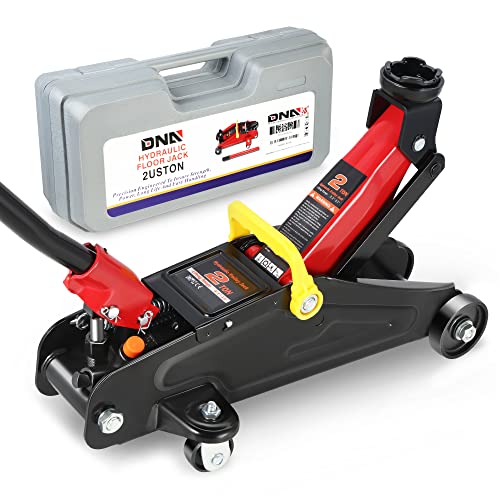 DNA Motoring TOOLS-00234 2-Ton Hydraulic Trolley |
8.8/10 | Buy |
| Best Value |
 Jack Boss 3-Ton Low Profile Floor Jack |
8.8/10 | Buy |
 AUTOWN 3-Ton Hydraulic Floor Jack |
8.6/10 | Buy | |
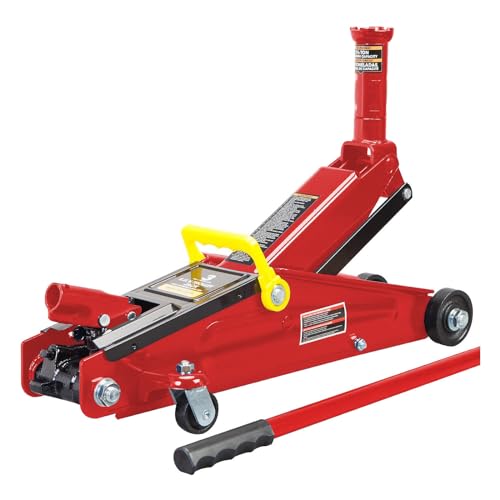 BIG RED T83006 3-Ton Floor Jack |
8.3/10 | Buy | |
| Best Premium |
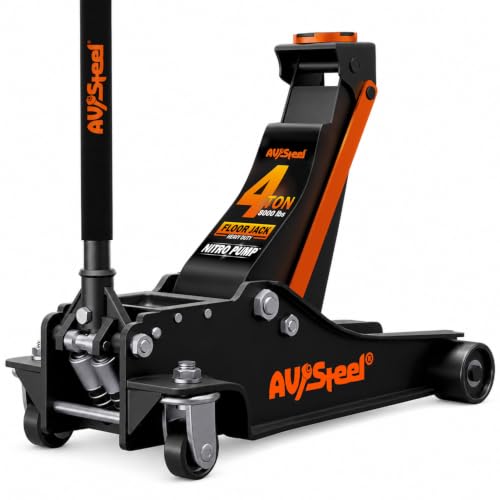 AV Steel 4 Ton Heavy-Duty Hydraulic Floor Jack |
8.3/10 | Buy |
 SATA 3-Ton Aluminum Floor Jack |
8.1/10 | Buy | |
 YELLOW JACKET 5-Ton Low Profile Floor Jack |
7.8/10 | Buy |
Jack Boss 3 Ton Fast Lift Steel Hydraulic Floor
The Jack Boss 3-ton fast lift hydraulic service jack delivers a 6,600-pound capacity with a working range of 5.15 to 18.3 inches. Built with heavy-duty steel and a precise universal joint release valve, it provides dependable lifting for garage maintenance, trucks, and SUVs.
Pros
- Robust 3-ton (6,600 lb) working load limit suitable for cars, SUVs, and light trucks
- Versatile 5.15-inch to 18.3-inch lifting range provides ample reach for brake and suspension service
- Universal joint release mechanism allows smooth, gradual descent control
- 360-degree rear swivel casters and rigid steel front wheels allow easy positioning under vehicle lift points
- Certified to meet ANSI/ASME PASE safety standards
Cons
- 5.15-inch collapsed height may not clear ultra-low ground clearance or lowered sports cars
- Heavier steel chassis footprint is best suited for garage floors rather than compact roadside storage
- Requires a smooth, firm concrete surface to roll and position safely without sinking
DNA Motoring TOOLS-00234 2-Ton Hydraulic Trolley
The DNA Motoring TOOLS-00234 is a compact 2-ton (4,000 lb) hydraulic trolley floor jack featuring a 5.1-inch to 13-inch lifting span and built-in overload protection. Engineered for DIY mechanics servicing passenger sedans and compact cars, it provides rapid vehicle lifting that must be supported with auxiliary mechanical jack stands.
Pros
- Manageable 4,000 lb capacity easily raises compact and mid-size passenger cars for wheel and brake service
- Built-in hydraulic overload valve prevents internal damage if overloaded beyond the rated capacity
- Rear swivel casters allow quick and precise positioning under factory lift points
- Compact frame footprint fits easily in residential garages with restricted floor space
Cons
- Maximum lift height is capped at 13 inches, limiting workspace depth for heavy underbody repairs
- Minimum 5.1-inch collapsed saddle height may not clear heavily lowered or track-tuned sports cars
- Not rated or recommended for full-size pickup trucks, commercial vans, or large three-row SUVs
Jack Boss 3-Ton Low Profile Floor Jack
Built with a hybrid aluminum and steel frame, this 3-ton floor jack pairs a low 3-15/16-inch minimum clearance with a dual-piston rapid pump. It serves as a versatile lifting solution for low-slung sedans as well as standard SUVs and minivans.
Pros
- Low-profile 3-15/16-inch minimum lifting clearance
- Fast elevation with dual-piston hydraulic pump
- Hybrid aluminum and steel frame construction
- Protective rubber saddle shields vehicle chassis
- Meets rigorous ANSI/ASME PASE safety standards
Cons
- At 58.5 pounds, it remains relatively heavy to transport
- 18-5/16-inch max height may be limiting for lifted trucks
AUTOWN 3-Ton Hydraulic Floor Jack
Built with heavy-gauge alloy steel, this 3-ton jack delivers a high 7.1 to 20.9-inch reach tailored for trucks and SUVs. Its rapid-lift hydraulic system and cross-grooved rubber pad provide stable, efficient lifting during maintenance.
Pros
- Substantial 6,600-pound capacity supports full-size vehicles
- Generous 20.9-inch maximum elevation height
- Fast elevation with minimal handle pumping
- Textured rubber saddle pad prevents frame slipping
- Removable handle allows compact garage storage
Cons
- High 7.1-inch minimum height does not fit low-clearance sedans
- Heavy alloy steel construction makes transport cumbersome
BIG RED T83006 3-Ton Floor Jack
Engineered for high-riding trucks and SUVs, the BIG RED T83006 delivers up to 20-7/8 inches of lift height with an extended saddle neck. Its 6,000-pound capacity and integrated overload bypass provide reliable lifting power for routine garage maintenance.
Pros
- Generous 20-7/8 inch maximum lift height
- Extended saddle neck reaches high truck frames quickly
- Built-in safety bypass valve prevents overloading
- Smooth 360-degree swivel casters ease garage positioning
Cons
- Minimum 5-7/8 inch height is tall for low-profile cars
- Single-piston pump requires more strokes than dual-piston models
AV Steel 4 Ton Heavy-Duty Hydraulic Floor Jack
The AV Steel 4-ton hydraulic floor jack provides 8,000 lbs of lifting capacity and a 4-1/4-inch to 19-3/4-inch vertical range powered by a rapid dual-piston pump. Built with a rigid 87.3-pound all-steel chassis, it offers home garage mechanics and truck owners dependable lifting strength for standard passenger cars, crossovers, and half-ton pickups.
Pros
- Substantial 4-ton (8,000-lb) capacity easily handles heavy front and rear axle loads on half-ton pickups, large SUVs, and vans.
- Dual-piston rapid pump quickly raises the saddle to chassis contact points with minimal handle pumping strokes.
- Rigid 87.3-pound all-steel frame delivers superior stationary stability on home garage floors.
- Built-in overload protection valve guards the hydraulic cylinder against accidental over-capacity operation.
Cons
- Substantial 87.3-pound gross chassis weight makes vehicle trunk transport or mobile hauling physically demanding.
- Collapsed saddle height of 4-1/4 inches will not clear low-slung sports cars or lowered vehicles without drive-on ramps.
- Maximum lift height of 19-3/4 inches is not designed for lifted 4x4 trucks or long-travel off-road suspensions.
SATA 3-Ton Aluminum Floor Jack
Designed for versatile garage work, this aluminum floor jack combines a low 3-3/4-inch clearance with a dual-piston pump for rapid vehicle elevation. Its aluminum construction significantly cuts down on overall weight, making positioning around the shop far less strenuous.
Pros
- Low 3-3/4-inch minimum height accommodates low-clearance vehicles
- Dual-piston system reduces physical pumping effort
- Aluminum body provides good portability around the shop
- Controlled release mechanism eliminates sudden drops
Cons
- Long 28.3-inch frame requires substantial storage room
- 19-1/8-inch maximum lift may not suit high-clearance trucks
YELLOW JACKET 5-Ton Low Profile Floor Jack
Built for heavy trucks and SUVs, this 5-ton hydraulic jack pairs a dual-piston pump for quick lifting with a low-profile stance. An extended handle and rubber-padded saddle deliver ample leverage and vehicle protection during garage work.
Pros
- High 5-ton capacity accommodates large trucks and SUVs
- Dual-piston pump delivers fast lifting speed
- Rugged heavy-gauge steel construction
- Rubber saddle pad protects vehicle contact points
- Built-in safety valve prevents accidental overloading
Cons
- Heavy steel build makes transport cumbersome
- Large footprint requires ample garage floor space
Technical Guide to Floor Jack Sizing and Safe Lifting for the Honda Odyssey
Selecting the proper floor jack for a Honda Odyssey requires looking beyond basic vehicle branding to examine specific curb weight dynamics and physical underbody dimensions. A standard Odyssey weighs approximately 4,500 pounds empty, with passenger and cargo configurations pushing gross vehicle weight significantly higher. Most garage service tasks involve elevating either the entire front drive assembly or an individual corner rather than hoisting the whole chassis simultaneously. Understanding how weight distributes across the chassis reveals exactly why a standard 3-ton floor jack serves as the optimal equipment choice for home garage maintenance.
Vehicle Curb Weight and Minimum Tonnage Requirements
A hydraulic jack does not support the total weight of a vehicle when lifting from standard maintenance points. Elevating a single corner requires the hydraulic ram to manage roughly twenty-five percent of the total mass, while lifting an entire axle engages approximately fifty to sixty percent of the curb weight. Because a Honda Odyssey registers a base curb weight between 4,400 and 4,600 pounds depending on model generation, lifting the front end demands supporting at least 2,600 to 2,800 pounds of active load. A 3-ton hydraulic jack provides 6,000 pounds of rated working capacity, creating a substantial mechanical safety buffer that easily handles these dynamic loads without straining internal seals.
Some DIY owners wonder whether an entry-level 2-ton floor jack can manage minivan service. While 4,000 pounds of theoretical capacity technically exceeds the load of a single corner, 2-ton units operate uncomfortably close to their pressure limits when lifting the heavy front end of an Odyssey. Operating hydraulic equipment near its maximum limit increases wear on internal O-rings, reduces stability, and risks triggering internal overload bypass valves. Selecting a 3-ton or 4-ton unit ensures the hydraulic ram functions comfortably within its designed duty cycle.
Front Axle Weight Bias and Central Lifting Demands
Minivans utilize a transverse front-engine, front-wheel-drive platform that shifts substantial mass toward the front bumper. The Honda Odyssey houses a 3.5-liter V6 engine, automatic transmission, steering rack, and primary subframe directly over the front wheels. This mechanical arrangement creates an approximate sixty-forty front-to-rear weight distribution when the vehicle is unloaded. Anyone elevating the front end from the central subframe crossmember is asking the jack to carry the heaviest portion of the vehicle at once.
Central lift points place elevated demands on both the lifting arm and the hydraulic cylinder. Lifting from the central front bracket raises both front tires off the ground simultaneously, eliminating secondary tire contact that would otherwise share the load. A 3-ton rating guarantees that the jack maintains sufficient hydraulic pressure to elevate both front corners without hesitation. Choosing a heavy-duty model like the AV Steel Heavy-Duty Floor Jack 4 Ton (8,000 lbs) or a robust 3-ton Jack Boss unit provides the structural rigidity needed to lift this concentrated front-end mass securely.
Ground Clearance and Collapsed Saddle Height Constraints
Minivan ground clearance is often lower than drivers assume, presenting unique clearance challenges for garage equipment. A factory-spec Honda Odyssey typically offers between 4.5 and 5.5 inches of clearance between the ground and the lower rocker panels or subframe rails. If a tire is punctured or completely flat, that clearance shrinks by an additional two to three inches at the affected corner. A floor jack with a tall collapsed saddle simply cannot roll into place beneath a compromised minivan chassis.
Measuring the collapsed height of the jack saddle is just as crucial as checking its maximum tonnage rating. Standard truck jacks frequently feature a minimum starting height exceeding 5.5 or even 7 inches, making them completely incompatible with passenger minivans. High-clearance models like the AUTOWN 3 Ton Floor Jack start at 7.1 inches, which prevents entry under an Odyssey frame without pre-lifting the vehicle on wooden blocks. A low-profile service jack with an entry height between 3.5 and 4.25 inches slides underneath the Odyssey pinch welds effortlessly, even under adverse flat-tire conditions.
Suspension Travel and Maximum Lift Stroke Considerations
Passenger minivans feature relatively soft, compliant suspension setups engineered for passenger comfort over road imperfections. When a hydraulic jack lifts the vehicle body from side pinch welds, the chassis rises several inches before the wheels actually lift off the pavement. This suspension droop consumes a large portion of the floor jack’s total available stroke. If the jack runs out of vertical extension before the tire clears the ground, completing a simple tire rotation becomes impossible.
Compact trolley jacks frequently fail this critical requirement due to their abbreviated lift range. The DNA Motoring TOOLS-00234 Low Profile Hydraulic unit, for example, features a maximum lifting height of only 13 inches. While its 5.1-inch minimum profile allows underbody entry, a 13-inch peak height cannot overcome the Odyssey suspension droop when lifting from the body sill. Minivan maintenance demands a maximum lift height of at least 18 to 21 inches, ensuring ample room to insert mechanical jack stands beneath factory support points.
Chassis Reach and Frame Clearance Under the Front Air Dam
The front overhang of the Honda Odyssey extends forward past the axle centerline to accommodate crash structures and aerodynamic styling. The front bumper spoiler sits low to improve highway fuel economy, creating an extended horizontal approach to the central engine crossmember. A short-chassis trolley jack will see its lift arm handle strike the lower plastic bumper cover before the saddle reaches the reinforced central lift point. Damaging expensive plastic bumper fascia or radiator supports is a constant risk when using improperly proportioned tools.
Long-chassis service jacks solve this reach dilemma by extending the pivot geometry away from the pump handle. Models such as the Jack Boss 3 Ton Low Profile measure over 28 inches in frame length, allowing the saddle to slip deeply under the minivan engine bay while the handle remains accessible outside the bumper line. Mechanics must verify that the jack body remains low across its forward section to prevent contact with lower splash shields during the initial pump strokes. Sufficient reach transforms an awkward, hazardous maneuver into a straightforward garage task.
Hydraulic Pump Mechanisms and Rapid Lift Efficiency
Pumping a service jack handle beneath a large minivan can become physically demanding if the hydraulic system lacks mechanical efficiency. Single-piston hydraulic mechanisms displace a modest volume of fluid with each handle cycle, requiring fifteen to twenty full pumps just to bring the saddle into contact with the frame. Dual-piston rapid-pump assemblies, by contrast, incorporate two separate hydraulic pistons that dramatically increase fluid flow per stroke. This setup allows the lifting saddle to travel upward rapidly until it meets mechanical resistance from the vehicle chassis.
Rapid-lift technology proves especially valuable when positioning a jack under tight vehicle clearances. A dual-piston pump, such as the system featured on the SATA 3-Ton Aluminum Floor Jack, allows the operator to seat the saddle against the pinch weld in three to five swift strokes. Once the saddle engages the vehicle load, the hydraulic circuit automatically shifts fluid pressure to prioritize lifting leverage over travel speed. This smooth mechanical transition minimizes user fatigue and shortens staging time during multi-corner tire service.
Saddle Protection and Pinch Weld Integrity
Unibody vehicles like the Honda Odyssey rely on reinforced sheet metal pinch welds along the lower rocker panels for individual corner lifting. A bare metal jack saddle features aggressive steel teeth designed to grip solid truck frame rails, which can quickly crush or bend thin unibody seams. Damaged pinch welds crack protective factory coatings, exposing bare steel to road salt and accelerating corrosion along structural sills. Deforming these lift points can also cause subsequent jack slippage, creating an immediate personal safety hazard.
Preserving underbody integrity requires using an integrated rubber saddle pad or a dedicated slotted adapter. Modern service jacks often supply wide saddles fitted with cross-grooved or recessed rubber pads that distribute dynamic weight evenly across the reinforced flange. The Jack Boss 3 Ton Low Profile includes a protective rubber saddle that cushions the Odyssey pinch seam during upward force. If a floor jack features a plain steel dish, adding a durable vulcanized rubber pad prevents metal-on-metal gouging and preserves factory undercoating intact.
Lowering Control and Universal Joint Release Valves
Lowering a heavy minivan back onto the pavement requires exceptional metering control from the hydraulic release valve. Entry-level hydraulic jacks often utilize direct pin or cog mechanisms that bind under high pressure and release abruptly. A sudden quarter-turn of a sticky release handle can cause the entire vehicle to drop rapidly, potentially damaging suspension components or shifting jack stands violently. Controlled descent is a non-negotiable safety priority for any garage lifting operation.
Universal joint gear assemblies provide the smoothest, most progressive lowering action available on modern service jacks. Turning the knurled handle on a U-joint drive rotates a micro-metered release screw smoothly, regardless of the handle angle relative to the chassis. Heavy-duty units like the Jack Boss Floor Jack 3 Ton Capacity Fast Lift utilize rugged universal joints that give mechanics millimeter-level control over descent speed. This precision ensures that the vehicle settles onto jack stands gently without jarring the suspension or unsettling support bases.
Steel Versus Aluminum Chassis Portability Trade-Offs
Floor jack construction materials dictate how easily the tool rolls across garage floors and stores against shop walls. Heavy-gauge carbon steel remains the industry standard for durability, resisting chassis flex and providing a planted, steady base under heavy loads. Professional steel jacks like the AV Steel Heavy-Duty Floor Jack 4 Ton (8,000 lbs) tip the scales at more than eighty-seven pounds, providing immense stability but demanding substantial effort to maneuver across rough driveways. For mechanics working on a stationary concrete floor, steel construction offers long-term durability and rugged reliability.
Aluminum and hybrid aluminum-steel jacks offer an attractive alternative for homeowners who value easier mobility. The SATA 3-Ton Aluminum Floor Jack utilizes high-strength aluminum side plates to reduce total equipment weight by roughly thirty percent compared to pure steel models. A lighter chassis makes rolling the jack around the vehicle significantly easier and simplifies hanging storage or trunk transport. The hybrid design retains steel in the lift arm and hydraulic power unit where structural stresses peak, successfully balancing strength with easy maneuverability.
Crucial Equipment Limitations Observed in Common Service Jacks
Analyzing available market options reveals that not every 3-ton or multi-ton jack suits the specific geometry of a Honda Odyssey. As noted previously, the AUTOWN 3 Ton Floor Jack provides plenty of capacity with 6,600 pounds of strength, but its 7.1-inch minimum height prevents it from sliding under an Odyssey without prior elevation. Similarly, standard 2-ton trolley jacks fail because their 13-inch maximum lift limit leaves minivan tires firmly resting on the concrete. Even heavy-duty models must be evaluated against the exact clearance and stroke parameters of your specific vehicle.
Prospective buyers must avoid assuming that a higher tonnage rating automatically guarantees compatibility with a minivan. The 5 Ton Hydraulic Low Profile Floor Jack delivers incredible lifting capacity and low entry clearance, but its heavy frame demands considerable physical effort to position in tight garage bays. Balancing a 3-ton to 4-ton capacity rating against a collapsed profile under 4.25 inches and an extended reach of at least 18.5 inches produces the ideal tool match for Odyssey maintenance. Matching these three metrics prevents frustrating garage surprises before service work starts.
Safe Staging Protocols and Jack Stand Integration
Every DIY mechanic must treat a hydraulic floor jack strictly as an elevation tool, never as a static holding device. Internal hydraulic pressure relies entirely on rubber O-rings and fluid valving, which can bleed down or fail without warning under sustained loads. Never place any part of the body beneath a vehicle supported only by a hydraulic ram. Following established vehicle elevation safety principles ensures that all mechanical work proceeds without life-threatening risk.
Proper vehicle elevation begins with parking the Honda Odyssey on a smooth, level concrete surface, engaging the parking brake, and chocking wheels that stay on the ground. Once the floor jack lifts the chassis to the required working height, immediately position ASME PASE compliant mechanical jack stands beneath designated factory support notches. Slowly turn the jack release handle to settle the minivan weight completely onto the mechanical stands before removing tires or beginning service. Give the vehicle a firm, physical push check at the bumper to verify total stability before entering the work zone.
Hydraulic Fluid Care and Seasonal Cylinder Maintenance
Maintaining a service jack over years of minivan ownership requires periodic inspection of the hydraulic power unit. Air pockets can enter the closed fluid circuit during shipping or after extended periods of horizontal storage, resulting in spongy handle resistance and reduced lift stroke. Purging trapped air involves opening the release valve fully, pumping the handle rapidly through ten to fifteen full cycles, and closing the valve to restore hydraulic firmness. This quick procedure restores positive pressure without requiring tool disassembly.
Replenishing hydraulic fluid requires using dedicated anti-foaming ISO VG 22 or ISO VG 32 hydraulic jack oil through the rubber reservoir plug. Introducing improper fluids such as automotive motor oil, brake fluid, or automatic transmission fluid will rapidly destroy the internal nitrile rubber seals. Storing the floor jack with its lifting arm completely lowered and the release valve lightly closed prevents moisture and road debris from corroding the polished chrome ram. Routine cleaning and caster lubrication keep the equipment operating smoothly through every seasonal brake check and tire rotation.
Selecting the correct size floor jack for your Honda Odyssey comes down to matching a 3-ton capacity rating with a collapsed saddle height under 4.25 inches and a maximum extension reaching at least 18.5 inches. This combination clears low bumper aprons, handles front transaxle weight bias effortlessly, and overcomes minivan suspension droop to get tires off the floor. Pairing a capable dual-piston service jack with solid mechanical jack stands and rubber saddle protection keeps your family vehicle securely elevated for years of dependable home maintenance. Always verify solid concrete footing and chock stationary wheels before raising any portion of the chassis.
About the author
Peter Nelson is an automotive writer whose published work includes off-road jacks, power tools, vehicle maintenance, and garage equipment. His coverage connects product features with practical applications, helping readers think through equipment choices for everyday repairs, project vehicles, and off-road situations.