
How Does Floor Jack Work: Practical Guide for 2026
Learn how does floor jack work with hydraulic physics, dual-piston mechanics, and essential garage lifting safety standards updated for November 2026.
 By Peter Nelson
Updated October 28, 2026


Raising several thousand pounds of automotive metal requires far more than simple brute force. Modern trolley jacks rely on closed fluid circuits and mechanical leverage to convert modest physical effort into immense lifting power. Understanding how does floor jack work gives DIY mechanics and garage enthusiasts the knowledge needed to position saddles accurately, diagnose pressure changes, and avoid damaging fragile unibody pinch welds. Choosing between compact service jacks and heavy-duty shop equipment also becomes much clearer once you grasp the underlying hydraulic engineering.
Hydraulic mechanisms create a substantial mechanical advantage, but operating lifting gear safely requires strict staging protocols. Garage floors must remain level and solid, while unlifted tires require positive wheel chocks to prevent vehicle movement during elevation. Before positioning any jack under a chassis, reviewing a car ramps and jack stands safety analysis reinforces why mechanical supports must always back up hydraulic pressure. Proper equipment preparation protects rocker panels, prevents chassis drops, and ensures every maintenance project stays fully secure from start to finish.
| Award | Product | BJL Score About BJL ScoreThe BJL Score is our own rating from 0 to 10, based on performance, design and build, ease of use, and value. It reflects independent research and is never influenced by manufacturers, retailers, or affiliate commissions. Learn more › | |
|---|---|---|---|
| Best Overall |
TONDA 1.5-Ton Hydraulic Floor Jack
|
9.1/10 | Buy |
| Best Premium |
 SATA 3-Ton Heavy-Duty Steel Floor Jack |
8.9/10 | Buy |
| Best Budget |
 FLKQC Flooring Jack with Protective Felt Pad |
8.8/10 | Buy |
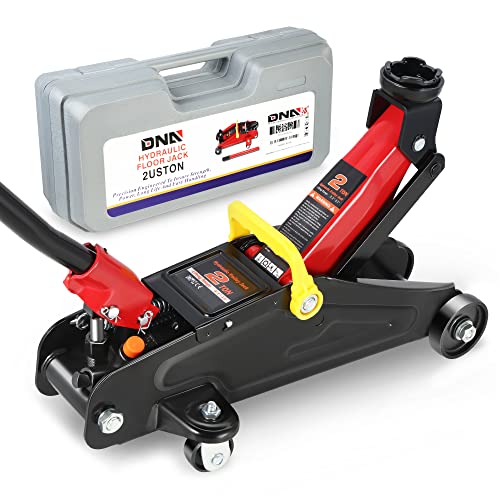 DNA Motoring TOOLS-00234 2-Ton Hydraulic Trolley |
8.8/10 | Buy | |
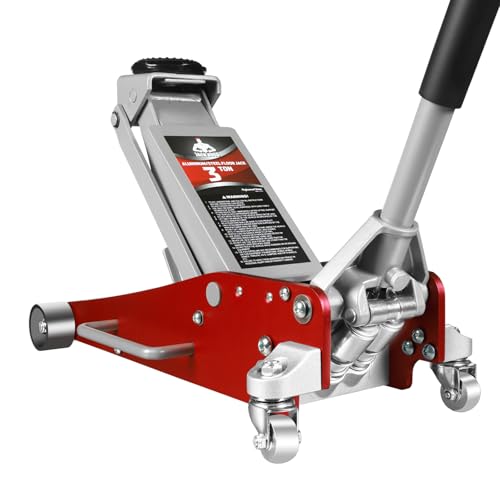 Jack Boss 3-Ton Low Profile Floor Jack |
8.8/10 | Buy | |
| Best Value |
 AUTOWN 3-Ton Hydraulic Floor Jack |
8.6/10 | Buy |
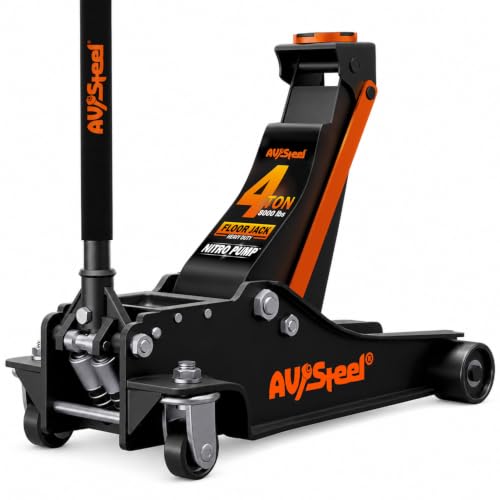 AV Steel 4 Ton Heavy-Duty Hydraulic Floor Jack |
8.3/10 | Buy | |
 AV Steel 3-Ton Hydraulic Floor Jack |
7.8/10 | Buy |
TONDA 1.5-Ton Hydraulic Floor Jack
Weighing under 15 pounds, this compact steel floor jack offers a 3,000-pound capacity for basic garage maintenance and tire rotations. Its 4.9-inch to 11.8-inch lift range and integrated carry handle make it a practical option for owners of compact cars and sedans.
Pros
- Lightweight construction at roughly 15 pounds
- Integrated carry handle for convenient transport
- Built-in bypass valve prevents accidental over-extension
- Swivel casters provide smooth positioning under vehicles
Cons
- Limited 11.8-inch maximum lift height
- 1.5-ton capacity unsuitable for trucks or SUVs
- 4.9-inch minimum clearance cannot fit ultra-low vehicles
SATA 3-Ton Heavy-Duty Steel Floor Jack
This SATA 3-ton heavy-duty steel floor jack combines a low-clearance chassis with a dual-piston rapid lift pump and an extended 19-1/8-inch maximum lift height. Factory reviewed to 1.5 times its rated 6,600-pound capacity, it provides dependable lifting muscle for home garage mechanics servicing passenger sedans, crossovers, and light pickups.
Pros
- Generous 3-ton (6,600 lb) rated capacity with factory proof evaluation to 1.5 times maximum load for enhanced structural confidence.
- Dual-piston rapid lift mechanism cuts unladen pump strokes to bring the saddle to vehicle contact points rapidly.
- Wide 3-3/4-inch to 19-1/8-inch elevation range accommodates low passenger cars as well as standard crossovers and light trucks.
- Rugged industrial-grade steel chassis offers dependable torsional rigidity and resistance to frame deformation.
- Precision slow-release descent valving helps prevent abrupt drops when settling the vehicle onto mechanical stands.
Cons
- Substantial 70-pound dry chassis weight makes manual lifting into high truck beds or mobile transport physically demanding.
- Bare steel saddle does not include a pre-installed slotted rubber pinch weld pad, requiring aftermarket protection for delicate unibody seams.
- Extended 28.3-inch steel chassis requires adequate clearance behind the vehicle to pump the handle comfortably in compact single-car bays.
FLKQC Flooring Jack with Protective Felt Pad
The FLKQC Flooring Jack is a manual ratcheting positioning tool equipped with a scratch-resistant felt pad to straighten hardwood and laminate boards without damaging walls. Ideal for DIYers and home remodelers building out garage shops or living spaces, it is designed for plank installation rather than vehicle lifting.
Pros
- Felt base pad effectively protects baseboards and finished flooring from marring
- Ratcheting action provides steady, controlled clamping pressure to straighten bowed planks
- Compact and lightweight single-piece design maneuvers easily along wall perimeters
- Eliminates pry marks and floor damage associated with traditional crowbars
Cons
- Designed exclusively for flooring alignment and cannot be used for lifting vehicles or machinery
- Manual ratchet pawls require periodic cleaning to keep wood dust and grit out of the gear teeth
- Felt pad can wear or collect abrasive debris over time if dragged across rough subfloors
DNA Motoring TOOLS-00234 2-Ton Hydraulic Trolley
The DNA Motoring TOOLS-00234 is a compact 2-ton (4,000 lb) hydraulic trolley floor jack featuring a 5.1-inch to 13-inch lifting span and built-in overload protection. Engineered for DIY mechanics servicing passenger sedans and compact cars, it provides rapid vehicle lifting that must be supported with auxiliary mechanical jack stands.
Pros
- Manageable 4,000 lb capacity easily raises compact and mid-size passenger cars for wheel and brake service
- Built-in hydraulic overload valve prevents internal damage if overloaded beyond the rated capacity
- Rear swivel casters allow quick and precise positioning under factory lift points
- Compact frame footprint fits easily in residential garages with restricted floor space
Cons
- Maximum lift height is capped at 13 inches, limiting workspace depth for heavy underbody repairs
- Minimum 5.1-inch collapsed saddle height may not clear heavily lowered or track-tuned sports cars
- Not rated or recommended for full-size pickup trucks, commercial vans, or large three-row SUVs
Jack Boss 3-Ton Low Profile Floor Jack
Built with a hybrid aluminum and steel frame, this 3-ton floor jack pairs a low 3-15/16-inch minimum clearance with a dual-piston rapid pump. It serves as a versatile lifting solution for low-slung sedans as well as standard SUVs and minivans.
Pros
- Low-profile 3-15/16-inch minimum lifting clearance
- Fast elevation with dual-piston hydraulic pump
- Hybrid aluminum and steel frame construction
- Protective rubber saddle shields vehicle chassis
- Meets rigorous ANSI/ASME PASE safety standards
Cons
- At 58.5 pounds, it remains relatively heavy to transport
- 18-5/16-inch max height may be limiting for lifted trucks
AUTOWN 3-Ton Hydraulic Floor Jack
Built with heavy-gauge alloy steel, this 3-ton jack delivers a high 7.1 to 20.9-inch reach tailored for trucks and SUVs. Its rapid-lift hydraulic system and cross-grooved rubber pad provide stable, efficient lifting during maintenance.
Pros
- Substantial 6,600-pound capacity supports full-size vehicles
- Generous 20.9-inch maximum elevation height
- Fast elevation with minimal handle pumping
- Textured rubber saddle pad prevents frame slipping
- Removable handle allows compact garage storage
Cons
- High 7.1-inch minimum height does not fit low-clearance sedans
- Heavy alloy steel construction makes transport cumbersome
AV Steel 4 Ton Heavy-Duty Hydraulic Floor Jack
The AV Steel 4-ton hydraulic floor jack provides 8,000 lbs of lifting capacity and a 4-1/4-inch to 19-3/4-inch vertical range powered by a rapid dual-piston pump. Built with a rigid 87.3-pound all-steel chassis, it offers home garage mechanics and truck owners dependable lifting strength for standard passenger cars, crossovers, and half-ton pickups.
Pros
- Substantial 4-ton (8,000-lb) capacity easily handles heavy front and rear axle loads on half-ton pickups, large SUVs, and vans.
- Dual-piston rapid pump quickly raises the saddle to chassis contact points with minimal handle pumping strokes.
- Rigid 87.3-pound all-steel frame delivers superior stationary stability on home garage floors.
- Built-in overload protection valve guards the hydraulic cylinder against accidental over-capacity operation.
Cons
- Substantial 87.3-pound gross chassis weight makes vehicle trunk transport or mobile hauling physically demanding.
- Collapsed saddle height of 4-1/4 inches will not clear low-slung sports cars or lowered vehicles without drive-on ramps.
- Maximum lift height of 19-3/4 inches is not designed for lifted 4x4 trucks or long-travel off-road suspensions.
AV Steel 3-Ton Hydraulic Floor Jack
Built for standard passenger vehicles and light trucks, this heavy steel floor jack delivers a 6,000-pound capacity with a lift range of 5.5 to 18.5 inches. Its built-in overload protection and 360-degree rotating saddle make it a dependable option for routine garage maintenance.
Pros
- Generous 6,000-pound capacity for cars and SUVs
- Solid 5.5-inch to 18.5-inch lift clearance
- Durable all-steel frame ensures maximum stability
- Integrated overload valve prevents accidental over-lifting
- 360-degree rotating saddle aids quick, secure positioning
Cons
- Heavy 63.9-pound weight reduces overall portability
- Single-piston pump requires more strokes to reach height
- Unsuitable for lifted vehicles and heavy-duty trucks
Understanding the Mechanics Behind Hydraulic Floor Jack Operation
A hydraulic floor jack operates by converting manual lever strokes into high-pressure fluid force that expands an internal steel ram and elevates a mechanical lift arm. The entire system functions within a sealed circuit containing specialized hydraulic oil, two check valves, an outer reservoir, a pumping block, and a heavy lifting cylinder. By utilizing an incompressible liquid to transmit pressure, a modest downward push on the jack handle creates thousands of pounds of upward thrust at the lifting saddle. This fluid-driven design allows a single person to raise cars, crossovers, and full-size trucks smoothly and with complete mechanical control.
Fundamental Hydraulic Principles: Pascal’s Law and Pressure Multiplication
At the mechanical foundation of every automotive service jack lies Pascal’s principle of fluid dynamics. This physical law dictates that any pressure applied to an enclosed, static liquid transmits equally and undiminished throughout the fluid in all directions. Because liquids like hydraulic oil do not compress under operational force, the applied energy does not get absorbed by the fluid itself. Instead, the enclosed fluid acts as an unyielding hydraulic link that instantly transfers energy between separate chambers within the jack housing.
Force multiplication occurs by pairing two pistons with vastly different surface areas inside the closed hydraulic circuit. A small pump plunger connected to the handle mechanism has a narrow surface area, allowing moderate physical effort to generate substantial fluid pressure. That concentrated pressure travels directly into a much larger cylinder housing the primary lifting ram, multiplying the resulting force proportionally to the surface area difference. Fifty pounds of physical effort on the handle can easily produce several tons of lifting capacity at the vehicle saddle.
Core Mechanical Components Inside the Hydraulic Circuit
A standard trolley floor jack relies on several interconnected metal components machined to exact mechanical tolerances. The outer reservoir tube serves as the primary fluid storage chamber, holding the reserve volume of anti-foaming hydraulic oil when the lifting arm rests in its fully lowered position. Surrounding the high-pressure cylinder, this reservoir keeps the pump continually primed during elevation. High-grade nitrile rubber O-rings and polyurethane U-cup seals prevent oil from leaking past the moving pistons or escaping into the environment.
The hydraulic pump block houses the manual pumping piston alongside two critical check valves. The suction check valve allows oil to enter the pump chamber from the reservoir while blocking backflow, and the discharge check valve directs pressurized oil into the main ram while preventing reverse flow. As pressurized oil enters the cylinder base, the polished steel ram extends outward, pivoting the heavy lift arm on structural steel pins. Rigid side plates, broad front wheels, and rear swivel casters support the entire chassis, allowing the tool to roll forward slightly as the lifting arc changes.
The Dual-Phase Pumping Cycle: Suction and Compression Strokes
Raising a vehicle begins with the upward stroke of the operator handle. When you lift the handle, the internal mechanical linkage draws the small pump plunger outward from its machined bore, creating a localized vacuum inside the pumping chamber. This sudden drop in pressure unseats the suction check ball, allowing clean hydraulic oil to flow out of the reservoir and fill the pumping cavity. At the exact same time, the high-pressure discharge ball remains firmly seated, ensuring that oil already supporting the vehicle cannot back up into the pump.
Pushing the handle downward initiates the high-pressure compression phase. The downward motion drives the pump plunger into the fluid-filled bore, generating intense hydraulic pressure that instantly forces the suction check ball tight against its seat. With its retreat back to the reservoir blocked, the pressurized oil forces open the discharge check ball and surges directly into the main lift cylinder. Releasing the handle completes the cycle, leaving the discharge check ball sealed while the internal return spring readies the linkage for another stroke.
Single-Piston versus Dual-Piston Rapid Pump Systems
Hydraulic service jacks utilize either single-piston or dual-piston pump configurations within their hydraulic manifold blocks. A single-piston design uses one plunger to draw and compress fluid, requiring consistent handle strokes from initial saddle movement to full vehicle elevation. While mechanically simple and highly durable, single-piston systems displace a modest volume of oil per stroke. Consequently, operators must pump the handle numerous times just to bridge the empty air gap between the lowered saddle and the vehicle chassis.
Dual-piston systems solve this issue by placing two pump plungers side by side inside the hydraulic manifold block. Both pistons actuate simultaneously as the handle moves downward, effectively doubling the fluid displacement volume during unloaded strokes. This rapid-pump architecture allows the saddle to elevate from its collapsed profile to the vehicle frame rails in just three to five strokes. Mechanics who service vehicles daily often favor dual-piston jacks because they significantly reduce setup time and handle pumping fatigue before full load lifting begins.
Release Valve Operation and Controlled Lowering Circuits
Lowering an elevated vehicle requires opening the hydraulic circuit so oil can drain out of the high-pressure ram chamber. The release valve features a needle-point or ball-seat stem that threads directly into the base of the hydraulic manifold. In professional floor jacks, a gear-driven universal joint connects this valve stem directly to the operating handle socket. Rotating the handle counterclockwise turns the universal joint, slowly backing the valve needle off its precision seat.
Once the valve unseats, pressurized oil inside the main cylinder bypasses the closed check valves and flows through internal return channels back into the reservoir. As fluid escapes, the heavy vehicle weight compresses the main ram backward into its housing, assisted by heavy return springs on the lift arm. A universal joint mechanism provides progressive, micro-metered release control that prevents dangerous sudden drops. Smooth, gradual handle rotation allows you to lower the chassis gently onto mechanical jack stands without sudden impact.
Internal Safety Valving: Overload Bypass and Extension Limits
High-quality hydraulic service jacks incorporate internal safety valves engineered to prevent structural failure and severe accidents. An internal overload bypass valve consists of a calibrated spring holding a hardened ball against an auxiliary relief port. If an operator attempts to lift a vehicle exceeding the jack’s rated tonnage, the excessive fluid pressure overcomes the calibrated spring. This opens the relief port, routing pressurized oil directly back to the reservoir and preventing the ram from raising an unsafe load.
Overload valves come preset and sealed from the factory to prevent unauthorized tampering or incorrect adjustments in the field. In addition to overload protection, hydraulic cylinders include positive internal ram stops that prevent the polished ram from extending past its safe travel limit. Equipment tested in accordance with recognized ASME PASE standards ensures that critical hydraulic circuits perform reliably under rigorous garage conditions. When setting up lifting gear for complex underbody projects, following metal ramp staging procedures or checking rated jack stand capacities provides complementary layers of mechanical security.
Hydraulic Fluid Dynamics, Viscosity, and Seal Integrity
The operating medium inside a floor jack must meet strict physical requirements to ensure smooth operation and component longevity. Manufacturers specify dedicated anti-foaming hydraulic jack oil, typically classified under ISO VG 22 or ISO VG 32 viscosity grades. This specialized oil contains anti-wear additives, rust inhibitors, and anti-foaming agents that prevent air bubbles from forming during rapid cycling. Using the correct oil maintains consistent hydraulic pressure and keeps internal check balls seating cleanly against their metal ports.
Introducing improper fluids into a hydraulic jack causes rapid, catastrophic seal failure. Motor oil, automatic transmission fluid, power steering fluid, and especially brake fluid contain chemical detergents and synthetic solvents that destroy nitrile rubber and polyurethane seals. Contaminated seals swell, soften, and degrade, causing high-pressure fluid leaks, internal pressure bleed-down, and total loss of lifting capability. Storing floor jacks with the release valve closed and the lifting arm fully collapsed protects internal polished surfaces from airborne humidity and corrosion.
Purging Aerated Fluid: Diagnostic Bleeding Procedures
Air trapped inside a hydraulic circuit represents the most common cause of poor lifting performance and spongy handle resistance. Because air is a compressible gas, trapped pockets compress when you pump the handle rather than transferring force to the lifting ram. This condition leads to incomplete stroke travel, an arm that fails to reach maximum height, or a handle that springs back upward. Bleeding the hydraulic system purges entrained air bubbles, restoring firm hydraulic action and full lifting power.
To bleed a standard floor jack, first rotate the release valve counterclockwise to open the internal fluid return circuit completely. With the valve open, pump the operating handle rapidly through ten to fifteen full strokes to circulate oil and push trapped air toward the reservoir. Next, loosen the rubber fill plug on the main reservoir housing slightly to allow pressurized air to vent with a soft hiss. Reseal the plug, close the release valve, and pump the jack through a full unloaded cycle to verify smooth, continuous extension.
Structural Physics: Chassis Geometry and Ground Tracking
A floor jack operates as a dynamic mechanical lever, meaning its steel frame and rolling gear must handle complex physical forces during elevation. As the lifting arm raises a vehicle, the saddle travels along a slight forward arc rather than moving in a strictly vertical line. To compensate for this shifting arc, wide steel front wheels and rear swivel casters allow the entire jack frame to roll forward underneath the car. If the casters get wedged or bind on rough garage flooring, the saddle can slide violently off the designated lift point.
Low-profile chassis designs extend this structural geometry by lengthening the frame and dropping the front pivot height to clear lowered vehicles. High-lift jacks, by comparison, feature taller pivot points and extended arm lengths designed to clear long-travel suspension droop on four-wheel-drive trucks and full-size SUVs. Thick-gauge welded steel provides exceptional torsional rigidity, while aluminum hybrid designs reduce overall weight for easier transport. Broad front rollers distribute heavy automotive loads evenly across the floor slab, maintaining stability throughout the entire lifting stroke.
Dynamic Lifting versus Static Holding: Non-Negotiable Garage Safety
The most critical principle of floor jack operation is understanding that a hydraulic jack is exclusively a lifting device, never a load-holding tool. Hydraulic pressure relies entirely on synthetic rubber seals, precision check ball seats, and fluid valves that can fail without warning. A microscopic speck of dirt trapped under a check ball or a blown O-ring will cause an elevated vehicle to drop instantly. Never place any part of your body beneath a vehicle supported only by hydraulic pressure.
Whenever you elevate a car, truck, or SUV, you must immediately transfer the static load onto properly rated, ASME PASE compliant jack stands. Mechanical jack stands utilize solid cast-iron ratcheting pawls or heavy steel locking pins that cannot lose pressure or drift downward over time. Before lifting, ensure that wheels remaining on the garage floor have heavy rubber chocks placed firmly against the tire tread in both directions. Reviewing established methods for safe vehicle lifting at home helps reinforce proper staging routines across every garage project.
Position mechanical stands directly beneath manufacturer-approved structural hard points, such as boxed frame rails, solid axle tubes, or reinforced subframe members. Lower the floor jack release valve slowly until the vehicle weight rests fully and squarely on the mechanical stand saddles. Give the vehicle a firm, physical push test at the bumper to verify total chassis stability before beginning any maintenance, tire removal, or brake service. Respecting hydraulic limitations and adopting strict garage safety protocols ensures that every automotive project remains secure, controlled, and accident-free.
About the author
Peter Nelson is an automotive writer whose published work includes off-road jacks, power tools, vehicle maintenance, and garage equipment. His coverage connects product features with practical applications, helping readers think through equipment choices for everyday repairs, project vehicles, and off-road situations.