
Floor Jack Oil Change How Often Should You Replace Fluid: Garage Maintenance Guide for 2026
Maintain reliable lifting pressure with a floor jack oil change how often should you replace fluid guide for November 2026.
 By Peter Nelson
Updated October 25, 2026


Hydraulic floor jacks rely on clean fluid to generate the immense pressure required to lift vehicle chassis safely. Over time, moisture intrusion and microscopic particles contaminate the reservoir, resulting in sluggish pump action or pressure loss under load. Understanding floor jack oil change how often should you replace fluid keeps your lifting arm rising smoothly without skipping strokes. Hydraulic jacks serve solely as lifting mechanisms rather than support devices, so you must always position dedicated mechanical stands beneath the vehicle before starting repairs. When evaluating support gear, some mechanics examine whether car ramps are safer than jack stands, yet mechanical stands provide critical fail-safe security during any undercarriage job.
Routine fluid maintenance prevents internal corrosion and preserves the bypass valve that guards against hydraulic lock. Most manufacturers recommend refreshing hydraulic oil every one to three years, depending on garage humidity and frequency of use. Inspecting the rubber oil filler plug during each service cycle ensures a tight seal against external grit and fluid seepage. Reliable replacement bungs protect internal cylinder pressure, preventing air pockets from compromising your lifting capacity across passenger sedans, crossover SUVs, or light pickups.
| Award | Product | BJL Score About BJL ScoreThe BJL Score is our own rating from 0 to 10, based on performance, design and build, ease of use, and value. It reflects independent research and is never influenced by manufacturers, retailers, or affiliate commissions. Learn more › | |
|---|---|---|---|
| Best Overall |
Lyxheth 6-Pack 8mm Rubber Hydraulic Oil Reservoir
|
9.2/10 | Buy |
 Viliqiou 5/16-Inch Jack Oil Plugs (20-Pack) |
9.2/10 | Buy | |
| Best Budget |
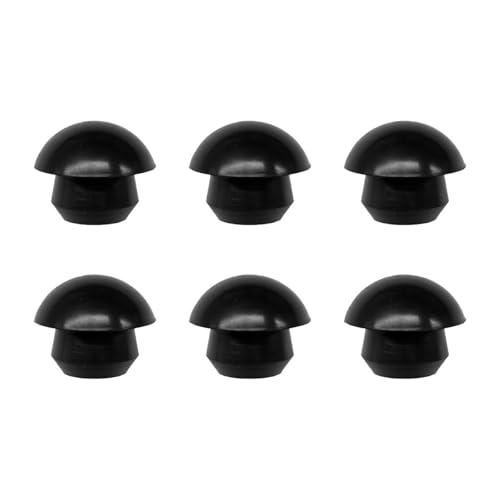 Tuxihapp 8mm Rubber Hydraulic Bottle Jack Oil |
8.9/10 | Buy |
Lyxheth 6-Pack 8mm Rubber Hydraulic Oil Reservoir
This six-pack of 8mm tapered rubber oil filler plugs by Lyxheth provides a practical replacement solution for cracked or missing hydraulic reservoir bungs on bottle and floor jacks. The push-in cone profile seats into standard 0.31-inch reservoir holes to help prevent fluid weeping and keep contaminants out of the hydraulic circuit.
Pros
- Tapered rubber profile seats firmly into standard 8mm (0.31-inch) reservoir fill ports
- Cost-effective six-pack provides multiple spares for service toolboxes and mobile repair rigs
- Pliable rubber construction helps prevent fluid weeping and resists hydraulic oil contact
- Press-in design allows quick replacement during fluid servicing without special tools
Cons
- Designed strictly for smooth 8mm (0.31-inch) openings and will not fit threaded ports or larger fill holes
- Lacks an integrated retaining tether, requiring care not to misplace the plug during fluid maintenance
- Rubber material may degrade over time if exposed to harsh cleaning solvents or extreme operating heat
Viliqiou 5/16-Inch Jack Oil Plugs (20-Pack)
Designed for routine hydraulic jack maintenance, these Viliqiou silicone plugs provide a snug, leak-resistant seal for standard 5/16-inch filler ports. The generous 20-piece pack ensures mechanics and shop owners always have spare stoppers ready.
Pros
- Durable silicone material resists tearing and degradation
- Flat-head design effectively seals against hydraulic leaks
- Tool-free installation and removal
- Generous 20-pack provides ample workshop spares
Cons
- Restricted to 5/16-inch filler ports
- Offered in only one color
Tuxihapp 8mm Rubber Hydraulic Bottle Jack Oil
This 6-pack of Tuxihapp 8mm tapered rubber oil filler plugs provides a snug, oil-resistant seal for hydraulic bottle jack and floor jack reservoirs. Designed to replace cracked, dry-rotted, or missing factory bungs, these plugs help prevent messy oil leaks during horizontal vehicle storage and keep contaminants out of your hydraulic fluid.
Pros
- Snug tapered conical profile designed for standard 8mm (0.31-inch) hydraulic reservoir ports
- Resilient, oil-resistant rubber compound resists hardening, cracking, and fluid weeping
- Tool-free press-in installation makes fluid flushes and reservoir air bleeding straightforward
- Economical 6-pack provides essential backups for shop toolboxes, farm trucks, and fleet rigs
Cons
- Specific to 8mm ports and will not fit jacks requiring threaded metal plugs or larger diameter bungs
- Tightly seated rubber can require careful prying with pliers or a dull pick during fluid service
- Repeated removal with sharp tools can gouge or tear the rubber over extended use
Frequently Asked Questions
In 2026, how often should you complete a floor jack oil change and replace fluid?
Replace hydraulic fluid every one to three years for regular home garage maintenance, or annually if the jack operates weekly. Storing equipment in unheated garages often leads to condensation buildup that degrades oil viscosity. Flushing the reservoir expels trapped moisture and restores full stroke efficiency across all ton ratings.
What are the primary symptoms of degraded hydraulic jack fluid?
Spongy pump strokes, incomplete lift height, and sluggish arm response indicate your hydraulic oil is contaminated. Aging fluid turns dark or milky as moisture mixes with internal seals, reducing holding pressure. If a jack requires excessive pumping to lift a vehicle, fresh hydraulic fluid usually restores rapid lifting performance.
Can you substitute standard motor oil or brake fluid in a floor jack?
No, you must never use motor oil, transmission fluid, or brake fluid in a hydraulic trolley jack. Brake fluid rapidly degrades internal rubber O-rings and filler plugs, causing leaks and sudden pressure failure. Quality hydraulic jack oil with anti-foaming additives provides the precise viscosity required to protect internal valves.
How do you bleed air after refilling floor jack fluid?
Open the release valve fully by turning the handle counterclockwise, pump the handle rapidly six to ten strokes, then close the valve tightly. This process pushes trapped air bubbles out of the cylinder into the reservoir. Removing the oil fill plug during bleeding allows air to escape, ensuring consistent pump resistance.
When are car ramps preferable to lifting with a floor jack?
Drive-on ramps offer a quick solution for basic underbody maintenance where wheel removal is unnecessary. Drivers learning how to use car ramps for oil change jobs appreciate the stable drive-on surface for flat driveways. Even so, a reliable hydraulic floor jack paired with stands remains necessary for brake jobs and suspension servicing.
About the author
Peter Nelson is an automotive writer whose published work includes off-road jacks, power tools, vehicle maintenance, and garage equipment. His coverage connects product features with practical applications, helping readers think through equipment choices for everyday repairs, project vehicles, and off-road situations.