
How Much Does a Car Lift Cost for a Garage: A Practical Guide for 2026
Planning how much does a car lift cost for a garage requires evaluating equipment tiers, concrete slabs, and wiring in November 2026.
 By Emily Markham
Updated October 10, 2026


Upgrading a home workshop from standard floor jacks and jack stands to dedicated vehicle elevation machinery completely reshapes how automotive repairs, detailing, and vehicle storage happen in residential bays. While many automotive enthusiasts begin their planning by wondering how much does a car lift cost for a garage, calculating the true total expenditure involves far more than simply checking the price tag on the machinery itself. A complete installation budget balances the baseline lifting mechanism against mandatory structural requirements, dedicated high-voltage electrical additions, freight logistics, and specialized fluid requirements. Reviewing a detailed residential car lift selection helps clarify how overall design configurations alter total workshop expenses.
Different structural frameworks create distinct investment brackets across the home equipment spectrum. Compact mechanical tire lifters and portable low-rise scissor frames present the most accessible entry point for DIY mechanics who have standard overhead space, whereas heavy-duty surface-mounted two-post hoists and multi-vehicle storage stackers represent larger initial capital investments. Beyond the core machinery purchase, buyers must evaluate concrete slab thickness, compressive strength ratings, and overhead door track modifications that protect both the vehicle and the building structure. Understanding each variable guarantees that your workshop upgrade remains safe, structurally sound, and financially predictable from initial freight offloading to the final hydraulic fluid purge.
| Award | Product | BJL Score About BJL ScoreThe BJL Score is our own rating from 0 to 10, based on performance, design and build, ease of use, and value. It reflects independent research and is never influenced by manufacturers, retailers, or affiliate commissions. Learn more › | |
|---|---|---|---|
| Best Overall |
LGYORWAY Portable Single Post Mobile Car Lift
|
9.2/10 | Buy |
| Best Premium |
 DigMaster 8000 LBS Portable Two Post Car Lift |
9.1/10 | Buy |
 WEIZE 11,000 lb Two-Post Car Lift with 220V 3HP |
9.1/10 | Buy | |
 KATOOL 11,000 lb 2-Post Car Lift |
8.8/10 | Buy | |
| Best Budget |
 Albott 7000 LBS Portable Scissor Car Lift |
8.6/10 | Buy |
 Albott 7000 lb Portable Car Lift with Extension |
8.1/10 | Buy | |
| Best Value |
 Albott 8000 LBS Portable Car Lift |
8.1/10 | Buy |
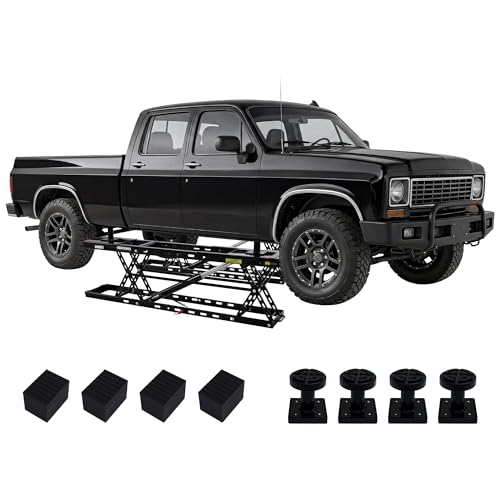 Albott 8000 LBS Portable Car Lift |
7.8/10 | Buy |
LGYORWAY Portable Single Post Mobile Car Lift
The LGYORWAY Portable Single Post Car Lift is a non-hydraulic, mobile tire-engaging lifting station rated for up to 8,800 lbs per wheel with a 33.5-inch maximum lift height. Requiring no electrical wiring, hydraulic fluid, or concrete floor anchors, it is an ideal choice for home garage DIYers and mobile mechanics seeking safe wheel-end access without pinching rocker panels.
Pros
- Mechanical drive requires no 110V or 220V electrical circuits and zero hydraulic fluid sourcing
- Tire-engaging forks eliminate contact with vulnerable vehicle pinch welds, floorboards, and rocker panels
- Compact 31.9 x 30.7 x 49.2-inch footprint rolls easily across standard residential garage slabs on 4 casters
- Substantial 33.5-inch rise height provides far superior working clearance compared to conventional 20-inch floor jacks
- Includes a heavy cargo plate to double as an industrial shop dolly and material handling station
Cons
- Lifts only one wheel or vehicle corner at a time rather than elevating the entire chassis simultaneously
- Carries European CE and TUV marks rather than American Automotive Lift Institute (ALI) gold label certification
- Requires a smooth, solid, and level hard surface to safely support and roll under substantial loads
DigMaster 8000 LBS Portable Two Post Car Lift
Engineered for home workshops with limited overhead space, the DigMaster portable two-post lift delivers an 8,000-pound capacity, 51.3-inch maximum lifting height, and 220V electric-lock operation. It offers DIY mechanics wheel-free service capability without the permanent footprint of a full-height commercial two-post hoist.
Pros
- 8,000-lb capacity handles passenger vehicles, light trucks, and SUVs without taking up permanent bay space
- Low column height of roughly 72 inches fits comfortably beneath standard 8-foot or 9-foot residential ceilings
- Mid-rise 51.3-inch elevation provides comfortable creeper or rolling seat clearance for underside vehicle maintenance
- Electric lock release system simplifies carriage engagement compared to complex manual dual-point release cables
Cons
- Maximum 51.3-inch lift height does not provide full stand-up undercarriage headroom for taller mechanics
- Requires a 220V electrical power connection, which may necessitate running dedicated garage wiring
- Substantial 1,223-lb shipping weight requires planned freight handling, equipment assistance, or extra hands for unloading
WEIZE 11,000 lb Two-Post Car Lift with 220V 3HP
The WEIZE 11,000-lb two-post automotive lift combines a high-output 220V 3HP hydraulic power unit with an open-floor layout for home garage mechanics and light commercial service bays. Requiring a dedicated 220V circuit, structural concrete slab, and dual-point lock disengagement, it offers substantial lifting capacity for sedans, SUVs, and work trucks.
Pros
- High 11,000-lb capacity easily handles heavier half-ton and three-quarter-ton trucks
- Wide 110.23-inch drive-through clearance makes vehicle positioning simple and stress-free
- Rugged 220V 3 HP hydraulic motor delivers dependable lifting muscle
- Clear-floor layout leaves garage floor completely open for transmission jacks and fluid drains
Cons
- Dual-point safety release requires walking to both columns to disengage locks before lowering
- Requires a dedicated 220V single-phase electrical hookup and an appropriate concrete foundation
- Heavy 1,426-lb shipping package requires a forklift, trailer ramp, or helpers for freight delivery offloading
KATOOL 11,000 lb 2-Post Car Lift
The KATOOL 11,000-lb two-post clearfloor automotive lift combines a high-output 4.0 HP 220V motor with dual hydraulic chain-drive cylinders to deliver a 4.25-inch to 70.75-inch lifting range. It is ideal for home mechanics, vehicle restorers, and independent shop operators with appropriate concrete foundations and 220V single-phase power.
Pros
- Heavy-duty 11,000-lb rating provides exceptional load headroom for full-size pickups, light trucks, and heavy unibody SUVs
- Low 4.25-inch minimum pad clearance accommodates standard passenger cars and lower ground-clearance vehicles
- Clearfloor overhead configuration keeps the bay floor free of raised drive-over baseplates for seamless transmission jack rolling
- Integrated column rubber padding helps protect vehicle door edges when entering and exiting elevated vehicles
- Powerful 4.0 HP single-phase 220V motor delivers reliable hydraulic lifting muscle for heavy-duty chassis
Cons
- Dual-side manual safety releases require walking to both columns to disengage mechanical locks before lowering
- Requires heavy freight offloading coordination via on-site forklift or customer terminal pickup for the 1,200-lb package
- Demands a dedicated 220V single-phase electrical circuit and verification of a sufficiently cured, structural concrete foundation
Albott 7000 LBS Portable Scissor Car Lift
The Albott 7000 LBS Portable Car Lift delivers reliable frame-engaging lifting power with a 28-inch maximum rise height, making it an excellent unanchored solution for low-ceiling residential garages. Built from high-strength Q235B steel, it suits DIY mechanics and car enthusiasts tackling brake jobs, tire rotations, and chassis maintenance on level concrete.
Pros
- Substantial 7,000-lb capacity easily handles most domestic sedans, sports cars, and midsize SUVs
- Mobile four-wheel design eliminates permanent concrete drilling and fits well under standard 8-to-10-foot residential ceilings
- Includes extension panels and multi-height adapter blocks to reach factory frame contact points across different wheelbases
- Multiple mechanical locking positions allow safe, stable under-vehicle working heights off hydraulic pressure
Cons
- Maximum 28-inch rise height does not provide full standing headroom underneath the vehicle
- Weighs 401 pounds, which requires moderate physical effort to reposition or wheel across uneven garage thresholds
- Requires a minimum load of approximately 220 pounds on the frames to compress the return springs and initiate descent
Albott 7000 lb Portable Car Lift with Extension
The Albott 7000 lb Portable Car Lift provides residential mechanics with reliable mid-rise lifting capacity without requiring permanent concrete anchors. Built from high-strength Q355B steel with dual mechanical locking pins, it delivers up to 20 inches of working height for brake jobs, tire rotations, and underbody maintenance.
Pros
- 7,000-pound lifting capacity accommodates a wide variety of passenger vehicles and half-ton trucks.
- Modular extension plates increase maximum jacking spread up to 70.7 inches for longer chassis.
- Dual mechanical safety locks ensure the raised vehicle is mechanically supported during undercar service.
- Compact folding frame design with integrated wall-mount handles preserves valuable garage floor space.
Cons
- Individual lifting frames weigh roughly 120 pounds each, requiring physical effort to position beneath vehicles.
- Maximum rise height of 20 inches provides practical clearance for wheel and suspension service, but does not allow full standing headroom.
- Hydraulic fluid is not included and requires sourcing ISO grade No. 46 hydraulic oil prior to first operation.
Albott 8000 LBS Portable Car Lift
The Albott 8,000 LBS Portable Car Lift is an unanchored, frame-engaging scissor lift system constructed from high-strength Q355B carbon steel and rated for vehicles up to 8,000 pounds. Featuring dual mechanical safety locking pins, an included 8.3-inch extension plate for 75-inch length stability, and a 22-inch lift height with rubber pads, this mobile unit is built for home garage DIY mechanics seeking reliable chassis clearance without permanent floor anchoring.
Pros
- Heavy-duty 8,000-pound rated capacity accommodates a wide range of consumer vehicles including many light trucks and SUVs
- Rigid Q355B carbon steel build provides dependable frame stability under load compared to basic steel alloys
- Dual mechanical safety locks and locking pins provide reliable physical engagement during elevated service work
- Completely unanchored operation eliminates the need for concrete core drilling, chemical anchors, or high ceilings
Cons
- Each individual frame weighs approximately 130 pounds, requiring physical effort to slide and align beneath vehicle jacking points
- Strict operational safety requirements mandate a flat, solid floor with no operating slopes exceeding 4 degrees
- Requires No. 46 hydraulic oil, which must be purchased separately prior to initial bleeding and operation
Albott 8000 LBS Portable Car Lift
The Albott 8000 LBS Portable Car Lift provides an 8,000-pound capacity frame-engaging scissor system constructed from high-tensile Q355B steel for low-ceiling residential garages. Featuring mechanical safety locks, dual locking pins, and extension plates reaching up to 75 inches, it suits DIYers and truck owners seeking serious lifting capability without permanent concrete anchoring.
Pros
- Substantial 8,000-lb gross capacity handles heavier consumer trucks and SUVs that exceed smaller portable units.
- Requires no permanent concrete slab anchor bolts, allowing free floor repositioning and low-ceiling garage clearance.
- Included extension plates lengthen frame support reach up to 75 inches to engage separated factory jacking points.
- Constructed from high-grade Q355B structural steel with dual locking pins for reliable mechanical safety.
Cons
- Individual frames weigh roughly 130 pounds each, requiring physical effort to slide and align beneath vehicles.
- Requires sourcing ISO No. 46 hydraulic fluid separately before initial setup and cylinder bleeding.
- Maximum lift height of 27.4 inches is restricted to creeper work and does not offer full standing undercarriage access.
Detailed Cost Breakdown and Garage Lift Investment Analysis
Determining the real investment required for a home garage vehicle hoist involves balancing the baseline machinery against several essential site preparation requirements. Many workshop owners assume that purchasing the lift constitutes the entirety of the project budget, only to discover secondary expenses during delivery and setup. A complete budget accounts for physical equipment design, structural slab readiness, high-voltage electrical wiring, freight offloading logistics, and ongoing maintenance consumables. Evaluating these expense categories prior to placing an order prevents unexpected project delays and ensures your chosen equipment matches your residential workspace.
Equipment Architecture Categories and Initial Capital Outlay
Lifting machinery falls into distinct architectural tiers, with each mechanical design reflecting a specific investment bracket and functional purpose. Entry-level portable solutions, such as mobile single-post tire lifters, offer the lowest capital barrier for hobbyists focused primarily on wheel, brake, and suspension servicing. Units like the LGYORWAY Portable Car Lift eliminate the need for electrical connections or hydraulic fluid systems, using manual mechanical leverage to elevate individual corners safely. Because these systems maneuver on caster wheels, they require zero building alterations and store easily against a wall when maintenance finishes.
Mid-tier investments introduce portable low-rise and mid-rise scissor frames that engage vehicle rocker panels and chassis pick-up points. Options such as the Albott 7000 LBS Portable Car Lift with Extension and the Albott 8000 LBS Portable Car Lift Quick Jack feature low-profile lifting frames driven by portable hydraulic power carts. These units elevate an automobile to comfortable working heights for brake repairs, tire rotations, and detailing while rolling away when parking space takes priority. While these portable assemblies require hydraulic oil and level concrete floors, they avoid permanent anchoring costs and fit inside garages with standard ceiling heights.
Permanent surface-mounted two-post hoists represent the upper end of residential equipment investments, delivering full underbody clearance for transmission replacements and heavy mechanical overhauls. Industrial-grade models such as the WEIZE 11000lbs Two Post Car Lift and the KATOOL 11000lbs 4.0HP 2 Post Lift Car Lift incorporate massive steel columns, high-output hydraulic power units, and dual equalization cables. Meanwhile, semi-portable two-post units like the Portable Two Post Car Lift 8000 LBS Capacity bridge the gap by offering bolt-down stability alongside modular mobility. These robust units demand the highest initial equipment outlay alongside strict slab preparation, but they provide uncompromised service versatility for full-size trucks and SUVs.
Concrete Slab Verification and Foundation Modification Costs
The structural integrity of your garage floor represents a critical and frequently underestimated cost variable when installing permanent lifting machinery. Two-post surface-mounted lifts transfer tremendous dynamic pulling force onto concrete anchor bolts, demanding a flat, uncracked foundation. Most manufacturers require a minimum slab depth of four inches, though heavy-duty equipment rated above ten thousand pounds often specifies four and a half to six inches of reinforced concrete. The concrete must also deliver a minimum compressive rating of 3,000 PSI and have cured for at least twenty-eight days to ensure wedge anchors achieve their required pull-out resistance.
Verifying existing concrete depth often requires drilling a discreet test hole in the planned mounting location to measure physical slab thickness accurately. If test drilling reveals a thin slab measuring under four inches, or if aggregate crumbling indicates degraded compressive strength, owners must budget for concrete foundation remediation. Rectifying an inadequate foundation entails saw-cutting rectangular sections of the existing floor, excavating sub-base soil, and pouring dedicated reinforced footing pads with high-strength concrete. This structural modification represents a notable secondary investment, yet skipping it introduces severe structural hazards including column tipping and anchor failure.
Garage slabs built with post-tensioned reinforcement cables present an additional logistical and financial hurdle that DIY builders cannot afford to ignore. Striking a tensioned steel tendon with a rotary hammer drill can cause explosive concrete spalling, severe structural failure of the home foundation, and serious physical injury. Properties built on post-tension foundations require professional ground-penetrating radar scanning to map cable locations before drilling single anchor holes. Investing in professional slab scanning services adds to initial installation expenses, but it provides the essential layout certainty required to drill anchor holes safely.
Electrical Service Upgrades and Dedicated Circuit Sizing
Operating a motorized automotive hoist requires adequate electrical supply capacity that frequently exceeds standard residential wall outlet capabilities. While compact portable scissor units sometimes utilize standard 110-volt or 120-volt circuits, full-size two-post lifts universally require dedicated 208-volt to 240-volt single-phase power connections. Commercial-grade power units, such as the 3.0-horsepower motor on the WEIZE lift or the 4.0-horsepower motor driving the KATOOL hoist, draw substantial amperage spikes when initiating hydraulic pump pressure under maximum vehicle load. Powering these systems safely demands a dedicated 20-amp or 30-amp circuit breaker paired with properly sized copper wiring run directly from the main service panel.
Homeowners whose main electrical panels are situated far from the workshop bay or already operating near total capacity must budget for professional electrical work. Hiring a licensed master electrician to install conduit, pull heavy-gauge wire, mount safety disconnect switches, and secure local building permits adds a recognizable installation line item. Attempting to run a high-output hydraulic motor on an undersized shared circuit or extension cord risks continuous breaker tripping, motor burnout, and hazardous overheating. Ensuring correct electrical provisioning protects expensive pump motors from voltage drops while guaranteeing rapid, consistent vehicle elevation cycles.
Garage Ceiling Clearance and Overhead Door Modifications
Vertical spatial constraints inside residential garages often mandate specialized structural alterations that influence total installation expenses. Full-size two-post lifts feature overall column heights exceeding nine or ten feet, requiring ample overhead space to accommodate the metal uprights and the vehicles elevated above them. Garages with standard eight-foot or nine-foot ceiling drywall cannot accommodate overhead crossbeam models without opening the ceiling to expose roof trusses. Low-ceiling workshops frequently favor baseplate two-post designs or portable scissor lifts like the Albott series, which avoid overhead structural interferences entirely while maintaining generous underbody access.
Overhead garage doors represent another physical obstacle that routinely clashes with elevated vehicles and hoist uprights. Standard garage doors roll along horizontal ceiling tracks suspended right where an elevated vehicle hood or roof needs to rest. Resolving track interference generally requires converting standard door tracks to high-lift or vertical-lift hardware that guides the door closer to the ceiling drywall. Center-mounted garage door openers and pull chains must also be replaced with wall-mounted jackshaft openers that connect directly to the door torsion shaft. Factoring in garage door track modifications ensures a conflict-free overhead bay that permits vehicles to rise safely to full mechanical lock height.
Freight Logistics, Delivery Receiving, and Offloading Realities
Receiving heavy steel garage equipment involves distinct logistics challenges that can introduce unexpected freight and handling fees. Unlike small parcels delivered directly to a front porch, heavy hoists ship via less-than-truckload freight carriers on massive flatbed trailers or enclosed semi-trucks. Steel columns, carriages, and hydraulic cylinders arrive banded together in heavy steel crates weighing between fifteen hundred and two thousand pounds. Buyers must review specialized freight delivery and unloading requirements before shipping to ensure appropriate equipment waits on site.
Residential freight deliveries typically include curbside drop-off only if the delivery vehicle features a commercial liftgate, yet many full-length lift crates exceed standard liftgate platform dimensions. Equipment manufacturers frequently require buyers to arrange their own offloading machinery, such as a forklift, tractor with forks, or a rented rollback flatbed tow truck. If offloading equipment cannot be secured at a home address, buyers often coordinate terminal pickup at the carrier freight depot using a heavy-duty trailer. Planning these delivery logistics in advance prevents costly carrier redelivery fees, storage surcharges, or freight return expenses.
Hydraulic Fluids, Anchors, and Specialized Consumables
Commissioning an automotive hoist requires several initial consumable purchases that are rarely supplied within the baseline equipment crate. Hydraulic power units require specialized hydraulic fluid, typically ISO 32 or ISO 46 anti-wear hydraulic oil, to operate cylinders smoothly and lubricate internal pump gears. High-capacity hoists feature fluid reservoirs holding three to four gallons of oil, necessitating upfront fluid purchases before testing can commence. Choosing quality fluid ensures that pressure relief valves seal properly and prevents internal seal cavitation during heavy lifting operations.
Anchoring surface-mounted columns also demands dedicated tooling and structural hardware that DIY builders may need to purchase or rent. Installing heavy wedge anchors requires a commercial rotary hammer drill, carbide-tipped concrete drill bits, compressed air blow-out nozzles, and an accurate torque wrench to tighten anchors to factory specifications. Horseshoe-shaped steel leveling shims are also mandatory to plumb columns vertically on garage floors that slope outward toward the apron. Exploring proven hydraulic car lift platforms emphasizes the value of utilizing correct hydraulic viscosity ratings, grade-five anchor hardware, and rust-inhibiting lubricants to secure reliable, leak-free operation.
DIY Self-Assembly Versus Professional Installation Rates
Deciding between self-installation and hiring certified automotive equipment technicians constitutes a major financial crossroads for any workshop owner. Assembling a two-post lift requires at least two capable individuals, heavy engine hoists or lifting straps to stand upright columns, precision spirit levels, and careful mechanical aptitude. DIY assembly eliminates contractor labor charges completely, making it an attractive route for experienced home fabricators and mechanics. However, self-installers must budget substantial personal time, typically spanning an entire weekend, to complete column alignment, anchor torquing, hydraulic bleeding, and cable synchronization safely.
Contracting professional installation technicians carries a dedicated service charge but delivers valuable peace of mind and structural assurance. Certified equipment installers bring specialized tools, heavy rigging dollies, laser levels, and rotary hammer equipment directly to the job site. They verify slab plumb, set anchors to precise torque thresholds, bleed hydraulic lines without messy spills, and synchronize equalization cables to guarantee identical carriage lock engagement. Certain equipment manufacturers also provide extended structural warranties when installation is executed and documented by recognized commercial contractors.
Preventive Maintenance, Long-Term Upkeep, and Operating Expenses
Maintaining vehicle hoists involves minor ongoing operating and maintenance expenses that protect your mechanical investment across years of service. Steel equalization cables stretch slightly during initial lifting cycles, requiring periodic tension checks and nut adjustments to keep carriages climbing simultaneously. Hydraulic fluid should be inspected regularly for moisture contamination or oxidation and flushed periodically according to duty cycles. Carriage slider blocks, cable sheaves, and arm restraint gear teeth also require regular application of high-pressure grease to prevent premature metal wear.
Routine safety audits also include checking wedge anchor bolt tension every few months using a calibrated torque wrench. Floor settling or vibration can occasionally loosen anchors, requiring re-torquing to prevent column baseplate movement under load. Replacing worn rubber lift pads, truck height adapters, or hydraulic hoses over time incurs modest secondary costs, but proactive parts replacement prevents vehicle chassis damage and hydraulic leaks. Budgeting for routine consumables ensures your garage setup delivers decades of safe, ergonomic underbody service without unexpected downtime.
Calculating the true investment for your home workshop involves looking beyond sticker prices and viewing the lift as a complete structural system. By accounting for equipment design, concrete slab validation, dedicated high-voltage wiring, delivery logistics, and essential tools, homeowners can plan an accurate project budget that avoids mid-project surprises. Choosing the right machinery tier for your vehicle weight requirements and ceiling dimensions guarantees that your garage upgrade delivers safe, dependable automotive access for every repair task ahead.
About the author
Emily Markham is an automotive aftermarket editor who has covered professional tools, workshop equipment, and the businesses that support vehicle repair since 2019. Her editorial background gives her a practical understanding of how technicians and shop owners evaluate equipment, product value, and long-term support.