
How Much Power Does a Car Lift Use? Garage Electrical Guide for 2026
Learn how much power does a car lift use, from motor wattage to circuit breaker needs, in this garage electrical guide updated for October 2026.
 By Hank O'Hop
Updated October 10, 2026
By Hank O'Hop
Updated October 10, 2026

Electrical service in residential workshops requires careful planning before installing heavy machinery, yet power supply requirements are frequently overlooked during garage layout design. Many automotive hobbyists and DIY mechanics wonder exactly how much power does a car lift use before selecting equipment for a home workshop. Operating an electro-hydraulic power unit requires matching your workshop circuit breaker panel to the motor demand so the equipment operates without tripping breakers or stalling under vehicle weight. Sizing your electrical circuits properly from the start ensures that lighting, air compressors, and hydraulic hoists function harmoniously without overloading your electrical service panel.
Power demands vary substantially depending on whether a hoist operates on a standard household branch circuit or a dedicated high-voltage line. While compact portable scissor lifts frequently plug into standard 110V utility outlets, full-height two-post and four-post hoists depend on dedicated 220V circuits to raise heavy vehicles reliably. Reviewing different hydraulic configurations in our guide to residential car lift installations helps clarify how specific vehicle hoist designs influence garage utility planning. Understanding these electrical requirements protects your pump motor from premature failure, prevents frustrating breaker trips, and ensures safe operation across years of vehicle maintenance projects.
| Award | Product | BJL Score About BJL ScoreThe BJL Score is our own rating from 0 to 10, based on performance, design and build, ease of use, and value. It reflects independent research and is never influenced by manufacturers, retailers, or affiliate commissions. Learn more › | |
|---|---|---|---|
| Best Overall |
Mid Rise Car Lift 7000lbs,Portable Car Lift
|
8.9/10 | Buy |
| Best Budget |
 Albott 7000 LBS Portable Car Lift with Extension
|
8.6/10 | Buy |
| Best Premium |
 Auto Lifts 14,000 lbs Car Lift 220V 2 Post Lift
|
8.3/10 | Buy |
| Best Value |
 Albott 8000 LBS Portable Car Lift Quick Jack
|
8.1/10 | Buy |
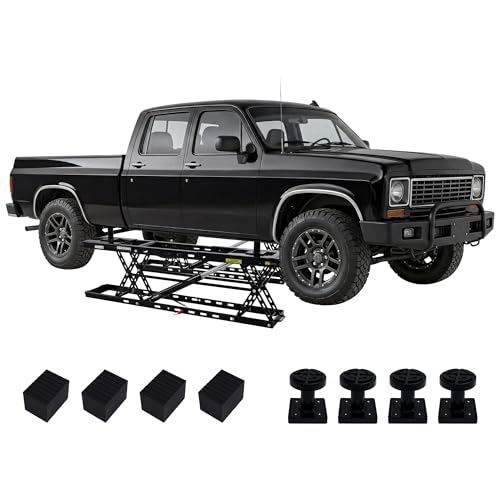 Albott 8000 LBS Portable Car Lift for Home Garage
|
7.8/10 | Buy |
Understanding Power Draw, Voltage Requirements, and Energy Costs for Car Lifts
Determining how much power an automotive lift consumes requires separating instantaneous power draw from cumulative energy consumption over time. An automotive lift draws electrical current only while the electric motor spins the hydraulic pump to raise a vehicle. Once the mechanical safety locks engage at the desired working height, the motor turns off completely and draws zero electricity. Lowering the vehicle uses gravity rather than electrical motor power, meaning the lift consumes power for less than two minutes during an entire service cycle.
The Direct Answer: Instantaneous Watts versus Kilowatt-Hours
Instantaneous power represents the electrical wattage required to drive the hydraulic pump while forcing pressurized fluid into the lifting cylinders. Most residential and light commercial hydraulic power units feature electric motors rated between 1.5 and 3 horsepower. In electrical terms, one mechanical horsepower equals roughly 746 watts, but accounting for motor efficiency losses brings real-world continuous electrical draw between 1,500 and 3,000 watts under full rated load. This means that when the pump is actively lifting a vehicle, it consumes power at a rate comparable to an electric clothes dryer or a large kitchen oven.
Cumulative energy consumption tells a completely different story because the duty cycle is remarkably brief. Raising a sedan, sports car, or pickup truck to maximum working height typically takes between 45 and 60 seconds. Running a 2,200-watt motor for a single one-minute ascent consumes approximately 0.037 kilowatt-hours of electrical energy. Even in regions with elevated residential electricity rates, that single lift cycle costs less than one or two pennies in total utility expense.
The primary engineering challenge for garage owners is therefore never the monthly electric utility bill. The true concern centers on whether your garage electrical panel and branch wiring can supply the immediate current required by the motor. Electrical circuits must be sized to support the initial startup demand and continuous lifting current without tripping breakers or overheating branch wires. Understanding this fundamental distinction allows you to focus workshop planning on proper wire gauges and dedicated breakers rather than ongoing power costs.
Voltage Classifications: 110V Standard Household versus 220V Dedicated Circuits
Automotive lifts generally fall into two primary electrical categories: standard 110V to 120V single-phase systems and heavy-duty 208V to 240V single-phase units. Low-rise frames and portable scissor lifts frequently utilize 110V power units so homeowners can plug them into accessible garage outlets. These 110V power units typically require a dedicated 20-amp circuit wired with 12-gauge copper conductors to function safely. Operating a 110V pump on a shared 15-amp general household circuit almost always results in immediate breaker trips when lifting a vehicle.
Fixed two-post service hoists and heavy four-post parking lifts almost universally rely on 208V to 240V power configurations. Doubling the line voltage cuts the operating amperage in half for the exact same mechanical workload, improving electrical efficiency and motor reliability. A 220V power unit running a 2.5-horsepower motor draws approximately 12 to 18 running amps under heavy mechanical load. This reduced current flow produces significantly less heat within the motor windings, allowing the unit to handle frequent lifting cycles in busy repair facilities.
Commercial hoists rated for 14,000 pounds or more require robust 220V power units to generate sufficient hydraulic pressure across heavy structural direct-drive cylinders. These heavy units demand dedicated double-pole 30-amp breakers and heavy 10-gauge wiring to prevent voltage drop under peak strain. Choosing between 110V and 220V configurations usually comes down to your available electrical service capacity and whether you prioritize portable convenience or heavy vehicle lifting capability.
Inrush Starting Amperage versus Continuous Running Current
Electric motors on hydraulic pumps exhibit two distinct current ratings: continuous running amperage and inrush starting amperage. Inrush current, often referred to as locked-rotor amperage, occurs during the initial fraction of a second when power is first applied to the stationary motor shaft. Because the pump must instantly overcome fluid inertia and high initial resistance inside the hydraulic lines, startup current can spike two to three times higher than nameplate running amperage. A motor with a running rating of 15 amps may briefly demand 35 to 45 amps at the exact moment the push-button switch is depressed.
Standard residential circuit breakers are engineered with thermal-magnetic trip curves designed to tolerate brief current spikes without disconnecting the circuit. However, an undersized breaker or an aging electrical panel will interpret this heavy inrush surge as a direct short circuit, tripping instantly. Dedicated circuits protect your equipment by ensuring that no other appliances or lighting fixtures contribute to the momentary current surge. Dedicated branch wiring also protects delicate electronics in your home from experiencing voltage sags during motor startup.
Running current takes over once the motor reaches its normal operational speed and the hydraulic oil flows steadily into the cylinders. This operational amperage remains relatively steady as the vehicle climbs toward the overhead shutoff bar or maximum cylinder stroke. If the vehicle approaches the upper boundary of the lift’s rated lifting capacity, running amperage will climb slightly as hydraulic system pressure reaches its relief valve threshold. Monitoring motor temperature and listening for smooth pump operation helps verify that the running current remains well within safe engineering limits.
The Zero-Energy Descent: Gravity-Driven Hydraulic Return
One of the most energy-efficient aspects of modern automotive hoists is the descent cycle. Raising a vehicle requires substantial mechanical energy to force pressurized fluid through high-pressure hoses and into the cylinders, but lowering the vehicle requires no electrical motor assistance whatsoever. Modern hydraulic car lift systems rely purely on gravity and vehicle curb weight to force hydraulic fluid back into the reservoir tank. The vehicle weight pushes down on the cylinders, directing fluid through a controlled flow-restrictor valve that regulates descent speed safely.
The lowering process begins by raising the carriages slightly off their mechanical safety locks, which takes roughly two seconds of motor power. Once the lock release lever or pneumatic release mechanism pulls the locking pawls clear of the lock ladder, the operator opens a manual lowering valve. This valve simply creates an open path for the fluid to drain back into the reservoir without engaging the electric motor. In lifts with electric lowering solenoids, the only power consumed during descent is the negligible fraction of a watt needed to energize a small 12V or 24V valve coil.
Because gravity drives the descent, portable scissor lifts and frame-engaging units often require a minimum weight threshold to compress return springs and overcome seal friction. Manufacturer guidelines for portable scissor frames, for instance, frequently specify a minimum load of roughly 200 pounds to achieve a complete drop to the floor. Without sufficient vehicle mass, the hydraulic fluid will not overcome cylinder internal seal resistance, leaving the empty lift slightly elevated. This gravity-based mechanism keeps long-term operating costs minimal while providing a fail-safe lowering method during power outages.
Wire Gauge Sizing, Distance Runs, and Voltage Drop Concerns
Electrical wiring must be sized properly to prevent severe voltage drop between your main breaker panel and the lift power unit. Voltage drop occurs when electrical current travels through undersized conductors over long distances, causing a decrease in available voltage at the motor terminals. When an electric motor experiences low operating voltage, it draws higher amperage to compensate for the lost power, which causes excessive heat buildup inside the motor windings. Over time, chronic voltage drop degrades winding insulation, weakens motor torque, and can cause premature pump motor burnout.
For standard 110V power units positioned within 25 feet of the service panel, 12 AWG copper wire on a dedicated 20-amp breaker is standard practice. If the wiring run extends between 50 and 100 feet into a detached garage or pole barn, upgrading to 10 AWG copper wire is strongly recommended to minimize line resistance. Under no circumstances should operators power a hydraulic lift through lightweight household extension cords or multi-outlet power strips. Thin extension cords cause extreme voltage drop, create serious fire hazards, and can starve the hydraulic pump during heavy vehicle ascents.
Dedicated 220V circuits demand equal attention to wire sizing and conduit routing. Standard installations within 50 feet of the subpanel typically utilize 10 AWG copper conductors connected to a dedicated 30-amp two-pole breaker. Longer runs exceeding 75 feet should step up to 8 AWG conductors to guarantee that full line voltage reaches the power unit contactor. Investing in correct copper wire sizing ensures smooth motor starts, quiet hydraulic pump operation, and dependable service throughout the operating lifespan of your lift.
Portable Scissor Lifts versus Heavy Two-Post Commercial Hoists
Comparing power consumption across different lift architectures highlights the relationship between motor size, capacity, and structural engineering. Portable mid-rise scissor lifts rated for 7,000 to 8,000 pounds frequently utilize compact 110V power units designed for residential versatility. These units offer flexible mobility in home garages and low-ceiling bays where installing high-voltage electrical lines is impractical. While their lift cycle may take slightly longer than high-voltage commercial units, they deliver sufficient hydraulic pressure to raise light trucks and passenger cars using standard workshop power.
In contrast, heavy-duty commercial vehicle hoists engineered with 14,000-pound capacities rely exclusively on high-torque 220V direct-drive hydraulic power units. Heavy two-post commercial hoists feature reinforced double S-shaped steel columns, massive direct-drive cylinders, and wide drive-through clearances to handle full-size diesel work trucks and commercial fleet vans. Raising 14,000 pounds requires substantial hydraulic flow rates, which only a heavy-duty 220V motor can generate without excessive cycle times or thermal overload. The commercial power unit operates faster and handles continuous daily duty cycles that would rapidly overheat a light 110V motor.
Structural steel mass and cylinder volume directly dictate the electrical horsepower required to lift vehicles safely. A mid-rise scissor lift uses smaller cylinders working through mechanical linkage levers, whereas a direct-drive two-post hoist uses full-stroke cylinders with larger fluid displacement volumes. Choosing the right lift requires balancing your vehicle fleet demands against the electrical supply capacity of your garage. While a portable 110V scissor lift easily handles weekend brake jobs, larger shop hoists demand dedicated high-voltage infrastructure to deliver their rated industrial lifting strength.
Garage Subpanel Capacity and Generator Compatibility
Installing an automotive hoist often prompts a thorough review of the total electrical service entering your garage or workshop building. Older residential detached garages frequently operate on modest 30-amp or 60-amp subpanels that also supply interior lighting, door openers, and wall receptacles. Adding a 220V lift drawing 25 starting amps to a 30-amp subpanel leaves almost zero headroom for air compressors, space heaters, or metal fabrication equipment. If your workshop panel lacks sufficient spare breaker slots, installing a dedicated 100-amp subpanel represents the most reliable solution for expanding your shop capabilities.
Many rural property owners and mobile mechanics question whether a portable generator can run an automotive lift effectively. Operating a hydraulic power unit on generator power is feasible, but the generator must feature sufficient surge capacity to handle the locked-rotor startup spike. A generator rated for 3,500 running watts may stall immediately when a 2,000-watt pump motor attempts to start against hydraulic head pressure. To run a 110V or 220V hydraulic power unit smoothly, the generator should deliver at least 5,000 to 7,000 starting watts of clean, low-distortion power.
Inverters and solar battery backup banks also require careful surge calculation before attempting to power vehicle lifting equipment. Pure sine wave inverters are mandatory because modified sine wave units can cause electric motors to run hot and vibrate excessively. Inverter systems must be capable of providing high instantaneous peak currents without tripping internal overload protection circuits. Verifying these electrical margins ensures that you can safely raise vehicles even in remote workshops or during utility power interruptions.
Electrical Safety Practices, Lock Engagement, and Preventive Care
Operating hydraulic shop equipment safely requires strict adherence to mechanical and electrical operating standards. After raising a vehicle to the appropriate working height, operators must always lower the carriage onto the mechanical safety locks before stepping underneath. Resting the vehicle on solid steel lock ladders completely removes hydraulic pressure from the hoses, pump, and cylinder seals while preventing accidental vehicle drops. This standard shop practice also guarantees that the electrical power unit remains entirely de-energized throughout your mechanical repair work.
Routine maintenance on the hydraulic power unit directly influences the electrical efficiency and amperage draw of the pump motor. Using the manufacturer-specified hydraulic oil viscosity, such as standard No. 46 hydraulic fluid, ensures that fluid moves freely through pump gears and internal valves. Contaminated or overly viscous fluid forces the electric motor to work harder, increasing running amperage and generating excess heat. Inspecting hydraulic fluid clarity and replacing dirty oil on schedule keeps pump resistance low and prolongs motor life.
Inspecting electrical connections, switch contacts, and motor starter capacitors should be part of your scheduled garage safety routine. Loose terminal screws or corroded spade connectors increase circuit resistance, leading to localized heating and potential motor failure. Always disconnect the main circuit breaker or unplug the power unit before performing any electrical inspection or fluid maintenance. Ground-fault protection and properly grounded steel motor housings provide vital defense against electrical shock in garage bays where moisture or fluid spills may occur.
Understanding the balance between electrical supply and hydraulic demand ensures that your automotive lift operates safely and reliably for years to come. While actual electrical energy consumption adds only pennies to your monthly utility bill, supplying clean voltage through correctly sized dedicated circuits protects both your equipment and your workshop. Whether you select a portable 110V scissor lift for personal vehicle maintenance or a heavy 220V two-post hoist for demanding truck repairs, proper electrical planning delivers dependable lifting performance whenever project work begins.
About the author
Hank O'Hop writes about automotive tools, hands-on repairs, and the challenges of maintaining and improving project cars. His published work covers workshop equipment, engine hoists, power tools, and garage upgrades, offering practical insights for readers who prefer to understand their equipment before putting it to work.