
How Much Car Lift Cost: Practical Cost and Setup Guide for 2026
Evaluate how much car lift cost in November 2026, including equipment categories, foundation requirements, power upgrades, and shipping logistics.
 By Christian Hazel
Updated October 10, 2026


Transforming a home garage into a functional workspace begins with eliminating the frustration of crawling across cold concrete under precarious jack stands. When evaluating shop equipment upgrades, determining how much car lift cost involves far more than just the purchase sticker on a steel frame. Buyers must balance vehicle curb weight, structural concrete slab integrity, and electrical supply capabilities before committing to residential car lifts. Factoring in overhead clearance and freight logistics ensures the hoist delivers dependable service without surprising hidden expenses.
Lifting hardware ranges from compact portable frames designed for track days to heavy two-post commercial hoists capable of supporting full-size work trucks. Understanding how much car lift cost across various designs helps mechanics select between wheel-free service accessibility and multi-vehicle storage efficiency. Modern hydraulic car lifts incorporate critical mechanical lock ladders and dual-cylinder safety systems that protect both the vehicle and technician during intense service procedures. Calculating the total investment requires analyzing equipment categories, shipping realities, and site preparation requirements before anchoring any columns.
| Award | Product | BJL Score About BJL ScoreThe BJL Score is our own rating from 0 to 10, based on performance, design and build, ease of use, and value. It reflects independent research and is never influenced by manufacturers, retailers, or affiliate commissions. Learn more › | |
|---|---|---|---|
| Best Overall |
Rueekfil 7000 LBS Portable Car Lift
|
9.2/10 | Buy |
| Best Premium |
 KATOOL 7000 lb Portable Mid-Rise Scissor Lift |
9.1/10 | Buy |
 WEIZE 11,000 lb Two-Post Car Lift with 220V 3HP |
9.1/10 | Buy | |
| Best Budget |
 Real Relax 7000 LBS Portable Car Lift with 11-Inch |
8.9/10 | Buy |
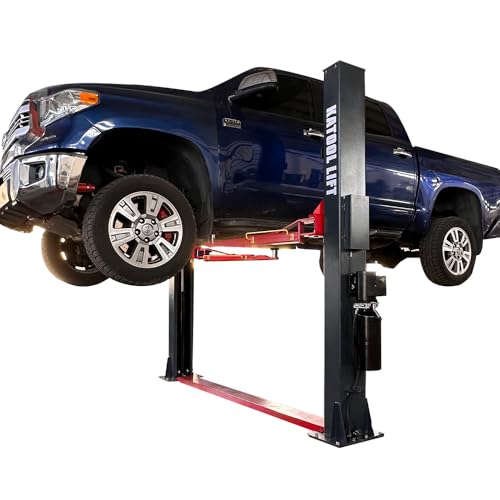 KATOOL 12,000-lb Heavy-Duty 2-Post Car Lift |
8.9/10 | Buy | |
| Best Value |
 Albott 7000 LBS Portable Scissor Car Lift |
8.6/10 | Buy |
 VEVOR Portable Manual Car Lift 4400 lbs Capacity |
8.1/10 | Buy | |
 Albott 7000 lb Portable Car Lift with Extension |
8.1/10 | Buy | |
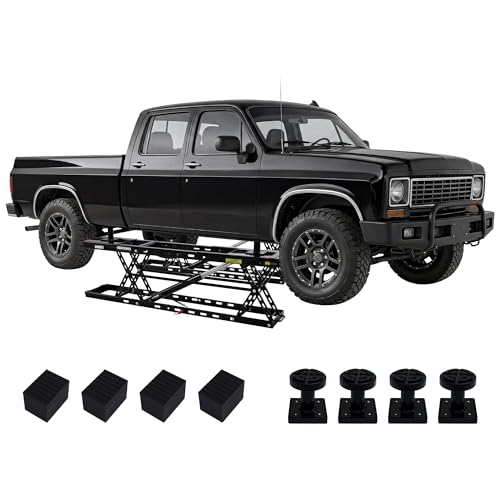 Albott 8000 LBS Portable Car Lift |
7.8/10 | Buy |
Rueekfil 7000 LBS Portable Car Lift
The Rueekfil 7000 LBS Portable Car Lift is a heavy-duty, frame-engaging hydraulic vehicle lift designed for home garage DIYers and mobile mechanics seeking up to 28 inches of working clearance without drilling into concrete. Built from Q235B carbon steel with positive mechanical safety locks and wall-mount storage handles, it provides a stable platform for servicing unibody sedans, SUVs, and light trucks.
Pros
- Substantial 7,000-pound lifting capacity easily handles heavier passenger cars, midsize trucks, and modern electric vehicles
- Unanchored portable frame design operates without requiring permanent anchor bolts or structural slab modifications
- Mechanical safety locks provide rigid structural engagement at working height before undercarriage service begins
- Comes packaged with 11-inch extension plates, adjustable height columns, and rubber lift pads for versatile chassis contact
- Built-in nylon rolling wheels and wall-mount handles simplify workshop repositioning and vertical off-the-floor storage
Cons
- Total crated package weight of 418 pounds requires a helper or mechanical assistance during freight delivery and unboxing
- Safety locks require manual physical disengagement on both independent lift frames before lowering the vehicle
- Maximum 26.8 to 28-inch lift height requires creeper access rather than providing full upright standing headroom
KATOOL 7000 lb Portable Mid-Rise Scissor Lift
The KATOOL 7,000 lb mid-rise scissor lift delivers 39 inches of lifting clearance with an ultra-low 4.3-inch collapsed profile powered by standard 110V electricity. It is an ideal solution for DIY mechanics, sports car enthusiasts, and low-ceiling garage owners who require dependable vehicle lifting without drilling permanent floor anchors.
Pros
- Substantial 7,000 lb capacity handles a wide variety of passenger cars, lowered sports cars, and light utility vehicles
- Ultra-low 4.3-inch drive-over profile eliminates clearance issues on low-slung performance vehicles
- Runs on a standard 110V household electrical supply for effortless residential garage integration
- Compact 39-inch vertical rise is perfectly matched to standard 8-to-10-foot residential ceiling heights
- Freestanding design avoids the concrete anchor drilling and slab modifications required by two-post lifts
Cons
- LTL freight delivery requires an on-site forklift for offloading or customer pickup at a regional freight terminal
- A 39-inch maximum lift height requires creeper or rolling stool use rather than full upright standing clearance
- Hydraulic oil is not pre-filled and must be sourced separately prior to system priming and operation
WEIZE 11,000 lb Two-Post Car Lift with 220V 3HP
The WEIZE 11,000-lb two-post automotive lift combines a high-output 220V 3HP hydraulic power unit with an open-floor layout for home garage mechanics and light commercial service bays. Requiring a dedicated 220V circuit, structural concrete slab, and dual-point lock disengagement, it offers substantial lifting capacity for sedans, SUVs, and work trucks.
Pros
- High 11,000-lb capacity easily handles heavier half-ton and three-quarter-ton trucks
- Wide 110.23-inch drive-through clearance makes vehicle positioning simple and stress-free
- Rugged 220V 3 HP hydraulic motor delivers dependable lifting muscle
- Clear-floor layout leaves garage floor completely open for transmission jacks and fluid drains
Cons
- Dual-point safety release requires walking to both columns to disengage locks before lowering
- Requires a dedicated 220V single-phase electrical hookup and an appropriate concrete foundation
- Heavy 1,426-lb shipping package requires a forklift, trailer ramp, or helpers for freight delivery offloading
Real Relax 7000 LBS Portable Car Lift with 11-Inch
The Real Relax 7000 LBS Portable Car Lift delivers dependable, unanchored vehicle lifting for home mechanics working under standard residential ceilings. Rated for up to 7,000 lbs with heavy-duty Q235B steel construction, mechanical safety locks, and integrated transport wheels, it is an ideal maintenance solution for DIYers servicing sedans, light trucks, and SUVs without drilling into concrete.
Pros
- Substantial 7,000-lb rated lifting capacity accommodates both passenger cars and light-duty trucks
- Unanchored, portable utility eliminates the need for concrete anchor bolts or permanent bay modification
- Included 11-inch extension plates expand the support footprint for extended-wheelbase models
- Integrated nylon wheels and dual storage handles facilitate mobility and wall-mounted stowage
Cons
- Requires a minimum vehicle load of approximately 220 lbs to lower the hydraulic cylinders
- Overall unit weight of roughly 425 lbs requires physical effort when maneuvering or hanging on walls
- Hydraulic fluid (No. 46 hydraulic oil) is not pre-filled and must be sourced separately before use
KATOOL 12,000-lb Heavy-Duty 2-Post Car Lift
The KATOOL 12,000-lb two-post automotive lift delivers heavy-duty lifting capacity powered by a robust 4.0 HP 220V motor, symmetric arms, and single-point lock release. It is an ideal solution for independent shops and home mechanics servicing full-size trucks, SUVs, and passenger vehicles with appropriate slab and electrical support.
Pros
- High 12,000-lb lifting capacity readily handles heavy diesel trucks, work vans, and fleet vehicles.
- Single-point safety lock release streamlines daily shop workflow for solo mechanics.
- Supplied with screw-on pads and 100mm height extension adapters right in the crate.
- Generous 70.86-inch maximum rise height provides ample undercarriage working room.
Cons
- Crated shipping weight of 1,379 lbs requires a forklift on-site for offloading or customer freight terminal pickup.
- Carries European CE certification rather than third-party Automotive Lift Institute (ALI) gold label certification.
- Requires a dedicated 220V single-phase electrical supply and user-sourced hydraulic oil prior to initial startup.
Albott 7000 LBS Portable Scissor Car Lift
The Albott 7000 LBS Portable Car Lift delivers reliable frame-engaging lifting power with a 28-inch maximum rise height, making it an excellent unanchored solution for low-ceiling residential garages. Built from high-strength Q235B steel, it suits DIY mechanics and car enthusiasts tackling brake jobs, tire rotations, and chassis maintenance on level concrete.
Pros
- Substantial 7,000-lb capacity easily handles most domestic sedans, sports cars, and midsize SUVs
- Mobile four-wheel design eliminates permanent concrete drilling and fits well under standard 8-to-10-foot residential ceilings
- Includes extension panels and multi-height adapter blocks to reach factory frame contact points across different wheelbases
- Multiple mechanical locking positions allow safe, stable under-vehicle working heights off hydraulic pressure
Cons
- Maximum 28-inch rise height does not provide full standing headroom underneath the vehicle
- Weighs 401 pounds, which requires moderate physical effort to reposition or wheel across uneven garage thresholds
- Requires a minimum load of approximately 220 pounds on the frames to compress the return springs and initiate descent
VEVOR Portable Manual Car Lift 4400 lbs Capacity
The VEVOR Portable Manual Car Lift delivers a 4,400-lb (2-ton) capacity and a 5.9 to 23-inch lift range driven mechanically by a power drill or hand crank without requiring hydraulics or electrical wiring. Featuring an unanchored triangular steel frame, 31.5-inch non-slip contact pads, and nylon transport casters, it is an accessible solution for home garage DIYers working on compact cars in low-ceiling spaces.
Pros
- Completely mechanical lifting operation requires no hydraulic fluid, air compressors, or dedicated 220V electrical circuits
- Low 5.9-inch collapsed profile easily slides beneath low-clearance vehicles and tucks away against garage walls when not in use
- Integrated nylon caster wheels allow a single operator to roll and position the lift frame effortlessly across smooth concrete floors
- Generous 31.5-inch non-slip rubberized contact pads distribute weight evenly to protect factory pinch welds and rocker panels
Cons
- 4,400-lb gross weight limit is not suitable for full-size pickup trucks, heavy electric vehicles, or large SUVs
- Lifting mechanism strictly prohibits impact wrenches and requires manual drill or hand-crank operation
- Maximum 23-inch lift height is designed for creeper work rather than providing full standing headroom
Albott 7000 lb Portable Car Lift with Extension
The Albott 7000 lb Portable Car Lift provides residential mechanics with reliable mid-rise lifting capacity without requiring permanent concrete anchors. Built from high-strength Q355B steel with dual mechanical locking pins, it delivers up to 20 inches of working height for brake jobs, tire rotations, and underbody maintenance.
Pros
- 7,000-pound lifting capacity accommodates a wide variety of passenger vehicles and half-ton trucks.
- Modular extension plates increase maximum jacking spread up to 70.7 inches for longer chassis.
- Dual mechanical safety locks ensure the raised vehicle is mechanically supported during undercar service.
- Compact folding frame design with integrated wall-mount handles preserves valuable garage floor space.
Cons
- Individual lifting frames weigh roughly 120 pounds each, requiring physical effort to position beneath vehicles.
- Maximum rise height of 20 inches provides practical clearance for wheel and suspension service, but does not allow full standing headroom.
- Hydraulic fluid is not included and requires sourcing ISO grade No. 46 hydraulic oil prior to first operation.
Albott 8000 LBS Portable Car Lift
The Albott 8000 LBS Portable Car Lift provides an 8,000-pound capacity frame-engaging scissor system constructed from high-tensile Q355B steel for low-ceiling residential garages. Featuring mechanical safety locks, dual locking pins, and extension plates reaching up to 75 inches, it suits DIYers and truck owners seeking serious lifting capability without permanent concrete anchoring.
Pros
- Substantial 8,000-lb gross capacity handles heavier consumer trucks and SUVs that exceed smaller portable units.
- Requires no permanent concrete slab anchor bolts, allowing free floor repositioning and low-ceiling garage clearance.
- Included extension plates lengthen frame support reach up to 75 inches to engage separated factory jacking points.
- Constructed from high-grade Q355B structural steel with dual locking pins for reliable mechanical safety.
Cons
- Individual frames weigh roughly 130 pounds each, requiring physical effort to slide and align beneath vehicles.
- Requires sourcing ISO No. 46 hydraulic fluid separately before initial setup and cylinder bleeding.
- Maximum lift height of 27.4 inches is restricted to creeper work and does not offer full standing undercarriage access.
Detailed Financial Breakdown and Garage Lift Ownership Factors
Calculating the true financial commitment of adding a vehicle lift requires examining hardware pricing alongside structural preparation, site logistics, and operational safety. While initial equipment figures represent the most visible expense, total project expenditures depend heavily on garage architecture, concrete readiness, and electrical capacity. Evaluating these interconnected factors early prevents expensive mid-installation delays and ensures dependable service life.
Equipment Classifications and Initial Hardware Categories
Automotive lifts fall into distinct design categories that dictate their mechanical complexity and initial investment requirements. Portable frame-engaging models, such as low-profile quick-lifting units, serve entry-level budgets by eliminating permanent mounting while providing convenient underbody access. These compact units utilize collapsible carbon steel assemblies and detachable hydraulic power units, making them ideal for standard residential bays. Their minimal setup requirements keep upfront investment lower than fixed machinery.
Mid-rise scissor lifts occupy a middle investment tier, delivering substantial lifting power and increased vertical clearance for brake and suspension work. Units such as the KATOOL mid-rise scissor hoist provide up to 39 inches of elevation with a 7,000-pound rating, bridging the gap between portable frame jacks and permanent column lifts. These systems incorporate robust steel linkages and multi-position mechanical safety locks that require precision manufacturing for secure undercarriage access.
Full-height two-post hoists represent the commercial service standard, requiring heavy vertical columns, structural baseplates or overhead crossbeams, and telescoping swing arms. Higher-capacity models, like the WEIZE 11,000-pound lift or the KATOOL 12,000-pound system, utilize high-tensile steel columns, dual hydraulic cylinders, and continuous synchronization cables. Evaluating heavy-duty shop lifts reveals that heavier steel construction provides essential structural safety margins when servicing heavy diesel trucks or work vans.
Concrete Slab Verification and Foundation Modification Expenses
Anchoring a two-post lift to an unverified residential garage floor presents serious structural hazards that can lead to catastrophic column pullout. Manufacturers typically mandate a cured concrete slab with a minimum thickness of 4 inches and a compressive rating of at least 3,000 PSI. Core drilling a small inspection hole allows homeowners to verify slab depth accurately before drilling anchor holes or bolting down heavy upright columns.
When existing concrete fails to meet minimum engineering thresholds, structural remediation becomes necessary and adds substantial expense to the overall project. Remediation requires saw-cutting floor sections, excavating soil, and pouring dedicated reinforced concrete footings measuring at least 4 feet square and 12 inches deep. This process demands rebar reinforcement and a full 28-day cure period to reach structural compressive ratings before anchor installation, adding tool rentals and concrete delivery costs.
Modern residential construction frequently incorporates post-tension cable foundations, which introduce extreme drilling hazards. Cutting into an energized post-tension tendon with a rotary hammer drill can cause explosive concrete blowout, structural damage, and severe personal injury. Hiring a professional concrete scanning technician with ground-penetrating radar equipment ensures safe anchor placement away from high-tension cables, protecting the home foundation and ensuring proper anchor holding power.
Electrical Infrastructure and Dedicated Circuit Requirements
Powering an automotive lift requires assessing the garage breaker panel and available branch circuit amperage. Compact portable lifts and light scissor systems often operate on standard 110-volt or 120-volt 20-amp household circuits, allowing owners to plug directly into existing utility receptacles. These low-voltage motors simplify setup and avoid electrical contractor fees, making them practical for weekend hobbyists who prioritize simple installation over rapid commercial turnaround times.
Commercial-grade two-post lifts feature powerful 3.0-horsepower to 4.0-horsepower hydraulic power units that demand a dedicated 208-volt to 240-volt single-phase power supply. Running heavy electric motors, like the 4.0-horsepower motor on the KATOOL 12,000-pound hoist, requires a dedicated 30-amp double-pole circuit breaker and heavy-gauge copper wiring. If the main panel lacks available breaker slots, installing a subpanel becomes an unavoidable project cost that requires a licensed master electrician.
Attempting to operate high-horsepower hydraulic motors on undersized extension cords or shared branch circuits leads to excessive voltage drops and premature motor burnout. Low operating voltage causes electric motors to draw excessive amperage, tripping circuit breakers repeatedly and overheating internal windings. Allocating funds for a dedicated disconnect switch adjacent to the column guarantees smooth pump operation and protects expensive motor components.
Ceiling Clearance Calculations and Overhead Door Track Conversions
Ceiling height limitations often catch buyers off guard, turning a straightforward installation into an unexpected garage remodeling project. Installing a full-rise clear-floor two-post lift requires vertical clearance exceeding 12 feet to accommodate upright columns and overhead shutoff bars. When vertical space is limited to 9 or 10 feet, floor-plate models or mid-rise scissor lifts become the practical choice by routing hydraulic lines and equalization cables across the floor.
Standard overhead garage doors present a common physical obstacle, as horizontal door tracks often extend directly into the vehicle lifting envelope. Raising a vehicle on a hoist while an overhead door rests on standard tracks risks crushing vehicle roofs into steel tracks. Converting garage doors to a high-lift track configuration angles the tracks upward against the ceiling, preserving crucial overhead clearance through specialized track sections and high-pitch cable drums.
Traditional ceiling-mounted center garage door openers must also be relocated to prevent violent interference with raised vehicle roofs. Installing a wall-mounted jackshaft opener attaches directly to the door torsion bar, completely eliminating center rails and overhead motor housings. For homeowners stacking vehicles on four-post parking platforms, combining high-lift tracks with a side-mount opener provides the headroom required to store sports cars safely under daily drivers.
Freight Logistics, Delivery Receiving, and Offloading Expenses
Shipping automotive shop equipment involves heavy freight carriers operating full-size tractor-trailers that cannot easily navigate residential cul-de-sacs or narrow driveways. Lift crates containing solid steel columns, carriages, and hydraulic power units regularly weigh between 1,500 and 2,500 pounds and exceed 9 feet in length. Freight carriers provide curb delivery only, leaving the recipient completely responsible for offloading the crated machinery from the truck bed safely.
Offloading long steel lift crates requires specialized equipment, representing another secondary expense that buyers must incorporate into their planning. Renting a commercial forklift for a day or hiring an independent rollback tow truck operator to winch the crate off the trailer bed ensures smooth handling. Coordinating delivery schedules with rental equipment or tow truck operators prevents missed delivery surcharges and costly freight detention fees during receiving.
Buyers seeking to bypass residential freight charges can arrange local terminal pickup, hauling the crated components home on a flatbed equipment trailer. Freight terminals utilize heavy forklifts to place the crated lift directly onto open utility trailers at no additional charge. Proper logistical planning eliminates unexpected carrier residential delivery accessorial charges and keeps receiving procedures organized and safe.
Mechanical Safety Systems and Third-Party Certification Standards
Structural safety systems represent the most vital engineering aspect of vehicle hoists and justify the price difference between economy and professional equipment. High-quality lifts incorporate automatic mechanical safety locks that engage continuously as carriages rise, locking the assembly into structural steel ladders. Single-point manual lock release systems allow technicians to disengage column locks simultaneously from one operating station, avoiding the inconvenience of walking to each column.
Automotive Lift Institute certification provides independent third-party verification that a lift model meets rigorous ANSI and ALCTV structural and electrical standards. Achieving certification requires destructive structural load testing, electrical component validation, and factory quality audits, which increases manufacturer production costs. Investing in certified equipment or units built from verified high-strength Q355B structural steel ensures column rigidity and long-term durability under heavy mechanical loads.
Hydraulic velocity fuses, slack-cable safety latches, and padded overhead limit shutoff bars protect technicians from mechanical failures during operation. An overhead limit switch automatically cuts electric motor power if a tall vehicle roof contacts the padded shutoff bar, preventing catastrophic ceiling contact. Premium safety components and certified engineering raise upfront acquisition costs but safeguard vehicle assets and protect human life.
Essential Lift Accessories and Outfitting Requirements
Purchasing the base lift package rarely completes the outfitting process, as practical vehicle service requires model-specific lifting adapters and protective accessories. Full-size pickup trucks and body-on-frame SUVs feature deep frame rails that require drop-in truck height adapters to clear side steps and exhaust pipes. Budgeting for specialized adapter sets ensures technicians can position swing arms securely under diverse fleet vehicles without using dangerous improvised blocks.
Four-post parking lifts demand accessory additions to achieve full maintenance versatility and garage floor protection. Frame-engaging rolling bridge jacks slide along runway channels, allowing technicians to lift vehicle axles off runways for brake and suspension service. Polyurethane caster kits and molded steel drip trays represent additional practical accessories that allow owners to roll empty lifts around the bay while catching motor oil drips from stored vehicles.
Hydraulic fluid represents another immediate expense required before initial commissioning, as lifts ship with dry hydraulic reservoirs. Standard commercial power units require between 3 and 4 gallons of premium anti-wear hydraulic oil, typically ISO AW-32 or AW-46 viscosity. Factoring in high-grade hydraulic fluid, thread-locking compounds, and concrete anchor hardware ensures complete operational readiness during initial installation day.
Long-Term Maintenance Schedules and Ownership Cost Recovery
Ongoing ownership costs for automotive lifts remain remarkably modest when preventative maintenance protocols are strictly observed. Equalization cables stretch naturally during their initial operational months, requiring periodic tension balancing to keep carriages level within columns. Routine maintenance involves applying lithium grease to column slider tracks, inspecting wire rope sheaves for wear, and verifying mechanical safety lock pawl engagement with every lift cycle.
Hydraulic system maintenance involves periodic line inspections, fitting checks, and hydraulic fluid replacement every two to three years. Condensation can accumulate inside hydraulic reservoirs in unheated garages, leading to internal pump cavitation and cylinder seal weeping. Replacing hydraulic fluid and flushing supply hoses prevents internal valve contamination and extends the service life of expensive power units over decades of use.
Balancing total investment against automotive repair savings reveals that a quality lift quickly offsets its acquisition and installation expenses. Professional labor rates at automotive dealerships and independent repair shops make major suspension, clutch, and transmission repairs costly endeavors. Performing routine maintenance, brake overhauls, and fluid services safely at home recovers the equipment investment over several vehicle ownership cycles while providing unmatched workshop convenience.
About the author
Christian Hazel is an automotive journalist with extensive experience covering four-wheel-drive vehicles, mechanical upgrades, and off-road equipment. His background includes technical reviews, installation features, and project-vehicle coverage, bringing useful context to equipment choices for trucks, Jeeps, and off-road enthusiasts.