
Where to Rent a Car Lift: DIY Garage Bays and Options for 2026
Explore where to rent a car lift options for October 2026, locate self-service mechanic bays, and compare rental bay costs against home garage lifts.
 By Christian Hazel
Updated October 10, 2026
By Christian Hazel
Updated October 10, 2026

Crawling under a chassis on jack stands presents obvious physical limits during major drivetrain, exhaust, or suspension work. Many automotive hobbyists and DIY mechanics actively research where to rent a car lift facilities to gain standing-height underbody access without committing thousands of dollars to permanent garage modifications. Community-accessible bays allow enthusiasts to tackle extensive repairs efficiently while avoiding the hazards of working under vehicles supported merely by hydraulic floor jacks. Checking out our residential vehicle lift guide highlights how dedicated equipment transforms routine service work into manageable tasks.
Finding reliable rental hoist access typically involves exploring specialized self-service auto garages, maker spaces, or military hobby shops rather than general commercial tool yards. General equipment rental companies almost never deliver frame-engaging vehicle lifts to residential driveways due to concrete slab thickness requirements and severe liability hazards. Understanding the realistic operational rules, hourly bay rates, and mandatory liability waivers helps home mechanics make practical maintenance decisions. Evaluating these temporary bay solutions against compact portable lifting equipment clarifies whether renting space or purchasing home hardware makes better financial sense.
| Award | Product | BJL Score About BJL ScoreThe BJL Score is our own rating from 0 to 10, based on performance, design and build, ease of use, and value. It reflects independent research and is never influenced by manufacturers, retailers, or affiliate commissions. Learn more › | |
|---|---|---|---|
| Best Overall |
ME 11000lbs Lifting Capacity 2 Post Car Lift 2
|
9.2/10 | Buy |
| Best Value |
 KATOOL 1100lbs 2 Post Car Lift Truck Clear Floor
|
8.9/10 | Buy |
| Best Premium |
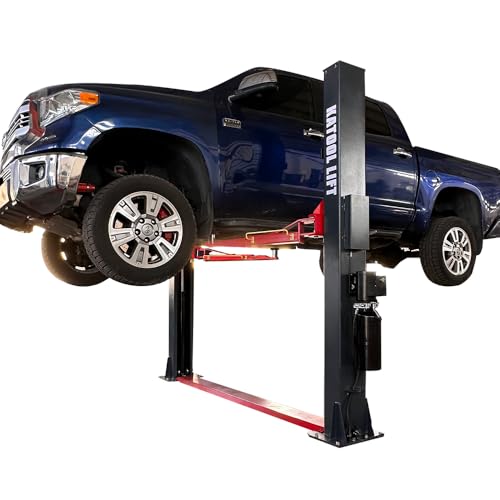 KATOOL 2 Post Lift 4.0HP 12000lbs Single Point
|
8.9/10 | Buy |
| Best Budget |
 Albott 7000 LBS Portable Car Lift with Extension
|
8.6/10 | Buy |
 KATOOL 8500lbs 3.0HP 4 Post Car Lift with Casters
|
8.6/10 | Buy | |
 KATOOL 12000 lbs Extra Height 167inch 2 Post Lift
|
8.3/10 | Buy | |
 VEVOR Portable Car Lift, 4400 lbs Capacity
|
8.1/10 | Buy | |
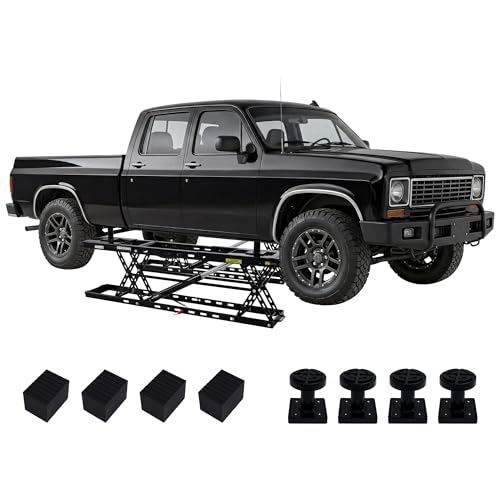 Albott 8000 LBS Portable Car Lift for Home Garage
|
7.8/10 | Buy |
Navigating Vehicle Lift Rental Options and Practical Alternatives
Locating a commercial facility or community workshop with rentable vehicle hoists solves an immediate challenge for home mechanics facing complex underbody repairs. While equipment rental yards supply excavators and scaffolding, vehicle-lifting hoists cannot be rented for home use due to structural engineering and insurance mandates. Enthusiasts must instead explore self-service repair bays, shared enthusiast collectives, or evaluate purchasing a dedicated residential lifting system.
Where to Find Self-Service Auto Garages and Community Repair Bays
Dedicated self-service auto garages operate in several metropolitan areas and provide equipped service stalls on an hourly or daily basis. These commercial DIY shops supply surface-mounted hoists, alignment racks, compressed air lines, and fluid disposal stations. Technicians and hobbyists can rent bay time to complete brake overhauls, clutch replacements, and exhaust work without permanent garage modifications. Finding these facilities requires searching local automotive directories for terms like DIY auto garage or self-service vehicle repair center.
Military service members, retirees, and eligible dependents have access to an established rental hoist network through base Morale, Welfare, and Recreation auto hobby shops. These installations feature certified lifting bays, tool cribs, tire mounting machines, and on-site safety coordinators who supervise vehicle staging. Bay fees are heavily subsidized, making military auto skills centers the premier standard for community repair access. Qualified individuals should contact installation support to verify operating hours and bay availability before scheduling maintenance.
Independent makerspaces, community automotive co-ops, and car clubs represent another venue for securing temporary vehicle lift access. Certain enthusiast groups pool membership dues to lease industrial warehouse space outfitted with shared hydraulic hoists, engine cranes, and welding stations. Joining an automotive cooperative often involves monthly dues or volunteer shop hours rather than pure hourly fees. These shared spaces deliver valuable community knowledge alongside overhead lifting access for long-term project cars.
Why Commercial Tool Rental Companies Do Not Rent Out Automotive Hoists
Homeowners often call general equipment rental yards expecting to rent a towable two-post hoist or mid-rise lift for weekend projects. Rental companies uniformly refuse to offer vehicle lifts for off-site residential use because these machines require permanent structural anchoring. A two-post surface-mounted lift exerts extreme dynamic pulling forces on concrete floor anchors whenever a heavy truck is elevated. Rental companies cannot verify the structural adequacy of residential slabs or ensure proper anchor embedment depth.
Anchoring a permanent commercial hoist demands a cured concrete slab with a verified compressive strength of at least 3,000 PSI and a minimum thickness of 4 inches. Thin residential garage slabs, cracked foundations, and unreinforced concrete cannot safely support the high tensile stresses generated by two-post baseplates. Test drilling and core sampling are often necessary to confirm concrete thickness before anchor installation. Furthermore, post-tension slabs contain pressurized steel cables that present catastrophic snapping hazards if struck by a drill.
Insurance underwriters impose immense liability restrictions on automotive lifting equipment operated by unvetted users outside supervised commercial facilities. If an improperly rigged vehicle slips off lifting pads or an unbolted column overturns, the resulting damage creates catastrophic liability. Even portable scissor-style hoists demand strict adherence to floor levelness and load balance tolerances that rental companies cannot oversee remotely. Reviewing our guide on hydraulic vehicle hoist considerations helps clarify the strict mechanical standards that professional equipment must satisfy.
Operational Rules and Preparation for Renting a Lift Bay
Operating a vehicle lift within a commercial rental facility begins with completing mandatory liability paperwork and standard shop safety orientation. Most DIY garage businesses require customers to sign comprehensive waivers releasing the facility from liability regarding personal injury or vehicle damage. Operators frequently mandate personal protective gear, including ANSI-rated eye protection, durable work gloves, and closed-toe work boots inside active bays. Some facilities also administer a brief operational check to ensure the customer understands how to operate hydraulic power units.
Planning your tool inventory before arriving at a rental bay ensures you maximize paid hoist time without stalling the project. While rental shops usually supply overhead hoists and shop air, access to specialty pullers, diagnostic scanners, and hand tools may carry separate fees. Bringing your own hand tools, impact sockets, torque wrenches, and replacement hardware prevents unexpected delays. Staging all replacement fluids, gaskets, and filters in your transport vehicle ensures continuous workflow inside the bay.
Time management plays a decisive role in the overall cost and success of renting commercial bay space. DIY mechanics must account for stubborn rusted fasteners, rounded bolt heads, and component alignment difficulties that frequently extend project timelines. Most rental shops enforce strict closing hours and assess steep overnight storage penalties if an immobilized vehicle occupies a bay past scheduled closing. Having a contingency plan for flatbed towing or overnight extensions helps avoid unexpected storage fees.
Mechanical Safety and Pre-Lift Inspection in a Rental Facility
Prior to raising any vehicle on a rental hoist, the operator must conduct a methodical pre-operational inspection of the lifting structure and hydraulic assembly. Inspect the steel lifting cables for signs of fraying, bird-caging, or uneven tension across the synchronized carriages. Check the hydraulic lines and cylinder fittings for weeping fluid, cracks, or loose connections that could indicate impending hydraulic pressure loss. Ensure the swing arms pivot freely and that the internal mechanical arm restraint gears lock securely into mesh.
Positioning the vehicle requires locating the exact manufacturer-designated structural lift points along the frame rails or reinforced unibody pinch welds. Placing lift pads under cosmetic rocker panels, thin floor pans, or steering linkages can result in catastrophic structural crushing and vehicle instability. On unibody passenger cars with asymmetric swing arms, position the vehicle with roughly 30 percent of the chassis weight behind the columns and 70 percent forward. On heavy body-on-frame trucks and commercial vans, utilize symmetric arm geometry and truck frame-cradle adapters.
Safety lock engagement represents the most critical operational rule when utilizing any hydraulic vehicle hoist. Raise the vehicle several inches off the concrete, stop the hydraulic motor, and shake the vehicle firmly at the bumper to verify balance and pad engagement. Continue raising the vehicle to working height, listening for the synchronized mechanical lock pawls clicking into the internal column ladders. Always lower the carriages onto the mechanical safety locks before stepping underneath the vehicle, relieving all hydraulic pressure from the cylinders.
The Financial Calculation: Renting Bay Time Versus Buying a Home Lift
Renting shop space with an overhead hoist offers convenience for infrequent, single-afternoon repairs like swapping an exhaust system or replacing a catalytic converter. However, the hourly and daily rates charged by DIY auto repair facilities accumulate rapidly on extended mechanical projects. A weekend transmission replacement, engine rebuild, or multi-stage suspension overhaul can quickly consume dozens of billed bay hours. Factoring in bay fees, specialty tool rentals, fluid disposal charges, and travel time alters the long-term economic logic.
Investing in a home garage lift can offset repeated rental bay expenses across just a few substantial restoration or maintenance projects. Entry-level portable scissor lifts and compact two-post hoists provide permanent lifting capability directly inside a residential workspace. Home ownership of lifting equipment eliminates the pressure of hourly billing clocks and allows DIY builders to work at their own pace. Comparing total project costs reveals that dedicated equipment pays for itself rapidly for owners maintaining multiple personal vehicles.
Home mechanics should analyze their annual repair schedule, available floor space, and structural ceiling clearance before deciding between renting and purchasing. If you perform only a solitary oil change and tire rotation each year, renting local bay time remains the more economical route. For automotive hobbyists who perform seasonal maintenance, track day prep, or multiple brake overhauls annually, home equipment investment delivers undeniable convenience and sustained cost efficiency.
Exploring Portable Scissor Lifts as a Take-Home Alternative
For homeowners who cannot locate a nearby rental bay but lack the ceiling height for a full-size post hoist, portable scissor lifts provide an outstanding alternative. Units like the Albott 7000 LBS and 8000 LBS portable lifts utilize heavy-duty Q235B or Q355B high-strength steel frames with multi-position safety locks. These low-rise and mid-rise systems achieve lifting heights between 23 and 28 inches, providing ample clearance for brake jobs, suspension rebuilds, detailing, and fluid services. Their compact footprint enables easy placement in residential garages.
Mobility represents one of the strongest advantages of modern portable vehicle lifts for residential garages. Many portable models include integrated transport wheels and tow handles, allowing a single person to roll the collapsed frame under a parked vehicle or store it against a wall. Manual and power-drill-driven quick lifts, such as the VEVOR 4400 LBS portable model, operate without dedicated electrical wiring or compressed air supplies, lifting vehicles smoothly. These portable platforms eliminate the structural foundation hurdles of commercial post hoists by distributing weight broadly.
Operating portable scissor lifts still requires strict attention to manufacturer operating parameters and ground stability. The garage floor must be flat, smooth, and solid, as operating portable scissor platforms on slopes exceeding 4 degrees creates severe vehicle tipping hazards. Scissor lifts also partially obstruct the center undercarriage between the wheels, making full exhaust routing and transmission dropping more challenging than on clear-floor hoists. Nevertheless, for wheel-free service and brake bleeding, portable lifts provide home mechanics with reliable hoist access.
Fixed Two-Post and Four-Post Lifts for Permanent Home Bay Upgrades
When vehicle service demands complete unobstructed undercarriage access, installing a permanent surface-mounted two-post lift in a residential shop surpasses the capabilities of both rental bays and portable platforms. Units such as the KATOOL 11,000 lb and 12,000 lb two-post clear-floor lifts provide overhead beam synchronization, heavy-duty symmetric arms, and single-point or dual-point lock releases. These hoists deliver maximum lifting heights over 70 inches, enabling technicians to stand upright while servicing transmissions, drive shafts, and full exhaust systems. Consulting our analysis of heavy-duty shop lift specifications provides useful insight into column construction, carriage stability, and professional-grade duty cycles.
Four-post lifts present another compelling alternative for residential property owners seeking both service versatility and expanded parking density. Models like the KATOOL 8,500 lb four-post lift feature drive-on runways that support the vehicle entirely by its wheels, eliminating arm placement stress and frame balancing issues. With an optional caster kit installed, a four-post lift can be moved around the shop floor while unloaded, offering exceptional layout flexibility without mandatory concrete anchor bolting. Operating on standard 110V household circuits, these four-post units also double as seasonal parking stackers.
Procuring a permanent automotive lift involves specific logistical and electrical considerations that buyers must navigate during delivery and setup. Heavy steel columns and crossbeams ship via freight carriers on flatbed trailers, requiring a commercial forklift or coordinated rollback tow truck to unload safely at a residential property. Two-post power units typically require dedicated 220V single-phase electrical circuits on 30-amp breakers to power high-output 3.0HP or 4.0HP hydraulic motors. Verifying ceiling height clearances, overhead garage door track pathways, and concrete slab specifications ensures a smooth transition to a fully equipped workshop.
Practical Takeaways on Lift Access and Project Planning
Deciding whether to rent bay time at a self-service garage or invest in personal lifting equipment hinges on project scope, frequency, and budget realities. Renting space at a commercial DIY garage, military hobby facility, or enthusiast cooperative remains the ideal choice for one-time major jobs that require specialized industrial tools without long-term overhead. It provides an immediate standing-height work platform while sparing home mechanics the structural modifications and electrical upgrades required by permanent machinery.
When geographic availability is limited or repair projects become regular weekend endeavors, acquiring a portable scissor lift or permanent garage hoist shifts from a luxury to a logical asset. Portable systems bridge the gap for low-ceiling residential bays, offering safe wheel-free elevation without foundation anchoring. Meanwhile, full-size post lifts provide unmatched commercial utility for serious automotive restoration and fleet maintenance. Assessing your garage dimensions, foundation stability, and yearly maintenance demands ensures you choose the safest, most cost-effective path to elevating your vehicles.
About the author
Christian Hazel is an automotive journalist with extensive experience covering four-wheel-drive vehicles, mechanical upgrades, and off-road equipment. His background includes technical reviews, installation features, and project-vehicle coverage, bringing useful context to equipment choices for trucks, Jeeps, and off-road enthusiasts.