
Why Is the Pole on My Floor Jack Only 2 Feet Long? Reasons, Leverage, and Garage Safety
Why Is The Pole On My Floor Jack Only 2 Feet Long? Explore hydraulic leverage, compact trolley frame geometry, and vehicle lifting safety tips for October 2026.
 By Hank O'Hop
Updated October 16, 2026
Pumping a compact trolley jack under a vehicle often surprises DIY mechanics when they realize the pumping lever measures barely twenty-four inches. Many car owners unbox a brand-new horizontal trolley unit and immediately wonder why is the pole on my floor jack only 2 feet long when commercial shop jacks feature long four-foot steel handles. Compact garage jacks rely on internal hydraulic pressure multiplication rather than massive external mechanical leverage to elevate a two-ton vehicle safely. While alternative driveway tools like ramps require proper car ramp staging methods to maintain vehicle stability, a short-handle floor jack lets you position a compact lifting saddle directly beneath reinforced factory pinch welds in cramped work bays.
A shorter pole also acts as an engineered safety boundary for lightweight steel frames. Extending a handle beyond its designed two-foot length invites excessive manual torque, which can damage internal seals, warp the frame side plates, or trigger the hydraulic overload bypass valve prematurely. Compact trolley models are built for portable trunk storage, rapid positioning, and smooth lifting inside residential garages where a full-size service handle would constantly strike nearby walls or toolboxes. Understanding the exact mechanical balance between handle leverage, hydraulic cylinder displacement, and rated vehicle weight limits ensures you get smooth lifting action without risking garage accidents.
| Award | Product | BJL Score About BJL ScoreThe BJL Score is our own rating from 0 to 10, based on performance, design and build, ease of use, and value. It reflects independent research and is never influenced by manufacturers, retailers, or affiliate commissions. Learn more › | |
|---|---|---|---|
| Best Overall |
 Jack Boss 2-Ton Hydraulic Floor Jack and Jack |
9.2/10 | Buy |
| Best Value |
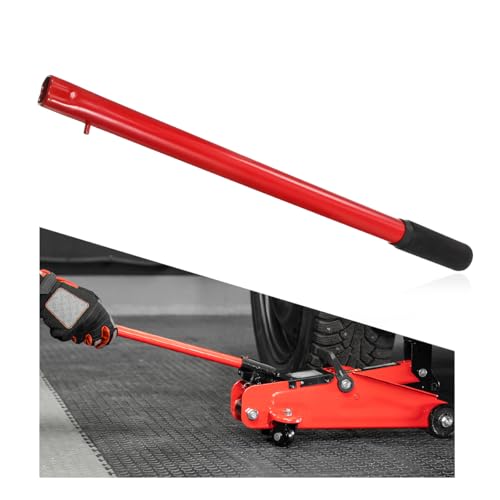 MTRPS 14.6-Inch 2-Ton Floor Jack Handle |
7.8/10 | Buy |
Jack Boss 2-Ton Hydraulic Floor Jack and Jack
This Jack Boss combo pairs a compact 2-ton trolley jack with two 2-ton mild steel jack stands designed for light passenger cars and compact unibody commuters. With a listed 4,000-lb single stand working load limit and welded steel construction, it offers an accessible lifting and static support setup for routine driveway maintenance.
Pros
- Convenient starter combo supplying both the hydraulic lifting tool and static vehicle support stands in one package
- Welded mild steel frame construction eliminates bolted joint movement under load
- Stated 4,000-lb capacity per individual stand accommodates common light passenger car curb weights
- Protective red powder coating delivers dependable surface resistance against shop fluids and moisture
- Hydraulic floor jack includes an integrated automatic overload safety valve to prevent over-pressurization
Cons
- Strictly limited by the manufacturer against use with pickup trucks, full-size SUVs, or heavy commercial vehicles
- Minimum stand collapsed height of 10.8 inches requires adequate chassis clearance for safe floor jack transfer
- Hydraulic trolley jack maximum lift of 13.4 inches creates a narrow handoff window to the 10.8-inch stand base height
MTRPS 14.6-Inch 2-Ton Floor Jack Handle
Built as a direct replacement for 2-ton horizontal hydraulic jacks, this steel lever provides dependable operation with a textured, slip-resistant grip. Its compact 14.6-inch frame makes it particularly well suited for vehicle owners seeking an easy-to-stow emergency spare.
Pros
- Rigid steel build resists bending under load
- Textured rubber grip prevents accidental hand slippage
- Corrosion-resistant finish extends overall durability
- Compact size stores conveniently inside small spaces
Cons
- Shorter length provides less leverage than standard poles
- Threaded connection fits only compatible jack sockets

The Mechanics, Engineering, and Safety Behind Two-Foot Floor Jack Poles
A two-foot handle on a horizontal hydraulic floor jack is an intentional engineering choice that balances hydraulic advantage, operator safety, and garage clearance. Compact utility jacks generate thousands of pounds of lifting force through internal hydraulic fluid displacement rather than raw physical leverage. If you have ever wondered why is the pole on my floor jack only 2 feet long, the answer lies in how hydraulic pump pistons work, how manufacturers protect structural frame members, and how compact equipment must maneuver in tight residential workspaces.
Hydraulic Advantage and Internal Pressure Displacement
Hydraulic floor jacks do not depend on long mechanical levers to lift thousands of pounds of vehicle weight. Instead, these tools utilize Pascal’s principle, where force applied to a small hydraulic plunger piston creates intense fluid pressure inside an enclosed reservoir. This pressurized hydraulic fluid travels through internal check valves into a much wider ram cylinder, multiplying the input force by a massive ratio. Because the fluid displacement does the heavy lifting, an operator only needs modest physical force at the handle to raise a vehicle corner.
A standard two-foot pole provides more than enough mechanical leverage to drive a small-diameter pump piston smoothly downward. If the jack had a direct mechanical gear or scissor link, a human operator would indeed need a four-foot or five-foot bar to overcome the mechanical resistance. In a hydraulic system, however, lengthening the handle would only produce excessive leverage that is completely unnecessary for pumping the internal fluid. The short handle moves the plunger through its full stroke quickly, allowing the jack arm to rise efficiently with manageable manual strokes.
Small-capacity trolley jacks often feature a pump plunger with an effective surface area under half an inch. When you depress a two-foot handle, your downward hand pressure translates into hundreds of pounds of hydraulic pressure per square inch inside the oil chamber. This pressure effortlessly pushes the lifting arm upward beneath factory pinch welds or frame rails. A longer pole would simply waste stroke speed and make pumping feel disconnected from the load.
Preventing Structural Frame Distortion and Hydraulic Overload
Every floor jack has a rated working load limit designed into its chassis plates, pivot pins, and hydraulic cylinder walls. For example, a two-ton trolley jack is engineered to lift up to four thousand pounds of distributed axle weight safely. The two-foot pole acts as a built-in mechanical torque limiter for the operator. By keeping the lever arm short, the manufacturer makes it physically difficult for an average user to force the jack beyond its structural yield point.
If a small trolley jack were equipped with a long handle, an unsuspecting mechanic could inadvertently exert tremendous torque on an overloaded vehicle. When a lifting arm encounters an immovable load, excessive leverage can twist the stamped steel side plates, crack the caster mounts, or bend the lift arm pivot pin. Premium units like the Jack Boss 2T Hydraulic Floor Jack Combo with Two incorporate built-in overload safety valves and vent plugs to relieve excess internal pressure automatically. Even with an overload valve, keeping the handle short prevents sudden hydraulic spikes that can rupture internal nitrile seals.
Physical feedback through the handle is also vital for recognizing when a lift point has become obstructed. With a compact two-foot pole, the mechanic instantly feels resistance when the saddle meets the frame rail or if the vehicle shifts unexpectedly. An overly long handle reduces this tactile feedback, masking dangerous resistance until metal bends or the vehicle slips. Maintaining a short lever ensures that the operator remains aware of the forces being applied throughout the lifting sequence.
Maneuvering in Confined Residential Garage Bays
Most compact hydraulic jacks are built specifically for home garages, carports, and driveway maintenance where space is severely restricted. When a car is parked close to a garage wall, a workbench, or a second parked car, maneuvering a full-length service handle becomes nearly impossible. A two-foot handle allows the user to swing the pumping arm freely through a complete arc without bashing against surrounding drywall or toolboxes. This tight turning radius makes portable trolley jacks practical in spaces where commercial shop equipment cannot fit.
The clearance under the vehicle itself also dictates handle length during initial saddle placement. When you slide a trolley jack under low rocker panels or beneath deep suspension crossmembers, the handle socket often sits angled beneath the vehicle body. A two-foot handle allows you to pump the jack in short, rapid strokes directly under the vehicle perimeter. Just as drivers must focus on evaluating car ramp clearance heights before driving onto ramps, floor jack users must verify that their handle has an unobstructed swing path between the driveway surface and vehicle body panels.
Compact handle dimensions also make it easy to reposition the jack while working on uneven surfaces. Trolley jacks must roll forward slightly on their steel casters as the lift arm arcs upward through its stroke. If a long handle binds against a nearby tire or wall, the jack chassis cannot self-correct its position beneath the lifting point. A short handle allows unrestricted movement, ensuring that the saddle stays firmly centered beneath the factory lift notch throughout the elevation process.
Weight Distribution and Preventing Jack Tipping Hazards
Total equipment weight plays a major role in how manufacturers size the operating handle. Commercial heavy-duty service jacks frequently weigh between seventy and one hundred pounds, providing a massive steel ballast on the floor. In contrast, portable two-ton trolley jacks are lightweight units often weighing twenty-five to thirty-five pounds so users can carry them easily by an integrated handle. Pairing a lightweight chassis with an oversized four-foot steel pole creates severe balance problems.
If a compact jack had an extra-long, heavy steel pole resting in its handle socket, the jack would easily tip backward onto its rear swivel casters whenever it was unloaded. A rearward tip can slam the handle into vehicle bodywork or cause the jack to roll unpredictably across a sloped driveway. By limiting the pole length to two feet or less, manufacturers ensure that the center of gravity stays centered between the front steel rollers and rear swivel casters.
The lighter overall mass also means the jack is frequently transported in vehicle trunks for emergency roadside use or mobile repairs. A two-foot pole, or a two-piece handle that breaks down into shorter segments, packs flat alongside spare tires and roadside kits. A rigid four-foot pole would be difficult to store in a standard trunk and could damage interior trim panels during transit. Compact dimensions keep the tool portable without sacrificing functional performance.
Engineering Differences: Compact Trolleys vs. Full-Size Shop Jacks
Understanding the physical differences between trolley jacks and commercial garage service jacks clarifies why their handle designs diverge so sharply. Commercial service jacks are designed for high-volume automotive repair shops where technicians lift vehicles dozens of times per day. These professional jacks feature long-reach steel chassis, dual-piston rapid-pump assemblies, and heavy universal-joint release systems. Their long handles allow technicians to pump the jack from a comfortable standing position at the vehicle bumper without stooping over.
Compact trolley jacks prioritize portability, lower weight, and budget-friendly construction for DIY vehicle owners. They use single-piston hydraulic blocks and horizontal pump linkages that require fewer complex mechanical parts. While a commercial jack may have a lifting range extending beyond twenty inches, compact units generally provide a lift range between five and fourteen inches. For light maintenance tasks like seasonal tire rotations or brake pad replacements, a two-foot handle delivers more than enough leverage to reach maximum stroke height efficiently.
The release valve mechanism also differs substantially between these two tool categories. Commercial shop jacks use internal universal-joint gears that allow you to twist the two-piece handle at any angle to lower the vehicle slowly. Compact trolley jacks typically use direct-drive release pins or slotted handle ends that fit directly over a release screw. Operating a direct-drive release valve with a two-foot handle gives you immediate, tactile control over the valve opening rate, preventing abrupt descents.
Handle Construction, Grip Control, and Mechanical Connections
The physical design of a replacement jack handle reveals how much engineering goes into small levers. For instance, replacement options such as the MTRPS Horizontal Hydraulic Jack Handle measure approximately 14.57 inches in length and are crafted from heavy-duty steel with a threaded nut connection. These dimensions show that horizontal hydraulic pumps do not require extensive leverage to generate smooth pumping action on two-ton systems.
Grip security is essential when applying downward force in a greasy workshop setting. Quality jack poles feature grooved rubber or textured composite sleeves designed with vertical ridges to prevent accidental hand slippage during pumping strokes. When an operator pumps a jack with wet or oily hands, a non-slip handle grip maintains firm palm contact and steady control. Slipping off a jack handle can lead to bruised knuckles or sudden jarring against the vehicle rocker panel.
Handle retention methods also vary depending on the jack brand and chassis style. Some horizontal trolley jacks utilize a threaded bolt or pin that secures the pole inside the pivot socket, while others use a friction-fit sleeve or spring-loaded detent ball. Securing the handle properly prevents it from pulling free during rapid up-and-down pumping cycles. A snug, rattle-free connection ensures that every ounce of manual effort transfers directly into the hydraulic plunger piston without lost motion.
The Real Dangers of Cheater Pipes and Extended Leverage
Some mechanics make the dangerous mistake of slipping a longer hollow pipe, commonly known as a cheater pipe, over a two-foot jack handle to make pumping feel even easier. While this modification increases leverage, it bypasses the engineered mechanical protections built into the tool. Using a cheater pipe multiplies your input torque to extreme levels, easily generating forces that can buckle the handle socket or shear the retention pin.
Excessive mechanical leverage also blinds the operator to hydraulic distress inside the cylinder. If a jack pump becomes jammed due to contaminated hydraulic fluid or a stuck check valve, forcing the handle with a cheater pipe will strip internal threads or blow out the piston seals. Furthermore, if you accidentally place the jack under a vehicle exceeding its rated tonnage, a cheater pipe allows you to force the jack upward until structural failure occurs. The manufacturer established the two-foot length specifically to prevent this kind of mechanical abuse.
A cheater pipe also creates severe clearance hazards during vehicle descent. Lowering a hydraulic jack requires fine rotational modulation of the release valve to ensure a gentle, controlled drop. A long makeshift extension bar amplifies small hand movements, causing the release valve to snap wide open. When a release valve opens abruptly, the vehicle drops instantly, potentially damaging suspension components or shifting precariously off the saddle.
Proper Vehicle Lifting Sequence and Mandatory Mechanical Support
Operating a compact floor jack safely requires strict adherence to workshop lifting protocols regardless of handle length. Begin by parking the vehicle on a flat, level concrete surface, engaging the emergency brake, and putting the transmission in park or reverse gear. Place heavy-duty wheel chocks on both sides of the tires remaining on the ground to eliminate any chance of roll-away movement. Locate the vehicle manufacturer-approved lift points, such as reinforced pinch weld seams or boxed frame rails, before rolling the jack into position.
Center the jack saddle precisely beneath the lift point, checking that the lift pad makes flat, flush contact with the vehicle metal. Use smooth, consistent strokes on your two-foot handle to elevate the chassis until the tire clears the ground by an inch or two. Never use a hydraulic floor jack as a static holding device during vehicle service. Hydraulic pressure relies on internal rubber O-rings and fluid valves that can leak or fail without warning under sustained loads.
Always transfer the elevated vehicle weight onto properly rated mechanical jack stands immediately after reaching the desired height. Position the jack stands beneath solid chassis support points, slowly open the jack release valve to let the vehicle settle onto the stands, and verify total stability by shaking the bumper firmly. Once the car rests securely on mechanical teeth, the floor jack can be lowered slightly as a secondary backup. Following these procedures ensures that your compact floor jack delivers dependable service while keeping you completely safe in your garage.
About the author
Hank O'Hop writes about automotive tools, hands-on repairs, and the challenges of maintaining and improving project cars. His published work covers workshop equipment, engine hoists, power tools, and garage upgrades, offering practical insights for readers who prefer to understand their equipment before putting it to work.