
How to Fix a Floor Jack That Wont Lift a Car Safely: Practical Repair Guide for 2026
Learn how to fix a floor jack that wont lift a car safely with hydraulic bleeding steps, oil refill checks, and workshop safety tips for October 2026.
 By Emily Markham
Updated October 18, 2026

Pumping a hydraulic service jack only to watch the lifting arm stall or gradually sink under load is an unsettling workshop obstacle. Hydraulic lifting equipment relies on a sealed, pressurized fluid circuit governed by Pascal’s principle, meaning even a small pocket of aerated fluid or an unseated release valve can stop lifting action entirely. Learning how to fix a floor jack that wont lift a car safely requires understanding how internal pressure builds, why oil bypasses vital check seals, and how to methodically inspect the hydraulic power unit before lifting a vehicle. Taking shortcuts during hydraulic troubleshooting invites serious equipment failure, making a disciplined diagnostic sequence essential for every home mechanic.
A floor jack functions strictly as an elevating device, so restoring its hydraulic efficiency must always align with non-negotiable garage safety protocols. Before diagnosing internal pressure loss, you should confirm that secondary support gear is on hand, and reviewing our guide on comparing car ramps and jack stands highlights why mechanical locks remain essential during vehicle service. Whether you are dealing with a spongy handle stroke, entrained air in the pump chamber, or a reservoir that requires clean oil, troubleshooting hydraulic mechanics demands methodical care. Tackling the root causes of cylinder pressure failure step by step allows you to restore lifting power while keeping your workshop safe.
| Award | Product | BJL Score About BJL ScoreThe BJL Score is our own rating from 0 to 10, based on performance, design and build, ease of use, and value. It reflects independent research and is never influenced by manufacturers, retailers, or affiliate commissions. Learn more › | |
|---|---|---|---|
| Best Overall |
TONDA 1.5-Ton Hydraulic Floor Jack
|
9.1/10 | Buy |
| Best Premium |
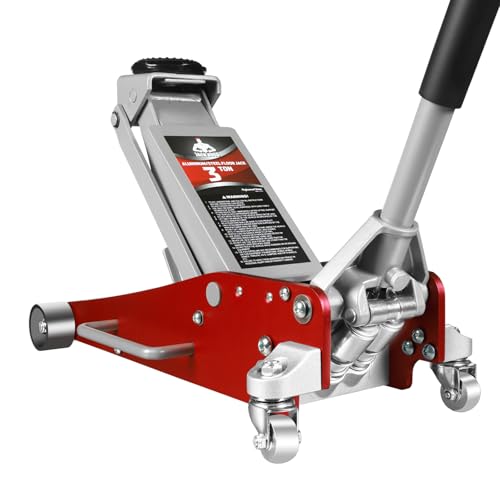 Jack Boss 3-Ton Low Profile Floor Jack |
8.8/10 | Buy |
| Best Value |
 Pro-LifT F-2315PE 3000 LBS Hydraulic Trolley Jack |
8.3/10 | Buy |
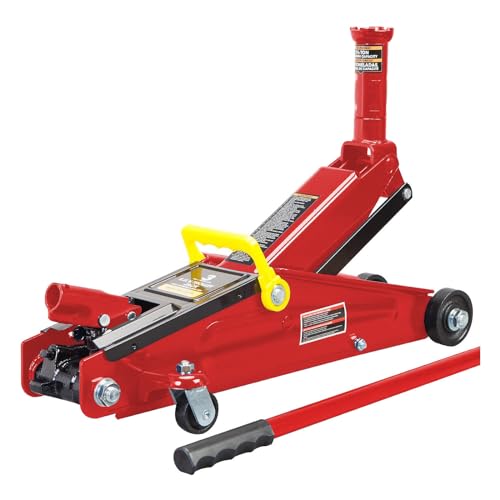 BIG RED T83006 3-Ton Floor Jack |
8.3/10 | Buy | |
| Best Budget |
 Suuonee 4-Piece Round Rubber Jack Pads |
8.1/10 | Buy |
 AV Steel 3-Ton Hydraulic Floor Jack |
7.8/10 | Buy |
TONDA 1.5-Ton Hydraulic Floor Jack
Weighing under 15 pounds, this compact steel floor jack offers a 3,000-pound capacity for basic garage maintenance and tire rotations. Its 4.9-inch to 11.8-inch lift range and integrated carry handle make it a practical option for owners of compact cars and sedans.
Pros
- Lightweight construction at roughly 15 pounds
- Integrated carry handle for convenient transport
- Built-in bypass valve prevents accidental over-extension
- Swivel casters provide smooth positioning under vehicles
Cons
- Limited 11.8-inch maximum lift height
- 1.5-ton capacity unsuitable for trucks or SUVs
- 4.9-inch minimum clearance cannot fit ultra-low vehicles
Jack Boss 3-Ton Low Profile Floor Jack
Built with a hybrid aluminum and steel frame, this 3-ton floor jack pairs a low 3-15/16-inch minimum clearance with a dual-piston rapid pump. It serves as a versatile lifting solution for low-slung sedans as well as standard SUVs and minivans.
Pros
- Low-profile 3-15/16-inch minimum lifting clearance
- Fast elevation with dual-piston hydraulic pump
- Hybrid aluminum and steel frame construction
- Protective rubber saddle shields vehicle chassis
- Meets rigorous ANSI/ASME PASE safety standards
Cons
- At 58.5 pounds, it remains relatively heavy to transport
- 18-5/16-inch max height may be limiting for lifted trucks
Pro-LifT F-2315PE 3000 LBS Hydraulic Trolley Jack
The Pro-LifT F-2315PE is an 18-pound portable hydraulic trolley jack rated for 3,000 pounds with a 5.25-inch to 12-inch lift range and an included blow-molded case. It is ideal for residential DIYers, mobile mechanics, and car owners seeking a compact, reliable tool for quick tire changes and brake service on passenger vehicles.
Pros
- Compact 18-pound steel chassis and integrated carrying handle make transport and positioning effortless
- Included hard-shell blow-molded case protects against dust, moisture, and fluid mess during transport
- All-welded steel frame provides dependable structural rigidity over lightweight stamped alternatives
- Rear swivel casters ensure smooth maneuverability on level concrete garage floors and paved driveways
Cons
- Maximum lift height of 12 inches limits working clearance and is not suitable for high-clearance trucks or tall SUVs
- Minimum saddle height of 5.25 inches may not clear lowered sports cars without auxiliary drive-on helper ramps
- The 3,000-lb capacity restricts use strictly to corner lifting on lightweight passenger cars and small crossovers
BIG RED T83006 3-Ton Floor Jack
Engineered for high-riding trucks and SUVs, the BIG RED T83006 delivers up to 20-7/8 inches of lift height with an extended saddle neck. Its 6,000-pound capacity and integrated overload bypass provide reliable lifting power for routine garage maintenance.
Pros
- Generous 20-7/8 inch maximum lift height
- Extended saddle neck reaches high truck frames quickly
- Built-in safety bypass valve prevents overloading
- Smooth 360-degree swivel casters ease garage positioning
Cons
- Minimum 5-7/8 inch height is tall for low-profile cars
- Single-piston pump requires more strokes than dual-piston models
Suuonee 4-Piece Round Rubber Jack Pads
Designed to prevent frame rail damage and slippage, these dense synthetic rubber pads provide a protective barrier between floor jacks and vehicle undercarriages. The set offers broad weight distribution across sub-frames and lift points for cars, trucks, and SUVs.
Pros
- Thick synthetic rubber resists cracking under heavy vehicles
- Minimizes metal-to-metal contact on painted surfaces
- Non-slip texture provides stable lifting contact
- Universal fit works with most floor jacks
Cons
- Lacks dedicated pinch-weld slots for slotted jacking points
- Fixed circular shape will not fit rectangular saddles
AV Steel 3-Ton Hydraulic Floor Jack
Built for standard passenger vehicles and light trucks, this heavy steel floor jack delivers a 6,000-pound capacity with a lift range of 5.5 to 18.5 inches. Its built-in overload protection and 360-degree rotating saddle make it a dependable option for routine garage maintenance.
Pros
- Generous 6,000-pound capacity for cars and SUVs
- Solid 5.5-inch to 18.5-inch lift clearance
- Durable all-steel frame ensures maximum stability
- Integrated overload valve prevents accidental over-lifting
- 360-degree rotating saddle aids quick, secure positioning
Cons
- Heavy 63.9-pound weight reduces overall portability
- Single-piston pump requires more strokes to reach height
- Unsuitable for lifted vehicles and heavy-duty trucks
Troubleshooting and Restoring Hydraulic Floor Jack Lifting Power Safely
Hydraulic floor jacks rely on a sealed fluid circuit where handle leverage forces oil into a high-pressure cylinder to push the lifting arm upward. When a jack fails to raise a car, the fault almost always stems from trapped air, low oil volume, valve contamination, or degraded internal seals rather than structural frame failure. Addressing these hydraulic issues requires a clean work area, proper protective gear, and a disciplined sequence that checks simple causes before disassembling mechanical components. Attempting to lift a vehicle on a malfunctioning hydraulic ram exposes both the vehicle and the mechanic to severe physical danger.
Diagnostic Checkpoints: Isolating Hydraulic Pressure Loss
A floor jack that pumps smoothly without load but refuses to elevate under chassis weight signals an internal pressure leak. When handle strokes produce zero resistance, air pockets inside the pump chamber often prevent hydraulic fluid from entering the main cylinder. If the lift arm rises during pumping but immediately sinks under load, the high-pressure circuit is losing its hold. Inspecting the exterior of the power unit for oily residue or weeping around the ram piston provides the first clue regarding seal condition.
Mechanical binding along the lifting arm linkages or front caster axles can also mimic hydraulic failure by restricting vertical movement. Dirt, road grit, and metal debris often accumulate in the pivot pins of heavy steel jacks over seasons of garage service. Checking the pivot points for physical binding or bent structural side plates ensures that hydraulic pressure is not fighting unnecessary mechanical resistance. If the arm moves freely by hand when the release valve is open, the malfunction resides squarely inside the hydraulic block.
Step-by-Step Air Purging: Bleeding the Hydraulic Cylinder
Entrained air represents the most common reason a trolley floor jack refuses to lift a vehicle. Air bubbles become trapped inside the hydraulic fluid during transit, storage on its side, or vigorous pumping with low oil reserves. Because air compresses under load while hydraulic oil does not, an aerated system merely squeezes trapped bubbles instead of pushing the heavy lifting ram upward. Purging this trapped air restores firm fluid displacement and full lifting stroke without requiring replacement hardware.
To bleed the cylinder, turn the release valve counterclockwise to open the hydraulic circuit completely, then pump the handle rapidly through fifteen to twenty full strokes. Next, locate the rubber oil fill plug positioned on the reservoir cylinder body beneath the inspection plate. Carefully pry the edge of the rubber plug open with a flat screwdriver to vent built-up atmospheric pressure, listening for an audible release of trapped air before reseating the plug. Close the release valve clockwise, pump the handle, and test whether the lift arm reaches its full extension height smoothly.
Inspecting and Replenishing Hydraulic Fluid Reservoirs
Operating a floor jack with insufficient hydraulic oil starves the pump pistons and pulls fresh air directly into the pressure chamber. Over time, micro-weeping past wiper seals and minor venting around the fill plug gradually reduces internal oil volume. Checking the reservoir level requires placing the jack on a flat concrete floor with the lift arm fully lowered and the release valve open. Removing the rubber fill plug allows direct visual inspection of the fluid reservoir inside the outer steel cylinder casing.
The correct oil level should sit just below the rim of the fill hole, typically between one-quarter inch and one-eighth inch beneath the opening. If you observe exposed metal or the inner cylinder tube inside the port, the fluid level is critically low. Pour clean oil slowly using a narrow funnel or squeeze bottle until it reaches the lower edge of the port, allowing time for air bubbles to escape. Never fill the reservoir while the lift arm is raised, because lowering the arm displaces fluid and causes messy overflow.
Hydraulic Fluid Chemistry: Avoiding Damaging Fluid Substitutes
Using the correct fluid specification is vital for maintaining internal rubber O-rings, nitrile U-cups, and polished steel cylinder walls. Only dedicated, non-foaming hydraulic jack oil rated at ISO VG 22 or ISO VG 32 should ever enter a garage service jack. Anti-foaming additives in proper jack oil prevent bubble formation during rapid pumping cycles, ensuring consistent pressure transfer. High-quality hydraulic oil also contains anti-corrosion inhibitors that protect internal check balls and spring seats from moisture damage.
Automotive fluids like brake fluid, motor oil, automatic transmission fluid, or power steering fluid must never be introduced into a hydraulic jack. Brake fluid contains aggressive solvents that rapidly swell, soften, and dissolve nitrile rubber seals, leading to total hydraulic failure under load. Motor oil and automatic transmission fluid possess incorrect viscosity curves and detergents that encourage foaming, which creates chronic air-locking. Introducing contaminated or improper fluids generally requires a complete teardown, often rendering an affordable service jack unserviceable.
Servicing Release Valves and Clearing Contaminated Check Seats
The release valve assembly controls the high-pressure fluid flow returning from the main ram chamber back to the low-pressure reservoir. In many heavy-duty models, a universal joint or gear-drive mechanism connects the operating handle to the release spindle. If the release valve does not seat completely against its internal metal orifice, high-pressure fluid constantly slips past the valve, preventing the jack from holding any load. Debris as small as a grain of sand lodged between the steel check ball and its precision-machined seat can break the hydraulic seal completely.
To clear contamination from the valve seat, open the release valve two full turns and pump the handle rapidly five to ten times to flush loose debris back into the reservoir. If fluid leakage persists, close the release valve firmly and tap the top of the valve housing gently with a brass punch and light hammer to seat the ball. Models featuring universal joint gear releases offer superior lowering control compared to simple pin-drive designs, but gear backlash can prevent full closure. Check that turning the handle clockwise produces positive metal-to-metal seating at the bottom of the valve stroke.
Pumping Mechanisms: Single-Piston Versus Dual-Piston Troubleshooting
Floor jacks utilize either single-piston or dual-piston pump blocks to drive hydraulic fluid into the primary ram cylinder. Single-piston models, commonly found on utility designs like the Pro-LifT F-2315PE or AV Steel 3 Ton jack, rely on one plunger to draw and compress oil. When a single-piston pump fails, diagnosing the issue is straightforward because only one intake check ball and one discharge valve govern fluid movement. However, single-piston designs require more handle strokes to elevate a vehicle, concentrating mechanical wear on a single plunger seal.
Dual-piston rapid-pump systems, such as the mechanism on the Jack Boss 3 Ton Low Profile jack, employ two opposing plungers to accelerate lift speed. One piston typically moves a larger volume of fluid at low pressure to reach chassis contact quickly, while the second piston generates high pressure for lifting. If one plunger seal fails or its check ball sticks, the jack may reach the car frame rapidly but stall once vehicle weight is applied. Troubleshooting dual-piston units requires verifying that both plunger shafts actuate smoothly without weeping oil around their retaining glands.
Internal Safety Bypass and Overload Valve Considerations
Modern service jacks incorporate factory-calibrated safety bypass valves to prevent structural over-pressurization. These bypass valves consist of a precision spring and ball calibrated to relieve pressure if an operator attempts to lift beyond rated capacity. For instance, models like the TONDA 1.5 Ton, BIG RED Hydraulic Trolley Jack, and AV Steel 3 Ton include internal bypass systems to protect the frame from buckling. When an overload valve triggers, fluid vents back into the reservoir automatically, stopping upward motion.
Tampering with, tightening, or attempting to adjust the internal overload relief screw is extraordinarily dangerous and should never be done. Factory bypass valves are preset during manufacturing to align with strict structural safety standards. If a floor jack refuses to lift a vehicle that falls well within its rated working load limit, the bypass spring may be fatigued or unseated. When an internal relief valve fails open on a properly rated load, replacing the hydraulic power unit or retiring the jack is the only safe solution.
Vehicle Staging and Chassis Load Distribution Mechanics
Fixing a floor jack safely also involves understanding how vehicle weight distributes across lifting points during garage service. A floor jack does not need to lift the total gross vehicle weight of an automobile during standard corner or axle maintenance. When raising the front or rear of a car, the jack supports approximately fifty to sixty percent of total vehicle curb weight. For example, a 3-ton rated jack provides an ample safety margin for raising the axle of a standard crossover or light pickup.
Always stage the vehicle on a hard, perfectly level concrete surface before positioning the jack saddle beneath factory lift points. Wheels remaining on the ground must be secured with heavy-duty wheel chocks placed in both rolling directions to eliminate accidental shifting. When elevating a chassis for underbody inspection, understanding metal car ramp staging and wheel chocking rules reinforces why vehicle stability must never rely on hydraulic pressure alone. An unstable vehicle will shift during elevation, placing severe side-load stress on the hydraulic ram that can bend the piston shaft.
Protecting Undercarriage Lift Points and Contact Surfaces
Bare metal saddles can gouge protective undercoating, bend delicate sheet metal pinch welds, or slip against smooth subframe crossmembers. Utilizing durable rubber pads, such as Suuonee round rubber arm pads, distributes vehicle weight evenly across the saddle face. The non-slip rubber texture absorbs concentrated pressure and prevents direct metal-on-metal sliding while the hydraulic arm arcs upward. Slotted rubber adapters are particularly beneficial for unibody sedans, allowing the reinforced pinch weld flange to seat without crushing rocker panel trim.
Positioning the saddle directly beneath manufacturer-designated structural lift points prevents severe chassis damage. Never position a floor jack saddle under thin sheet metal floor pans, steering tie rods, aluminum oil pans, or suspension control arms. Boxed truck frame rails, heavy engine subframe crossmembers, and reinforced pinch weld notches represent proper contact zones. Inspecting the contact zone as the saddle touches the vehicle ensures that the pad remains centered before full hydraulic pressure is applied.
Transferring Load to Mechanical Jack Stands Immediately
A hydraulic floor jack is strictly an elevating mechanism and must never be treated as a static load-holding device. Hydraulic seals rely on flexible elastomeric materials that can experience sudden pressure loss without warning due to internal seal tearing or check valve slip. Placing any part of your body beneath a car supported solely by a hydraulic jack is a life-threatening safety violation. Once the vehicle reaches the desired service height, properly rated jack stands must be positioned beneath reinforced frame points immediately.
Lower the vehicle onto the mechanical jack stands slowly by feathering the release valve with precise, micro-metered handle turns. Allow the stands to support the full mass of the chassis, keeping the floor jack saddle positioned just beneath the lift point with light contact as an emergency buffer. Give the vehicle a firm, physical push test at the bumper to verify rock-solid stability on the stands before crawling underneath or removing wheels. Maintaining this disciplined sequence ensures that a hydraulic failure never results in a catastrophic garage accident.
Proof-Load Testing and Knowing When to Retire Damaged Equipment
After completing hydraulic bleeding, fluid replenishment, or valve cleaning, the floor jack must pass a rigorous verification protocol before returning to regular service. Begin by operating the jack through three full extension cycles without load to verify smooth travel from minimum collapsed height to maximum reach. Next, conduct a controlled test by raising a vehicle corner just two inches off the pavement with unlifted wheels chocked, observing the ram for ten minutes. If the arm creeps downward or drops even a fraction of an inch, internal fluid leakage remains active and requires further attention.
Certain structural and hydraulic defects cannot be safely repaired with basic garage bleeding or oil top-offs. Deep scoring, pitting, or rust on the polished chrome cylinder ram will shred replacement seals instantly, causing persistent pressure blowouts. If the welded steel frame exhibits cracked welds, twisted side plates, or elongated caster mounting holes, the structural integrity of the tool is compromised. Upgrading to a dependable modern service jack with built-in overload protection guarantees that routine maintenance proceeds smoothly without compromising workshop safety.
Restoring a floor jack that refuses to lift requires methodical troubleshooting, beginning with simple air bleeding and clean hydraulic oil replenishment before suspecting major mechanical failure. Prioritizing non-negotiable garage safety by pairing every lift with certified mechanical jack stands ensures that you remain safe even if hydraulic pressure fluctuates. Treating hydraulic lifting gear with proper preventative care and respecting its operational limits will keep your garage running safely for seasons to come.
About the author
Emily Markham is an automotive aftermarket editor who has covered professional tools, workshop equipment, and the businesses that support vehicle repair since 2019. Her editorial background gives her a practical understanding of how technicians and shop owners evaluate equipment, product value, and long-term support.