
Floor Jack Maintenance How Often Should You Check for Loose Bolts: Garage Guide for 2026
Solid lifting safety starts with tight hardware. Master floor jack maintenance how often should you check for loose bolts to keep your garage setup secure this October 2026.
 By Larry Carley
Updated October 13, 2026
Maintaining Reliable Floor Jack Stability
Raising thousands of pounds in a home garage demands complete confidence in your lifting gear. A sudden creak or wobbling caster on pitted concrete won’t just ruin your focus; it can turn routine brake work into a hazard. Mechanical fasteners on trolley frames endure intense shear stress during vehicle elevation. DIY wrenchers often neglect floor jack maintenance how often should you check for loose bolts until the chassis begins to creak. Loose pivot pins and crossmember hardware compromise side-plate alignment, leading to binding lift arms and unpredictable chassis flex.
Visual checks before every garage session offer the smartest protection against sudden mechanical failure. Catching backed-out caster nuts or loose handle sockets early keeps your tool rolling smoothly. Hydraulic jacks are strictly lifting devices, so always lower your car onto rated mechanical jack stands before crawling underneath. Reviewing whether car ramps or jack stands offer better garage stability helps you establish safe garage habits. Using protective gear like the JACK BOSS Jack Pad Universal Large Floor Jack also guards factory pinch welds against metal damage.
| Award | Product | BJL Score About BJL ScoreThe BJL Score is our own rating from 0 to 10, based on performance, design and build, ease of use, and value. It reflects independent research and is never influenced by manufacturers, retailers, or affiliate commissions. Learn more › | |
|---|---|---|---|
| Best Overall |
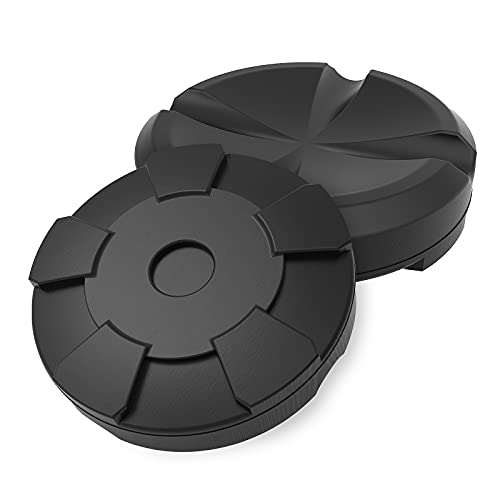
Jack Boss 4.17-Inch Rubber Jack Pads (2-Pack)
|
8.8/10 | Buy |
Jack Boss 4.17-Inch Rubber Jack Pads (2-Pack)
Designed to protect pinch welds and undercarriage finishes, these Jack Boss rubber pads feature a deep center groove and a sturdy 3-ton capacity per unit. They offer an accessible way to cushion vehicle contact points on compatible hydraulic floor jacks.
Pros
- High 3-ton weight rating per pad
- Durable rubber resists crushing and deformation
- Wide groove easily aligns with vehicle pinch welds
- Protects painted chassis parts from metal-on-metal contact
Cons
- Requires measuring jack saddle size to ensure proper fit
- Groove depth may not suit unusually tall pinch welds
- Not intended for heavy-duty commercial vehicles exceeding 3 tons
Frequently Asked Questions
Which fasteners require inspection during floor jack maintenance how often should you check for loose bolts?
Chassis side-plate bolts, caster mounting studs, and the main lift arm pivot pin demand immediate attention. These joints bear extreme torque and lateral stress during vehicle elevation. Tight caster nuts prevent annoying wheel bind on rough concrete. Secure side-plate bolts keep the hydraulic ram aligned so the lift arm rises evenly.
How often should you check for loose bolts on a floor jack in 2026?
Perform a brief visual scan before every lift and a complete wrench check monthly. Active home mechanics should verify bolt tightness bi-weekly to counter vibration from rolling across concrete. These routine checks take under two minutes. Tightening hardware early stops unexpected chassis play and extends service life.
Can loose trolley jack bolts cause saddle slippage?
Yes, loose frame bolts cause the chassis to twist under heavy loads. Frame flex reduces contact stability, risking saddle displacement off vehicle lift points. Pairing your setup with the JACK BOSS Jack Pad Universal Large Floor Jack adds 3-ton rated rubber grip to prevent shifting. Keeping structural fasteners torqued prevents the lift arm from deflecting sideways.
What tools are best for floor jack fastener maintenance?
A standard socket set, an adjustable wrench, and blue medium-strength threadlocker are sufficient. Most trolley jacks feature locknuts that rarely back out completely but can loosen over time. A single drop of threadlocker on side bolts prevents vibration shake during driveway moves. Never overtighten pivot pins to avoid binding the lifting arm.
Should you rely only on a hydraulic floor jack under a car?
No, never work under any vehicle supported solely by hydraulic pressure. Internal seals or bypass valves can fail suddenly without warning. Always rest vehicle weight securely on mechanical jack stands, or consider using car ramps for home oil changes when wheels stay on. Redundant mechanical support remains mandatory for garage safety.
About the author
Larry Carley is an experienced automotive technical writer and editor with more than four decades of work covering vehicle diagnostics, repair procedures, and automotive technology. His extensive technical writing helps readers understand mechanical systems, maintenance decisions, and the importance of accurate information when working on vehicles.