
Does My Floor Jack Need a Better Safety Mechanism: Practical Safety Guide for 2026
Does My Floor Jack Need A Better Safety Mechanism is a vital question for garage safety in October 2026. Learn how bypass valves, rubber adapters, and stands protect your vehicle.
 By Peter Nelson
Updated October 13, 2026
Lifting a multi-ton vehicle off garage concrete demands absolute confidence in your lifting setup. Many DIY enthusiasts find themselves asking, does my floor jack need a better safety mechanism when preparing for brake service, tire rotations, or underbody inspections. Standard hydraulic trolley jacks utilize pressurized fluid to elevate substantial weight, yet hydraulic circuits are engineered exclusively for dynamic raising rather than static holding. An internal pressure seal failure or an accidental release valve twist can cause a rapid, uncontrolled descent if secondary safeguards are missing.
Reinforcing your vehicle lifting safety involves understanding built-in hydraulic overload valves, adding slip-resistant rubber saddle adapters, and maintaining non-negotiable secondary mechanical supports. When comparing car ramps and mechanical jack stands, knowledgeable DIY mechanics recognize that no hydraulic service jack should ever act as a standalone workstation. Equipping your trolley jack with reinforced pinch weld pads and pairing it with rated mechanical stands ensures that your vehicle remains rock solid throughout any maintenance procedure.
| Award | Product | BJL Score About BJL ScoreThe BJL Score is our own rating from 0 to 10, based on performance, design and build, ease of use, and value. It reflects independent research and is never influenced by manufacturers, retailers, or affiliate commissions. Learn more › | |
|---|---|---|---|
| Best Overall |
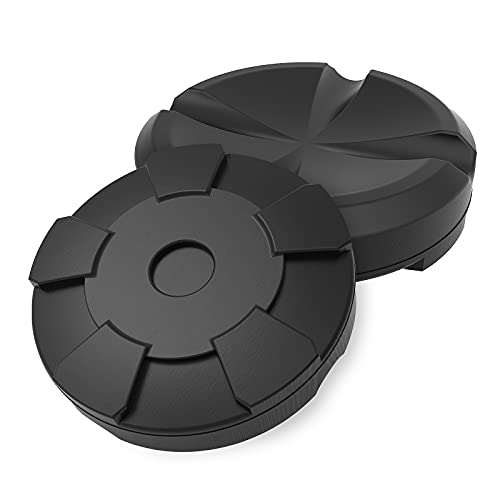
Jack Boss 4.17-Inch Rubber Jack Pads (2-Pack)
|
8.8/10 | Buy |
| Best Value |
 Jack Boss 1.5-Ton Hydraulic Floor Jack |
8.6/10 | Buy |
Jack Boss 4.17-Inch Rubber Jack Pads (2-Pack)
Designed to protect pinch welds and undercarriage finishes, these Jack Boss rubber pads feature a deep center groove and a sturdy 3-ton capacity per unit. They offer an accessible way to cushion vehicle contact points on compatible hydraulic floor jacks.
Pros
- High 3-ton weight rating per pad
- Durable rubber resists crushing and deformation
- Wide groove easily aligns with vehicle pinch welds
- Protects painted chassis parts from metal-on-metal contact
Cons
- Requires measuring jack saddle size to ensure proper fit
- Groove depth may not suit unusually tall pinch welds
- Not intended for heavy-duty commercial vehicles exceeding 3 tons
Jack Boss 1.5-Ton Hydraulic Floor Jack
Designed for sedan owners, this Jack Boss hydraulic jack offers a lifting range of 5.1 to 12.6 inches in a portable 16.6-pound frame. Its welded steel build and included hard storage case make it well-suited for trunk storage and quick tire changes.
Pros
- Lightweight design at under 17 pounds
- Hard blow-mold case included for storage
- Built-in overload safety valve
- Smooth positioning via 360-degree swivel casters
Cons
- Maximum 12.6-inch lift height is relatively low
- Capacity limited to sedans and lighter cars
- Minimum 5.1-inch height cannot accommodate ultra-low vehicles
Evaluating Hydraulic Floor Jack Safety Mechanisms and Protection Upgrades
A standard hydraulic floor jack comes equipped with internal protection systems designed to keep the tool itself from bursting, but it does not possess a mechanical locking mechanism to protect the user during static service. When determining whether does my floor jack need a better safety mechanism, the answer depends on distinguishing between internal hydraulic relief and external structural stability. Internal overload valves prevent catastrophic pump failure, yet pressurized oil can still bypass seals or drop unexpectedly if a valve seat becomes contaminated. Upgrading your lifting protocol requires adding physical contact enhancements like rubber pinch weld pads and strictly pairing the jack with mechanical support stands.
How Built-In Internal Hydraulic Safety Valves Function
Every reputable hydraulic service jack incorporates an internal overload bypass valve within its hydraulic manifold block. This safety mechanism features a calibrated spring and a hardened steel check ball calibrated to open when internal fluid pressure exceeds the rated working load limit. If an operator attempts to elevate a vehicle that surpasses the rated tonnage, hydraulic fluid diverts directly back into the fluid reservoir rather than forcing the lift arm upward. This engineered release prevents over-pressurization, split cylinder walls, and blown hydraulic pump packings during high-load attempts.
Units like the Jack Boss Floor Jack 1.5 Ton utilize thick drop forged alloyed welded steel construction alongside a built-in safety valve that activates automatically during overload conditions. This internal valving ensures that the hydraulic cylinder operates within its engineered structural boundaries, minimizing the risk of sudden mechanical deformation. In addition to overload protection, hydraulic cylinders integrate mechanical ram stops to prevent the polished chrome piston from extending beyond its cylinder housing. These factory safeguards protect the internal machinery, but they cannot prevent external balance shifts or gradual hydraulic pressure seepage while a vehicle sits suspended.
Check valves and release screws manage fluid direction throughout each handle pump stroke. When you pump the handle downward, pressurized fluid passes through a one-way check ball into the primary ram chamber. The check ball drops back onto its machined seat immediately after each stroke to trap pressure beneath the lift piston. If microscopic metal shavings or degraded fluid contaminants lodge beneath this check ball, pressurized oil can slip back into the low-pressure reservoir. This micro-leakage causes the lifting arm to creep downward, demonstrating why internal valves cannot serve as permanent locking systems.
Why Hydraulic Pressure Alone Is Never a Safe Holding Mechanism
Hydraulic mechanics operate entirely on Pascal’s principle, transferring force through an incompressible liquid medium to generate substantial lifting power. While this fluid dynamics principle allows a compact hydraulic pump to lift thousands of pounds with moderate handle effort, it remains inherently vulnerable to seal fatigue. The primary ram utilizes flexible nitrile rubber O-rings, polyurethane backup rings, or molded U-cup seals to contain immense internal fluid pressures. Any minor degradation, temperature fluctuation, or micro-tear across these synthetic seals allows pressurized oil to escape the lifting chamber.
Gradual cylinder creep represents a subtle yet dangerous failure mode in workshop environments. An operator might not notice the saddle settling an inch lower over a twenty-minute period, but that subtle drop can shift vehicle balance or pin tools against the undercarriage. Furthermore, sudden release valve manipulation remains an ever-present human error risk. Bumping an unsecured handle or turning a release screw too quickly causes instant fluid return to the reservoir, resulting in an immediate vehicle drop. For these mechanical reasons, workshop safety standards dictate that hydraulic jacks are strictly lifting devices, never static load-holding tools.
Upgrading the Saddle Interface with Rubber Pinch Weld Protectors
The raw metal saddle found on most standard trolley jacks represents one of the most common failure points for underbody damage and slippage. A circular steel saddle with small perimeter teeth exerts concentrated pressure against thin sheet metal, often crushing factory pinch weld seams or scraping protective undercoating. When protective paint chips away, bare chassis metal becomes vulnerable to aggressive road salt corrosion and structural weakening. Furthermore, hard steel contacting painted steel creates a low-friction interface that can slip if the vehicle shifts during elevation.
Adding an aftermarket rubber saddle adapter introduces a crucial layer of physical security to your lifting routine. Accessories such as the JACK BOSS Jack Pad Universal Large Floor Jack provide a durable, non-deformable rubber puck that cushions unibody frame rails and pinch welds. Measuring 4.17 inches in diameter and 1 inch in thickness, this large rubber pad creates a wide, high-friction contact area that resists crushing under heavy loads. Its integrated center groove, measuring 0.7 inches wide and 0.23 inches deep, fits securely over factory pinch weld flanges to prevent bending or flattening.
Before purchasing any rubber saddle pad, operators should carefully measure their floor jack’s metal saddle diameter and perimeter rim depth. The adapter must sit flat and snug within the steel cup so it cannot tilt, walk, or deform under extreme compression. High-density vulcanized rubber distributes chassis weight across a broader surface area, preventing localized stress fractures on unibody rocker panels. This simple, affordable accessory transforms an abrasive metal-on-metal lifting point into a secure, slip-resistant mechanical interface suitable for modern passenger sedans and crossovers.
Critical Vehicle Support Protocols: Secondary Mechanical Stands
The ultimate safety mechanism for any vehicle lifting project is not attached to the hydraulic jack at all, but rather placed alongside it. Heavy-duty mechanical jack stands featuring cast iron ratcheting pawls or solid steel locking pins provide positive mechanical support that cannot lose pressure. Once a floor jack elevates the chassis to the required service height, the vehicle weight must be immediately transferred onto secondary stands. Relying on solid steel columns eliminates the risk of hydraulic seal failure, accidental valve release, or cylinder pressure bleed-down while you work.
Proper capacity calculation ensures that both your jack and your secondary stands operate with adequate safety margins. A common misconception is that a floor jack must match the total gross vehicle weight listed on the door jamb placard. In reality, elevating an axle or an individual corner lifts approximately 50 percent to 60 percent of the total vehicle curb weight. For example, a 1.5-ton rated jack provides 3,000 pounds of lifting capacity, which is well matched for elevating one end of a compact or midsize sedan. However, pairing that jack with equally rated mechanical stands ensures that each support point carries its load safely.
Elevating only a portion of a vehicle creates unique lateral weight transfer dynamics that require disciplined execution. When researching lifting only one side of a car, DIY mechanics discover how single-side elevation shifts weight across opposing suspension components and tires. Raising one corner alters the center of gravity, which can cause an unsecured vehicle to pivot or slide if the wheels are not stabilized. Slowly lowering the floor jack until the reinforced chassis contact points rest firmly on mechanical jack stands ensures a rigid, stable workstation before any underbody work begins.
Controlled Descent Mechanics with Universal Joint Metering
Lowering an elevated vehicle safely requires micro-metered control over the hydraulic release valve. Many entry-level service jacks utilize direct pin or cog-style release mechanisms that can feel sticky, abrupt, or sensitive to minor handle rotations. If an operator applies slight rotational force and the release valve suddenly pops open, the vehicle will plummet downward in a jarring descent. Rapid descent places extreme shock loads on the vehicle chassis, suspension bushings, and shop floor equipment.
Premium garage floor jacks often feature a universal joint gear drive mechanism at the base of the operating handle. This U-joint design provides progressive, smooth gear engagement regardless of the handle angle during service. Micro-metering the release valve allows the technician to open the fluid passage by fractions of a millimeter, bleeding off pressure in a steady, controlled manner. Practicing slow, deliberate counter-clockwise handle rotations prevents shocking secondary support stands during weight transfer.
Surface Stability and Wheel Chocking Best Practices
A floor jack does not lift a vehicle in a purely vertical line; it travels along a slight forward arc dictated by the pivot point of its lifting arm. To accommodate this shifting arc, the trolley jack’s front steel rollers and 360-degree rear swivel casters must roll slightly forward as the saddle ascends. Operating on cracked concrete, pitted driveways, or soft asphalt can trap the casters, preventing the jack from rolling freely beneath the rising load. If the jack cannot roll, side-loading forces develop across the saddle, potentially pulling the vehicle off its contact point.
Wheel chocks provide non-negotiable horizontal stabilization to prevent vehicle roll-away accidents during lifting. Before placing the jack saddle beneath a factory lift point, technicians must place heavy-duty rubber chocks firmly against the front and rear of the tires remaining on the ground. Setting the vehicle transmission in park or reverse gear and engaging the emergency parking brake provides initial resistance, but mechanical chocks physically wedge the tires against floor movement. This rigid horizontal anchoring ensures that lifting forces do not induce lateral vehicle drift while elevating the chassis.
Hydraulic Maintenance Protocols to Preserve Safety Systems
Maintaining internal safety valves and lifting efficiency requires periodic hydraulic maintenance and fluid inspection. Trapped air bubbles inside the hydraulic circuit represent one of the primary causes of spongy handle resistance, incomplete lift strokes, and sudden ram settling. Air can enter the fluid passages during transport, vigorous pumping, or storage on its side. Purging trapped air involves opening the release valve fully, pumping the operating handle several rapid strokes to cycle fluid, and briefly loosening the rubber reservoir fill plug to vent pressurized air pockets.
Fluid replenishment must strictly utilize dedicated anti-foaming ISO VG 22 or ISO VG 32 hydraulic jack oil. Introducing improper fluids such as automotive motor oil, brake fluid, or automatic transmission fluid will destroy internal rubber and nitrile seals within weeks. Brake fluid is particularly caustic and rapidly degrades synthetic O-rings, leading to catastrophic internal fluid bypass and total pressure failure. Clean hydraulic oil lubricates internal check balls, prevents corrosion inside the polished steel cylinder, and maintains correct operating viscosity across seasonal temperature swings.
Recognizing When a Floor Jack Must Be Retired or Rebuilt
Routine visual inspection allows mechanics to identify developing mechanical hazards before a dangerous failure occurs in the workshop. Technicians should regularly examine the polished hydraulic ram for surface scoring, pitting, or rust buildup that can tear delicate wiper seals. Wet oil accumulation around the pump piston, release valve stem, or main cylinder base indicates internal packing degradation that compromises lifting integrity. If a jack requires excessive handle strokes to lift an unloaded saddle or fails to reach its full rated height, internal seals or check valves are slipping.
Structural damage to the chassis frame demands immediate retirement of the tool. Heavy-duty welded steel plates, like those found on Jack Boss trolley jacks, provide exceptional resistance to frame twisting under normal loads, but severe side-loading can warp side plates or bend caster mounting brackets. Operating a floor jack with twisted side frames introduces uneven loading across the lift arm pins and cylinder trunnions. If the chassis shows bent flanges, loose pivot rivets, or cracked welds, the jack must be taken out of service immediately rather than repaired with makeshift hardware.
Summary of the Complete Vehicle Elevation Safety System
Addressing whether a floor jack needs a better safety mechanism ultimately comes down to treating vehicle lifting as an integrated multi-tool system rather than relying on a single hydraulic unit. Built-in overload bypass valves protect the tool from structural over-pressurization, but they do not eliminate the inherent risks of pressurized fluid failure. Installing a slotted rubber saddle pad safeguards vehicle pinch welds and increases contact friction, eliminating the metal-on-metal slippage common to bare steel cups. Pairing this protected lifting interface with heavy-duty wheel chocks and ASME PASE compliant mechanical jack stands creates a foolproof garage safety barrier.
Disciplined execution of these basic workshop rules ensures complete safety during any automotive repair or maintenance job. Always position the jack on flat, solid concrete, chock unlifted wheels securely, and verify positive contact on reinforced factory lift points before raising the chassis. Never allow any portion of your body beneath an elevated vehicle until static weight rests entirely on mechanical locking stands. By combining internal overload valving, rubber saddle cushioning, and mechanical jack stand support, you establish an uncompromising safety foundation for every project in your garage.
About the author
Peter Nelson is an automotive writer whose published work includes off-road jacks, power tools, vehicle maintenance, and garage equipment. His coverage connects product features with practical applications, helping readers think through equipment choices for everyday repairs, project vehicles, and off-road situations.