
Does Floor Jack Handle Length Matter: Leverage, Reach, and Safety Guide for 2026
Understanding does floor jack handle length matter helps you balance pumping leverage, garage clearance, and lift safety in October 2026.
 By Larry Carley
Updated October 16, 2026
Positioning a hydraulic service jack beneath a vehicle requires balancing physical pumping effort against available workspace in a home garage. While vehicle owners often focus strictly on rated lifting capacity, the physical dimensions of the pump lever dictate how much force your arms must exert to raise a multi-ton vehicle. Many automotive DIY enthusiasts wonder: does floor jack handle length matter when lifting cars, crossovers, or light trucks? The physical answer is unequivocally yes, because the pump lever acts as a primary mechanical force multiplier that directly determines pumping leverage, chassis access under low bodywork, and operational control during descent.
A longer two-piece steel handle provides massive mechanical advantage, letting an operator elevate a vehicle smoothly with minimal downward thrust. Conversely, a compact single-piece lever measuring around fourteen or fifteen inches allows effortless maneuverability in tight stalls where a long bar would collide with walls or tool chests. Whether you are using a portable trolley jack for mobile repairs or evaluating robust underbody support by comparing car ramps and jack stands, handle dimensions shape your lifting experience. Understanding how lever geometry interacts with hydraulic pump pistons ensures you maintain ergonomic comfort and steady, controlled vehicle elevation.
| Award | Product | BJL Score About BJL ScoreThe BJL Score is our own rating from 0 to 10, based on performance, design and build, ease of use, and value. It reflects independent research and is never influenced by manufacturers, retailers, or affiliate commissions. Learn more › | |
|---|---|---|---|
| Best Overall |
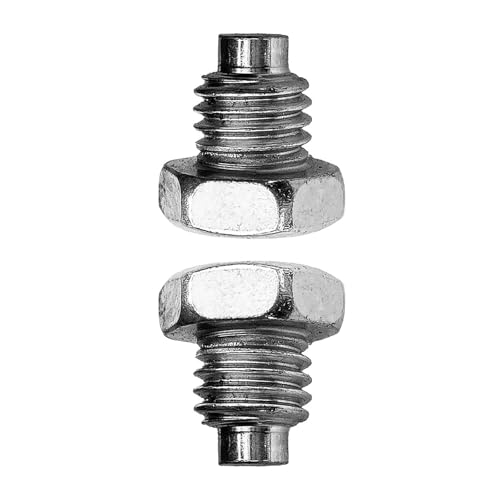
CouTunp 2PCS Car Floor Jack Handle Bolts
|
9.1/10 | Buy |
| Best Value |
 Anglekai 15-Inch Hydraulic Jack Handle |
9.1/10 | Buy |
| Best Premium |
 Hedume 2 Pack 2 Ton Jack Handle Replacement |
8.9/10 | Buy |
 YoRise 14.76-Inch Replacement Hydraulic Jack |
8.3/10 | Buy | |
| Best Budget |
 MTRPS 14.6-Inch 2-Ton Floor Jack Handle |
7.8/10 | Buy |
Anglekai 15-Inch Hydraulic Jack Handle
Built for 2-ton horizontal floor jacks and engine hoists, this compact carbon steel replacement handle delivers reliable leverage with a slip-resistant rubber grip. Its 15-inch profile makes it easy to store in a vehicle trunk for roadside tire changes or garage maintenance.
Pros
- Sturdy carbon steel build resists bending under load
- Textured rubber handle prevents slipping during operation
- Compact profile stores easily in trunks or toolboxes
- Plated finish wipes clean of grease and resists rust
Cons
- Short 15-inch length provides modest lifting leverage
- Specifically sized for 2-ton jacks, limiting broader use
- Fixed one-piece design lacks telescoping adjustability
YoRise 14.76-Inch Replacement Hydraulic Jack
The YoRise 14.76-inch replacement jack handle is a lightweight metal lever bar designed to operate compatible 2-3 ton horizontal hydraulic jacks. Featuring a textured anti-slip rubber grip and a compact 0.57-pound profile, it serves as a straightforward replacement for lost or damaged factory pumping poles in automotive trunk or garage kits.
Pros
- Compact 14.76-inch length stows easily behind truck seats, inside spare tire wells, or in portable toolboxes.
- Textured rubberized grip prevents hand slippage when pumping with oily or wet gloves.
- Lightweight 0.57-pound metal build resists bending under standard 2-3 ton lifting leverage.
- High-visibility red finish makes it easy to locate in dim roadside conditions or cluttered shops.
Cons
- Short 14.76-inch length provides limited mechanical leverage compared to longer multi-piece commercial jack poles.
- Socket receiver diameter is not explicitly listed, requiring buyers to verify their specific jack handle sleeve dimensions prior to purchase.
- Intended strictly for compatible 2-3 ton horizontal hydraulic jacks and will not fit larger high-tonnage commercial jacks or bottle jacks with distinct socket linkages.
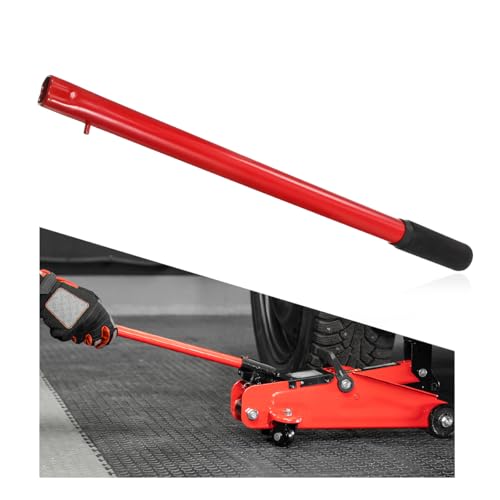
MTRPS 14.6-Inch 2-Ton Floor Jack Handle
Built as a direct replacement for 2-ton horizontal hydraulic jacks, this steel lever provides dependable operation with a textured, slip-resistant grip. Its compact 14.6-inch frame makes it particularly well suited for vehicle owners seeking an easy-to-stow emergency spare.
Pros
- Rigid steel build resists bending under load
- Textured rubber grip prevents accidental hand slippage
- Corrosion-resistant finish extends overall durability
- Compact size stores conveniently inside small spaces
Cons
- Shorter length provides less leverage than standard poles
- Threaded connection fits only compatible jack sockets
Analyzing Why Floor Jack Handle Length Matters in Automotive Service
Every hydraulic floor jack relies on mechanical leverage to transform modest human effort into immense hydraulic fluid pressure. Determining whether does floor jack handle length matter comes down to the fundamental physics of lever ratios, the physical space inside your workspace, and how precisely you can modulate lowering controls. While professional shop jacks frequently incorporate long, two-piece poles exceeding forty inches, compact utility jacks utilize shorter fourteen-inch levers to maximize maneuverability. Choosing or replacing a handle requires evaluating your lifting environment, vehicle clearance, and the physical force necessary to cycle the hydraulic pump.
Mechanical Advantage and Hydraulic Piston Pumping Dynamics
The primary function of any floor jack handle is acting as a force multiplier under classic lever mechanics. When an operator pushes down on the outer end of the handle, that force pivots around a fulcrum pin to drive the small hydraulic pump plunger into the cylinder block. According to lever principles, increasing the distance from the pivot point to your hands directly multiplies the force applied to the hydraulic fluid. A longer handle substantially reduces the physical effort required to lift thousands of pounds of vehicle curb weight.
Compact replacement bars provide a distinctly different set of trade-offs for vehicle maintenance. The Anglekai Horizontal Hydraulic Jack Handle measures 14.76 inches, offering enough mechanical advantage for typical two-ton horizontal jacks while remaining easy to pack. Shorter handles inherently require more downward effort from the user because the lever arm is shorter. For lightweight compact cars or utility equipment, this additional effort is manageable, but raising a heavier chassis with a short handle demands significantly more upper-body exertion.
The interaction between handle length and internal pump architecture also dictates your pumping rhythm. In dual-piston rapid-pump hydraulic jacks, each downward stroke displaces a greater volume of hydraulic oil, demanding higher instantaneous force at the handle. A full-length shop handle easily overcomes this resistance, allowing rapid chassis elevation in just a few full strokes. Conversely, pairing a dual-piston assembly or a heavy single-piston cylinder with an abbreviated lever can make the initial pump resistance feel noticeably stiff under full load.
Working Arc and Clearance in Confined Garage Environments
Workspace dimensions play a massive role in determining whether a long or short handle is practical for your routine maintenance. A standard full-length handle requires an expansive vertical and horizontal swing arc to complete a full pumping stroke. In a cramped residential garage with vehicles parked close together, long handles frequently collide with workbenches, storage cabinets, or adjacent walls. When working space is constrained, the physical length of the lever can prevent you from achieving a complete stroke cycle.
Lifting a vehicle from designated side pinch welds often exposes these clearance limitations. Because the jack body sits perpendicular to the rocker panel, a long handle extends straight outward toward garage walls or parked vehicles. In these restricted spaces, compact models like the Hedume 2 Pack 2 Ton Jack Handle Replacement, measuring 14.5 inches in length, provide vital maneuvering clearance. The reduced swing radius permits full pumping cycles where a forty-inch commercial handle would be obstructed after only a partial pump.
Portability and on-the-road emergency preparedness also favor shorter handle designs. Long two-piece poles require disassembly and can rattle loosely inside a vehicle trunk or tool chest. Compact handles fit neatly alongside a portable horizontal jack or roadside emergency kit without consuming valuable cargo space. Drivers who carry lifting equipment for track events or remote maintenance benefit from compact levers that operate smoothly within restricted roadside shoulders.
Chassis Reach and Deep Subframe Lift Point Accessibility
Accessing central lifting points beneath modern automobiles introduces another dimensional challenge that handle length directly influences. Many modern unibody vehicles and light trucks feature central subframe crossmembers or differential housings located deep beneath the chassis. Reaching these structural lift points requires rolling a low-profile or long-reach floor jack several feet inward past the front bumper or rear fascia. Once the jack saddle is centered beneath the subframe, the pump mechanism sits well beneath the outer perimeter of the vehicle.
Operating a jack placed deep under a vehicle chassis becomes extremely difficult with an abbreviated handle. If a short fourteen-inch lever is attached, the handle grip may sit entirely beneath the front air dam, radiator support, or aerodynamic underbody undertray. Pumping the jack in that position forces the mechanic to reach awkwardly beneath sheet metal, creating severe ergonomic strain and potential hand-pinch hazards. A full-length service handle ensures that the pumping grip remains safely outside the vehicle perimeter, allowing comfortable standing or kneeling operation.
Proper positioning at central lift points enables technicians to lift an entire front or rear axle simultaneously, establishing proper vehicle lift height for comprehensive mechanical service. If your garage setup forces the use of a short handle, lifting from exterior pinch welds one side at a time remains the safer approach. Attempting to pump a deeply recessed jack with inadequate handle reach increases the likelihood of accidental body contact and uneven saddle seating.
Release Valve Metering and Controlled Descent Sensitivity
Beyond raising a load, the floor jack handle serves as the primary steering and release control mechanism for the hydraulic system. Most modern trolley jacks utilize a universal joint or geared drive pinned directly to the base of the handle socket. Rotating the handle clockwise closes the release valve to build hydraulic pressure, while counterclockwise rotation bleeds fluid back into the reservoir. The length and diameter of the handle directly affect how much rotational leverage and tactile feedback you receive while modulating this valve.
Micro-metering vehicle descent requires minute, highly controlled rotational adjustments. A longer handle gives the technician greater rotational authority and a wider gripping surface, making it easier to open the valve by millimeters for a slow, gentle lowering motion. Short handles have a smaller rotational radius, which can make the release mechanism feel touchy or sensitive under heavy loads. If an operator accidentally twists a short handle too rapidly, the hydraulic bypass opens abruptly, causing the elevated vehicle to drop suddenly toward the ground.
Secure mechanical connection between the handle tube and the jack drive socket is critical for safe release operation. Loose retaining bolts or worn socket pins introduce rotational slop that makes descent control erratic. Components such as the CouTunp 2PCS Car Floor Jack Handle Bolts utilize precision 12 x 1.75 thread specifications to clamp the pressure rod firmly into the yoke. Eliminating play in the handle socket ensures that every millimeter of hand rotation translates directly into controlled hydraulic fluid return.
Handle Construction, Tube Diameter, and Grip Security
The metallurgical strength and wall thickness of a floor jack handle dictate its resistance to bending under maximum downward pumping force. When raising a vehicle that approaches the rated working load limit of a jack, hydraulic resistance spikes dramatically. Thin-walled or low-grade tubing can flex or permanently deform under aggressive pumping action. High-strength replacements, like the YoRise Horizontal Hydraulic Jack Handle, utilize thickened metal tubing designed to endure high bending stress without warping.
Standard replacement levers for horizontal trolley jacks typically feature outer tube diameters around 0.8 inches. This dimensional standard ensures proper seating inside the jack handle socket while maintaining sufficient structural rigidity along its length. Protective coatings, including electroplated paint or rust-resistant powder finishes, shield the steel substrate from garage moisture, spilled fluids, and corrosive road grime. Maintaining clean, uncorroded tubing prevents premature binding inside the pivot sleeve.
Grip ergonomics become vital when working with hands coated in motor oil, grease, or hydraulic fluid. Smooth bare metal handles easily slip from an operator’s grasp, leading to dropped tools or struck fenders. Quality replacement handles, including the MTRPS Horizontal Hydraulic Jack Handle, integrate rubber grip sleeves featuring prominent vertical ridges. These textured patterns channel away slippery lubricants and ensure a firm mechanical handhold during high-effort pumping and valve modulation.
Matching Handle Dimensions to Vehicle Tonnage and Axle Loads
Calculating the required lifting effort begins with understanding vehicle weight distribution. When a hydraulic jack elevates one axle or a single corner of a vehicle, it supports roughly fifty to sixty percent of the gross vehicle curb weight rather than the total mass. For a four-thousand-pound crossover, lifting the front end places approximately twenty-four hundred pounds of dynamic load onto the hydraulic cylinder. This substantial resistance translates directly into hydraulic pressure that the operator must overcome at the pump handle.
Compact two-ton horizontal jacks paired with fourteen-inch to fifteen-inch handles are well suited for lighter sedans, compact hatchbacks, and small engine hoists. The modest hydraulic forces generated when lifting lighter vehicles keep the physical pumping resistance within comfortable limits. However, servicing full-size pickups, commercial vans, or heavy three-quarter-ton trucks demands three-ton or four-ton service jacks equipped with lengthy two-piece handles. Attempting to raise a heavy pickup truck axle using an ultra-short lever creates severe operator fatigue and increases the risk of jerky pumping motions.
Operators must also verify that handle mounting hardware matches the tonnage demands of their specific jack chassis. Heavy three-ton and four-ton floor jacks employ reinforced handle brackets and larger retention bolts to withstand the immense torsional forces generated during heavy lifting. Utilizing undersized mounting bolts or ill-fitting handle tubes on high-tonnage jacks risks shearing the retention pin under maximum load. Matching your handle diameter, bolt thread size, and lever length to the jack tonnage rating ensures stable, predictable operation.
Non-Negotiable Garage Safety and Load Support Standards
Regardless of handle length, every DIY mechanic must remember that a hydraulic floor jack is strictly an elevating mechanism and never a static support device. The hydraulic circuit relies on rubber O-rings, check valves, and fluid pressure to hold a load in the air. Over time, internal seal weeping, thermal fluid contraction, or accidental handle movement can cause the lift arm to creep downward without warning. Placing any part of your body beneath a vehicle supported only by a hydraulic jack creates a life-threatening hazard.
Immediate transfer of vehicle weight onto ASME PASE compliant mechanical jack stands must occur as soon as the chassis reaches the desired height. Before initiating any lift, always chock the tires remaining on the ground in both directions to prevent roll-away accidents. When lifting on smooth garage slabs, preventing garage equipment from sliding is essential for preserving chassis balance. Lower the vehicle slowly onto the jack stand saddles until the stands fully bear the load before beginning brake or suspension work.
Long-term reliability of your lifting setup also requires proper hydraulic fluid maintenance. Use only clean, dedicated anti-foaming ISO VG 22 or ISO VG 32 hydraulic jack oil when topping off the fluid reservoir. Never introduce motor oil, brake fluid, automatic transmission fluid, or power steering fluid into a floor jack, as these chemical compounds deteriorate internal nitrile rubber seals. Regularly cycle the jack without load to purge entrained air pockets, ensuring smooth, spongy-free handle resistance every time you lift.
Floor jack handle length fundamentally shapes the balance between physical pumping leverage, workspace clearance, and precision lowering control. While long two-piece handles deliver effortless mechanical advantage and reach for heavy vehicles in open bays, compact fourteen-inch replacement handles offer essential clearance in tight single-car garages and mobile tool kits. Matching the lever length to your garage dimensions, vehicle axle loads, and jack chassis design allows you to work efficiently. Always secure your elevated chassis on rated jack stands with unlifted wheels securely chocked before performing any maintenance underbody.
About the author
Larry Carley is an experienced automotive technical writer and editor with more than four decades of work covering vehicle diagnostics, repair procedures, and automotive technology. His extensive technical writing helps readers understand mechanical systems, maintenance decisions, and the importance of accurate information when working on vehicles.