
Do You Need a Rubber Pad for a Floor Jack: Undercarriage Protection Guide for 2026
Protect your vehicle underbody and learn why do you need a rubber pad for a floor jack is essential for safe pinch weld lifting in this practical October 2026 guide.
 By Christian Hazel
Updated October 11, 2026

Positioning a hydraulic service jack directly against vehicle sheet metal creates immense localized pressure that easily bends factory seams and scrapes protective coatings. Home mechanics frequently ask whether do you need a rubber pad for a floor jack when preparing for routine brake work, tire rotations, or underbody oil service. A steel jack saddle features raised metal perimeter teeth designed to bite into heavy truck frames, but that same bare metal serration can crush delicate rocker panels on unibody passenger cars. Incorporating a dense vulcanized rubber pad or slotted pinch weld adapter forms a resilient barrier that cushions contact, distributes lifting force, and protects electro-coated frame rails from galvanic rust triggers.
While seasoned technicians lifting solid rear axles or heavy cast-iron truck differentials may bypass extra padding, modern sedans and crossover SUVs demand precise contact cushioning. Understanding equipment setups is essential when evaluating car ramps versus jack stands for residential garage service. Slotted rubber adapters allow vertical pinch weld flanges to settle neatly into recessed grooves, directing lifting force onto reinforced structural backing plates rather than thin folded sheet metal edges. Adding this protective accessory preserves undercarriage value, prevents costly rocker panel repairs, and provides non-slip stability whenever hydraulic pressure elevates the chassis.
| Award | Product | BJL Score About BJL ScoreThe BJL Score is our own rating from 0 to 10, based on performance, design and build, ease of use, and value. It reflects independent research and is never influenced by manufacturers, retailers, or affiliate commissions. Learn more › | |
|---|---|---|---|
| Best Overall |
TONDA Floor Jack Pad, Pinch Weld Jack Adapter
|
8.6/10 | Buy |
| Best Premium |
 Yesland 3-Inch Jack Pad Adapters (6-Pack) |
8.6/10 | Buy |
| Best Value |
 Universal Floor Jack Rubber Pad Jack Pad Adapter |
8.4/10 | Buy |
| Best Budget |
 Suewort Dual-Depth Pinch Weld Jack Pad |
8.3/10 | Buy |
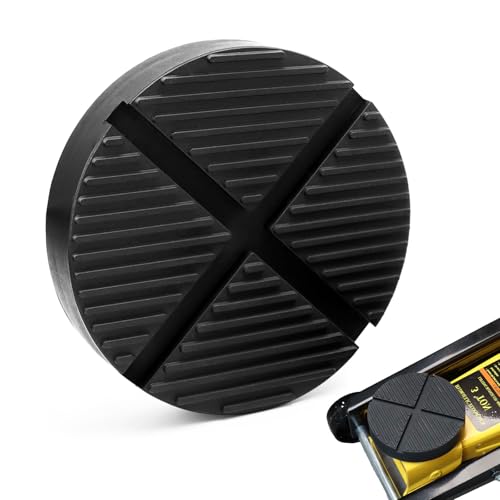 JUKFITA Floor Jack Rubber Pad |
8.1/10 | Buy | |
 Moibunka 5-Inch Floor Jack Rubber Pad |
8.1/10 | Buy | |
 TONDA 4.92-Inch Rubber Floor Jack Pad |
8.1/10 | Buy |
Yesland 3-Inch Jack Pad Adapters (6-Pack)
Designed to protect vehicle pinch welds during maintenance, these dense rubber pads offer reliable cushioning and grip on floor jacks. The six-pack provides versatile coverage for DIY mechanics working with standard car lifts and stands.
Pros
- Dense rubber prevents pinch weld crushing and paint damage
- Deep 3/8-inch slot fits standard vehicle frame seams
- Anti-slip surface provides stable contact while lifting
- Six-pack offers plenty of spares for multiple stands
- Compatible with a wide range of floor jacks
Cons
- Fixed groove depth may not suit extra-deep seams
- Square shape may not seat flat in small round cups
- Rubber surface can degrade under sustained high tonnage
Suewort Dual-Depth Pinch Weld Jack Pad
Designed for home garages and professional service bays, this heavy-duty rubber adapter protects pinch weld frame rails and vehicle paint from crushing during tire changes. Its dual-depth cross-grooves accommodate varying frame seam sizes while adding 1.8 inches of practical lift clearance.
Pros
- Dual-depth grooves fit multiple pinch weld styles
- Thick rubber cushions frame rails against deformation
- Adds 1.8 inches of useful lift clearance
- Wide base aligns securely with floor jacks
Cons
- Incompatible with standard scissor jacks
- Requires a jack with a stable, flat lifting surface
Moibunka 5-Inch Floor Jack Rubber Pad
Designed to shield pinch welds and underbody rails during lifting, this heavy-duty rubber puck supports vehicle loads up to 3 tons. The molded cross-groove pattern helps stabilize contact points, making it a practical accessory for home mechanics using floor jacks.
Pros
- Prevents pinch welds and frame rails from bending
- Cross-grooved design securely grips vehicle seams
- Durable rubber resists crushing under 3-ton loads
- Wide 5-inch diameter provides a sturdy base
Cons
- Large 5-inch size may not fit smaller jack saddles
- Maximum capacity is limited to 3 tons
- Sold as an individual single pad
TONDA 4.92-Inch Rubber Floor Jack Pad
The TONDA 4.92-Inch Rubber Floor Jack Pad provides a slotted, waffle-textured cushion designed for 2-3 ton lifting applications on unibody pinch welds. It is an ideal garage accessory for DIY mechanics wanting to prevent bent rocker seams and metal-to-metal gouging during floor jack lifting.
Pros
- Deep cross-slotted grooves seat vehicle pinch welds securely to prevent metal crushing
- Textured waffle pattern enhances contact grip between lifting point and jack saddle
- Heavy-duty rubber composition cushions up to 2-3 ton vehicle lifting applications
- Substantial 4.92-inch diameter spreads contact load across compatible floor jack saddles
Cons
- Pack includes only one pad, requiring an extra purchase if lifting both sides simultaneously
- Wide 4.92-inch diameter may not fit smaller or deeply recessed floor jack saddle cups
- Dense rubber can show compression marks or cosmetic wear under heavy concentrated point loads over time
Understanding Floor Jack Saddle Contact and Chassis Protection
Hydraulic floor jacks rely on heavy steel lifting saddles that transfer thousands of pounds of upward force onto tiny undercarriage contact patches. Deciding whether do you need a rubber pad for a floor jack depends entirely on your vehicle chassis architecture, factory lift point geometry, and garage maintenance goals. Understanding the structural differences between unibody pinch welds and rigid truck frame rails clarifies why rubber adapters are vital investments for passenger vehicles.
The Core Verdict: When a Rubber Saddle Pad Is Essential Versus Optional
Lifting a modern unibody car, crossover, or compact hatchback without a rubber pad invites structural and cosmetic damage. Unibody platforms concentrate vehicle weight along thin, vertical sheet metal seams known as pinch welds. Bare metal jack saddles feature serrated perimeter teeth that bite directly into these metal flanges, folding the seam flat or gouging factory paint. A dense rubber pad cushions this direct impact, making it an essential tool for unibody maintenance.
Vehicles built with traditional body-on-frame architecture present a slightly different set of lifting dynamics. Full-size pickup trucks, vintage rear-wheel-drive sedans, and dedicated four-wheel-drive SUVs often feature thick boxed steel frame rails or solid cast-iron axle housings. A bare steel jack saddle can contact these robust components safely without the imminent danger of structural crushing. However, even on heavy steel frames, an anti-slip rubber cushion prevents scraped undercoating and unwanted lateral slippage during elevation.
The Vulnerability of Unibody Pinch Welds Under Metal Saddle Pressure
Automotive manufacturers construct unibody pinch welds by spot-welding the floor pan, inner rocker panel, and outer body stamping together. This vertical flange possesses impressive structural strength in tension and shear across the entire chassis span. Unfortunately, thin pinch welds exhibit very poor resistance to localized point loads when pushed from below by a circular steel saddle. Applying substantial hydraulic lifting force directly against the edge of an unsupported flange quickly rolls the metal over.
Bending a pinch weld damages far more than appearance because factory rust inhibitors crack under extreme mechanical deformation. Once the galvanized zinc coating and electrostatic e-coat flake away, bare structural steel becomes exposed to moisture, road salt, and ambient grime. Moisture wicks into the folded seam, initiating hidden internal oxidation that weakens the rocker panel over several winter seasons. Furthermore, crushed pinch welds frequently collapse into adjoining plastic rocker trim, cracking expensive exterior moldings and breaking fragile retaining clips.
Flat Rubber Pucks Versus Slotted Adapters: Choosing the Right Configuration
Floor jack rubber pads generally fall into two primary physical categories: solid flat pucks and slotted frame adapters. Solid flat pucks resemble heavy vulcanized rubber discs, providing an even layer of cushioning across the full face of the metal saddle. These flat pads work exceptionally well beneath flat subframe crossmembers, solid suspension control arm mounts, and broad frame rail sections. They prevent metal-to-metal gouging while absorbing surface irregularities on smooth structural hard points.
Slotted adapters feature dedicated single or cross-grooved channels molded into the upper rubber contact face. Models such as the TONDA Floor Jack Pad, Pinch Weld Jack Adapter or the Yesland 6 Pack Universal Floor Jack Rubber Pad incorporate deep channels specifically sized for vertical sheet metal seams. The vertical pinch weld slips down inside the groove, allowing the flat shoulders of the rubber pad to contact the reinforced floor pan on either side. This design carries vehicle weight through the structural floor base rather than crushing the narrow vertical seam edge.
Sizing and Fitment Considerations: Saddle Cup Diameter and Groove Geometry
Selecting the correct rubber pad requires measuring the interior diameter and depth of your floor jack saddle cup. Standard hydraulic trolley jacks and service jacks typically feature saddle diameters ranging from three inches up to five inches. A pad that is too small can slide around inside an oversized metal saddle cup under shifting loads. Conversely, an oversized pad that perches unevenly on the raised saddle teeth can teeter or split when dynamic load increases.
Channel dimensions are equally critical when selecting a slotted pinch weld protector for your garage equipment. Slotted pucks like the GeeWatom Universal Floor Jack Rubber Pad Jack Pad Adapter feature wide cross grooves designed to align with various chassis angles. The depth of the groove must accommodate the height of your vehicle pinch weld flange without bottoming out prematurely. If the seam bottoms out against the groove floor before the pad shoulders touch the reinforced body, the pinch weld still carries excess concentrated weight. Specialized options like the Suewort Upgraded Pinch Weld Jack Pad provide dual-depth X-grooves with shallow and deep channels to solve this fitment dilemma.
Rubber Density and Compression Resistance Under Vehicle Load
High-quality jack pads must balance mechanical elasticity with exceptional structural hardness to avoid dangerous failure. Cheap, low-density foam rubbers or soft synthetic compounds crush completely flat beneath a vehicle corner, allowing the bare steel saddle to punch straight through. Durable pads utilize heavy-duty vulcanized rubber with a high durometer rating, similar in hardness to solid industrial pucks. This dense rubber compound deflects slightly to conform to chassis angles without crumbling or extruding over the saddle edges.
Rated lifting capacity provides a reliable benchmark for evaluating the load-bearing integrity of a rubber jack adapter. Products like the Moibunka Universal Floor Jack Rubber Pad & Jack and JUKFITA Floor Jack Rubber Pad are designed to support working load limits up to three tons. Because a standard hydraulic jack only lifts a single corner or axle at one time, a three-ton rated pad provides a substantial structural safety margin for standard passenger cars. Heavy-duty rubber compounds resist the cutting action of sharp sheet metal edges, maintaining structural integrity across repeated maintenance cycles.
Traction, Slippage Prevention, and Protective Chassis Coatings
Bare metal saddles contacting smooth, painted undercarriage metal generate remarkably low surface friction. When raising a vehicle, the chassis tilts slightly as one axle or corner leaves the garage floor, creating angular lateral force. Smooth steel teeth can slide abruptly along wet, oily, or waxed frame rails, causing the vehicle to shift off the lifting point. Dense rubber pads establish a high-friction interface that grips the chassis firmly, significantly reducing the hazard of unexpected shifts.
Surface texturing on top of the rubber pad further enhances grip under variable working conditions. Slotted pads manufactured by TONDA feature waffle-textured upper surfaces that bite securely into coated chassis surfaces without penetrating the paint film. This textured contact area displaces light dust and moisture, ensuring steady adhesion throughout the elevation stroke. Preserving unbroken chassis paint prevents localized rust pockets from forming around primary maintenance points.
Ground Clearance and Low-Profile Vehicle Considerations
Adding a thick rubber pad to your floor jack saddle increases the total collapsed entry height of your lifting setup. Standard rubber discs add between one inch and nearly two inches of overall height to the top of the saddle. For lowered sports cars, track vehicles, or performance sedans with aftermarket ground effects, this added thickness can make it difficult to roll the jack under low factory lift notches. When clearance is extremely tight, mechanics often explore low-clearance vehicle entry solutions to create preliminary room before positioning a jack.
Low-profile hydraulic floor jacks with collapsed saddle heights under 3.5 inches pair best with compact rubber pucks. Using a compact one-inch thick pad like the Yesland slotted adapter preserves essential undercar clearance while still delivering vital pinch weld protection. On the other hand, taller adapters provide beneficial vertical lift extension on taller crossovers and standard passenger cars. Gaining extra lifting clearance reduces the number of handle strokes needed to elevate suspension components to service height.
Step-by-Step Procedure for Aligning and Lifting With a Jack Pad
Safe vehicle lifting begins by staging your workspace properly on a level, solid concrete slab. Park the vehicle, shift the transmission into park or reverse gear, engage the emergency brake, and place heavy-duty wheel chocks firmly against both sides of the unlifted tires. Inspect your vehicle owner manual to locate the exact reinforced lifting notches along the rocker panel pinch weld seams. Never attempt to position a jack pad against unsupported floor pans, thin floorboards, steering linkages, or fluid pans.
Seat the rubber pad squarely in the center of the hydraulic jack saddle, verifying that the adapter sits flush within the perimeter rim. Roll the floor jack into position under the designated factory lift notch, orienting the slotted groove so it aligns parallel with the vertical pinch weld. Slowly pump the jack handle until the rubber groove makes light, positive contact with the pinch weld seam. Pause your pumping to visually confirm that the flange sits centered within the slot and the pad shoulders contact the reinforced underbody backing plate.
Once alignment is verified, pump the hydraulic handle steadily to raise the vehicle to your target working height. Maintain a close watch on the rubber pad throughout the upward stroke to ensure it does not roll, shift, or deflect excessively. Never lift from an uneven angle where the jack cannot roll forward naturally on its casters as the chassis arcs upward. If you need to raise only one side, understanding the mechanical considerations of elevating a single side of a vehicle helps maintain overall stability throughout the process.
Transitioning Load to Jack Stands and Undercarriage Safety
A hydraulic floor jack is engineered solely as a lifting tool, never as a stationary load-holding support. Hydraulic fluid pressure can fail unexpectedly due to internal seal leakage, aerated fluid cavitation, or accidental valve movement. As soon as the vehicle reaches the desired clearance, immediately position mechanical jack stands beneath designated factory support points. Never place any part of your body beneath an elevated vehicle that rests exclusively on a hydraulic cylinder.
Jack stand saddles present the exact same sharp, bare metal contact hazards as floor jack saddles. If you place a notched jack stand directly under a bare pinch weld, the concentrated vehicle mass will crush the seam just as quickly as an unpadded jack. Many mechanics use secondary rubber pads, such as those included in multi-pack sets like Yesland 6 Pack Universal Floor Jack Rubber Pad, to cushion jack stand contact surfaces. Lower the hydraulic release valve slowly and progressively using the universal joint control, allowing the vehicle weight to settle gently and squarely onto the padded mechanical stands.
Wear Indicators, Oil Exposure, and Equipment Retirement
Rubber jack pads endure extreme compressive stress and environmental contamination throughout their working lifespan in a residential garage. Exposure to petroleum-based fluids like motor oil, brake fluid, or gear oil causes natural and synthetic rubber to soften, swell, and degrade chemically. Wipe down your rubber adapters with a clean shop rag after every maintenance session to prevent fluid absorption. Store rubber pads in a dry, temperate garage cabinet away from direct ultraviolet sunlight and ozone-generating electric motors.
Inspect your rubber pads carefully before initiating every vehicle lift to detect structural micro-fractures, deep gouges, or permanent deformation. A pad that has developed deep horizontal splits along the base of its alignment groove can shear completely in half under peak load. If the rubber shows signs of crumbling, extreme permanent compression, or tearing along the saddle perimeter, retire the pad immediately. Replacing an inexpensive rubber adapter costs a fraction of repairing a crushed unibody rocker panel or damaged pinch weld seam.
Using a dedicated rubber pad on your hydraulic floor jack saddle represents one of the simplest, most effective safeguards for residential vehicle maintenance. While heavy full-frame trucks can withstand bare steel contact on solid axles and boxed frame rails, unibody passenger vehicles require the protective cushioning of dense vulcanized rubber. Selecting an adapter with the proper saddle diameter, groove depth, and compression density safeguards your factory paint, stops galvanic rust, and stabilizes the lifting point. Pair your padded jack with properly rated mechanical jack stands and secure wheel chocks to ensure every garage lifting task remains safe, steady, and damage-free.
About the author
Christian Hazel is an automotive journalist with extensive experience covering four-wheel-drive vehicles, mechanical upgrades, and off-road equipment. His background includes technical reviews, installation features, and project-vehicle coverage, bringing useful context to equipment choices for trucks, Jeeps, and off-road enthusiasts.