
Do It Yourself Car Ramps of 2026: Top Garage Picks
Elevate your vehicle safely with do it yourself car ramps for maintenance in November 2026. Compare load ratings, approach angles, and garage safety protocols.
 By Mike Bumbeck
Updated October 10, 2026


Setting up a vehicle for a routine garage oil change or underbody exhaust inspection often feels like an unnecessary struggle when relying solely on hydraulic floor jacks and unstable stands. Many home mechanics turn to do it yourself car ramps as a faster, more dependable way to gain working elevation without damaging delicate pinch welds or rocker panels. Whether assembling ramp kits using steel bracket ends on structural lumber or opting for pre-molded polymer units, achieving a stable lift requires understanding front-axle weight distribution and ramp incline angles. For enthusiasts who want stable under-car clearance without setting up permanent hydraulic shop equipment, exploring reliable heavy-duty vehicle lifting options can transform routine garage maintenance into a straightforward task.
Selecting or building the right vehicle ramps involves much more than finding spare lumber or grabbing the nearest set of plastic stands. A proper elevation setup must balance usable lift height, platform track width, and firm surface traction across slick troweled or epoxy-coated concrete garage floors. Choosing ramps with inadequate approach angles risks gouging low front splitters, while misunderstanding vehicle weight ratings can lead to dangerous structural deflection under heavy axle loads. By pairing proper wheel chocks and backup jack stands with well-engineered ramps, DIY hobbyists can safely inspect chassis components and complete fluid services with complete confidence.
| Award | Product | BJL Score About BJL ScoreThe BJL Score is our own rating from 0 to 10, based on performance, design and build, ease of use, and value. It reflects independent research and is never influenced by manufacturers, retailers, or affiliate commissions. Learn more › | |
|---|---|---|---|
|
A.A DIY Steel Ramp Kit for 2x8 and 2x12 Wooden
|
8.3/10 | Buy | |
 Keeper 05674-6 DIY Ramp Kit |
8.1/10 | Buy | |
| Best Budget |
 VEVOR Low Profile Car Service Ramps |
8.8/10 | Buy |
| Best Value |
 VEVOR High Profile Car Service Ramps |
8.9/10 | Buy |
 Race Ramps 56-Inch Foam Car Service Ramps |
8.1/10 | Buy | |
| Best Premium |
 Race Ramps 67-Inch XT 2-Piece Car Service Ramps |
8.3/10 | Buy |
| Best Overall |
 Race Ramps Extra-Wide Low-Profile Foam Loading |
9.2/10 | Buy |
 MaxxHaul 50947 Stackable Vehicle Car Ramps |
8.6/10 | Buy | |
 VEVOR 2.6-Inch Rubber Driveway Curb Ramp |
8.6/10 | Buy |
A.A DIY Steel Ramp Kit for 2x8 and 2x12 Wooden
The A.A DIY Ramp Kit provides heavy-duty powder-coated steel brackets that convert standard 2x8 or 2x12 wooden planks into sturdy utility loading ramps with a 700-pound capacity per ramp. It is an affordable, practical solution for DIYers and homeowners looking to load lawn tractors, mowers, and ATVs into pickup truck beds.
Pros
- Cost-effective alternative to expensive pre-fabricated aluminum loading ramps
- Heavy-duty powder-coated steel construction provides solid weather and corrosion resistance
- Flexible setup supports both 2x8 and 2x12 inch wooden boards for varying tire widths
- Compact 6-pound hardware kit stores easily behind truck seats or in a garage cabinet
- Solid 700-pound per-ramp capacity accommodates common light lawn equipment and small power sports
Cons
- Requires purchasing quality 2x8 or 2x12 lumber separately to complete the ramp build
- Limited to a 700 lb capacity per ramp, making it unsuitable for full-size passenger cars or heavy machinery
- Overall ramp strength and flex depend directly on the grade and condition of the wood planks you select
Keeper 05674-6 DIY Ramp Kit
The Keeper 05674-6 DIY Ramp Kit converts standard 2x8 or 2x12 wooden planks into heavy-duty loading ramps with a 700-pound capacity per ramp. It is an ideal, budget-friendly solution for truck owners and DIY mechanics needing to safely load ATVs, lawn tractors, and motorcycles.
Pros
- Heavy-duty powder-coated steel construction rated at 700 lbs capacity per ramp
- Compatible with common 2x8 and 2x12 wooden planks for customizable ramp lengths
- Includes all necessary mounting hardware for quick DIY assembly
- Compact 5.6-pound kit footprint stores easily in a truck toolbox or on a garage shelf
Cons
- Requires purchasing lumber separately before building usable ramps
- Not designed for passenger cars or heavy automotive service elevation
- Lacks integrated rubber floor pads or mechanical tailgate securing straps
VEVOR Low Profile Car Service Ramps
The VEVOR Low Profile Car Service Ramps offer a compact 2.56-inch lift height and durable polypropylene construction designed to give low-clearance vehicles easy access for hydraulic floor jacks. They provide an accessible, lightweight solution for DIYers who need to elevate sports cars and low sedans without scraping front air dams.
Pros
- Low 2.56-inch vertical lift helps clear low-hanging front splitters, air dams, and ground effects
- Durable impact-resistant polypropylene construction with an open honeycomb grid structure
- Stackable nesting design and lightweight 13-pound footprint allow effortless garage storage
- Honeycombed surface pattern facilitates moisture drainage and provides drive-on tire traction
Cons
- Manufacturer product details contain conflicting references between a 2.56-inch and 6.7-inch lift height
- Low 2.56-inch rise functions primarily as a jack-assist ramp rather than providing full crawl space for undercarriage work
- Exterior width of 7.87 inches requires deliberate wheel centering when aligning wide performance tires
VEVOR High Profile Car Service Ramps
Molded from impact-resistant polypropylene, the VEVOR High Profile Car Service Ramps provide an 8,000-pound axle pair capacity with a 6.3 to 6.7-inch vertical lift and a 17-degree incline. They are an ideal elevation solution for DIY mechanics servicing mid-size SUVs, trucks, and Jeeps who need stackable storage and ample undercarriage clearance for routine oil changes.
Pros
- Substantial 8,000-pound axle pair capacity (4,000 lbs per ramp) easily supports mid-sized trucks, Jeeps, and SUVs
- Generous 6.3 to 6.7-inch lift height offers ample working clearance for fluid flushes and filter changes
- Honeycomb traction surface allows moisture and shop fluids to drain freely, minimizing tire slip
- Stackable design with grooved top channels allows the ramps to nest neatly for compact garage storage
- Broad 15-inch width provides a confident drive-on footprint for standard and wider SUV tires
Cons
- The 17-degree incline is relatively steep and unsuitable for low-profile sports cars, lowered sedans, or vehicles with long front overhangs
- Conflicting manufacturer product documentation cites both 13,000 lbs and 16,000 lbs GVW capacity, requiring strict adherence to the 4,000-pound single-ramp limit
- Does not include listed rubber anti-skid base feet in product specs, requiring extra caution on smooth or slick epoxy garage floors
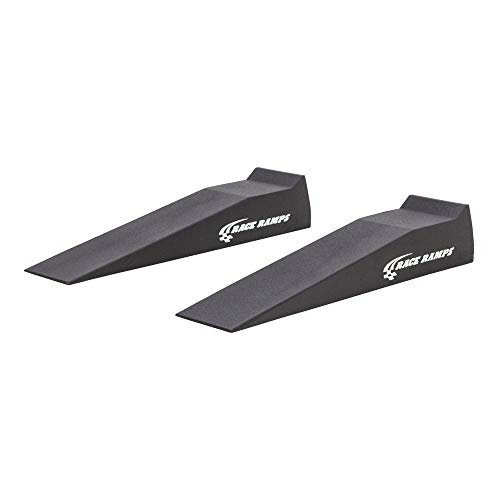
Race Ramps 56-Inch Foam Car Service Ramps
The Race Ramps 56-inch single-piece service ramps feature a gentle 10.75-degree incline and an 8-inch lift designed specifically for low-clearance sports cars and lowered vehicles. With a solid polyurea-coated foam build supporting 1,500 pounds per ramp and weighing only 10 pounds each, they are ideal for home mechanics seeking floor-safe, low-effort vehicle elevation.
Pros
- Gentle 10.75-degree incline angle helps clear low-profile front splitters and bumpers
- Ultralight design at approximately 10 pounds per ramp for effortless transport
- High-density polystyrene core with polyurea coating will not scratch or mark finished garage floors
- Generous 8-inch vertical lift provides open access for routine oil changes and maintenance
- Includes integrated carry straps for straightforward garage handling and storage
Cons
- Weight limit of 1,500 lbs per ramp is strictly intended for passenger cars and excludes heavy-duty trucks or large full-size SUVs
- Single-piece 56-inch solid design cannot be detached for side creeper access like two-piece modular models
- Substantial 56-inch length requires dedicated wall or floor storage space in compact home garages
Race Ramps 67-Inch XT 2-Piece Car Service Ramps
The Race Ramps 67-inch XT two-piece car service ramps provide a gentle 10.8-degree approach angle and a generous 10-inch lift height using solid high-density foam construction. They are ideal for lowered sports cars, performance coupes, and DIY mechanics who need easy undercarriage access without scraping front splitters or scuffing garage floors.
Pros
- Ultra-gentle 10.8-degree incline easily clears low-profile sports cars and aggressive front splitters
- Removable incline section provides unobstructed side creeper access directly behind the front wheel
- Solid high-density foam core will not scuff epoxy floors and weighs only around 17 pounds
- Generous 10-inch lift height gives ample room for oil changes and transmission maintenance
- Built-in raised forward stop helps prevent tire overrun when mounting the ramps
Cons
- Significant 67-inch overall length requires adequate longitudinal garage floor space during vehicle setup
- Weight rating of 1,500 pounds per ramp is not intended for heavy-duty three-quarter-ton pickups or large commercial vans
- Higher initial cost compared to entry-level stamped steel or hollow plastic service ramps
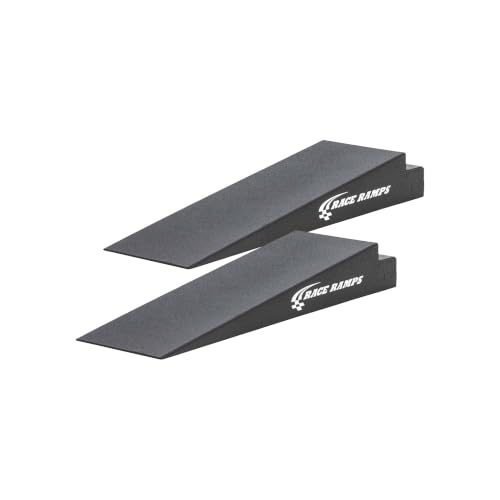
Race Ramps Extra-Wide Low-Profile Foam Loading
Race Ramps Extra-Wide Foam Trailer Loading Ramps deliver an 8-inch vertical rise and a wide 16-inch track built from lightweight solid-core foam. Featuring floor-safe, unscootable base technology, this pair is ideal for lowered sports car owners seeking smooth trailer loading and garage undercarriage clearance without bumper scrape.
Pros
- Extended 54.75-inch length and 8-inch rise create a gradual slope for low-clearance front splitters and air dams
- Extra-wide 16-inch driving surface easily accommodates wide performance and sports car tires
- Weighs only 15 pounds for superior portability compared to heavy welded steel or aluminum ramps
- Unscootable base technology helps prevent ramp slippage while protecting delicate epoxy and trailer floors
Cons
- Premium price point represents a higher initial investment than basic stamped steel or plastic ramps
- Rigid 54.75-inch single-piece footprint does not collapse or fold for storage
- Product data does not list explicit axle or Gross Vehicle Weight Rating (GVWR) figures, requiring buyers to verify load limits before heavy use
MaxxHaul 50947 Stackable Vehicle Car Ramps
The MaxxHaul 50947 stackable car ramp set delivers 6,500 lbs of per-pair axle support (3,250 lbs per ramp) and a practical 6.7-inch vertical lift. Constructed from rugged polypropylene with built-in side handles and a nesting footprint, it provides home mechanics with an efficient elevation solution for routine oil changes and undercarriage maintenance.
Pros
- Verified 6,500 lbs per-pair capacity (3,250 lbs per ramp) provides solid axle support for passenger cars and crossovers
- Delivers 6.7 inches of practical working lift for routine garage fluid changes and chassis inspections
- Patented nesting stackable design significantly reduces storage footprint in small garages
- Lightweight 18.92-pound total set weight with built-in side handles makes repositioning and transport effortless
Cons
- The fixed approach incline on this 35.63-inch ramp may cause contact with aggressive front splitters or lowered sports car bumpers
- Polypropylene base can push forward on slick, dusty, or high-gloss epoxy-coated concrete floors if vehicle approach is not smooth
- Rated strictly for 3,250 lbs per ramp, making it unsuitable for heavy-duty three-quarter-ton pickups, commercial cargo vans, or overloaded axles
VEVOR 2.6-Inch Rubber Driveway Curb Ramp
The VEVOR 2.6-inch rubber driveway curb ramp offers a 33,069-pound load capacity to help sports cars, trucks, and SUVs transition over rolled curbs and garage lips without front splitter damage. Made from heavy-duty recycled rubber with an integrated drainage channel, it is an ideal threshold solution for low-clearance vehicles.
Pros
- Industrial 33,069-pound weight capacity handles everything from compact sedans to heavy full-size trucks
- 2.6-inch vertical rise creates a smooth bridge over jarring rolled curbs and elevated garage thresholds
- Solid 21-pound dense rubber construction resists shifting under drive-over tire pressure
- Built-in 2.2-inch by 1.4-inch bottom conduit protects power cables and prevents water pooling behind the ramp
- Pre-drilled mounting holes and included hardware support quick permanent installation into concrete or asphalt
Cons
- Designed strictly as a transition ramp and does not provide underbody working clearance for routine oil changes or fluid maintenance
- Single 48.1-inch length requires deliberate vehicle alignment unless paired with an additional unit for wide driveways
- Dense industrial rubber can release a noticeable initial odor when unpacked for indoor garage use
Engineering, Sizing, and Operating Do It Yourself Car Ramps Safely
Crawling beneath a chassis requires absolute confidence in the mechanical support holding thousands of pounds overhead. Whether assembling ramp kits using steel bracket ends on structural lumber or choosing factory-molded polymer platforms, do it yourself car ramps provide home mechanics with rapid underbody access for routine maintenance tasks. Understanding how ramp geometry, load ratings, and garage surface friction interact is vital before driving any vehicle onto an incline. Setting up a safe elevation platform demands careful evaluation of vehicle curb weight, approach clearances, and secondary backup equipment.
Demystifying Weight Capacity: Gross Vehicle Weight Versus Axle Ratings
Load ratings on automotive service ramps frequently confuse buyers because manufacturers utilize varying rating standards. A set of ramps advertising a 16,000-pound Gross Vehicle Weight (GVW) capacity is not engineered to support 16,000 pounds on a single ramp or across both ramps simultaneously. In standard automotive equipment terminology, a GVW rating indicates that the pair can safely support the axle load of a vehicle weighing up to 16,000 pounds overall. Because an elevated axle typically carries between 50 percent and 60 percent of total vehicle curb weight, each ramp in that set is rated for approximately 4,000 to 4,800 pounds of actual working load.
Front-engine vehicles place a disproportionate amount of static mass onto the front axle, creating dynamic loading spikes as drive wheels climb the incline. A half-ton pickup truck or large SUV with a heavy engine can easily overload lightweight ramps if the user assumes vehicle weight splits evenly across four corners. Quality commercial ramps incorporate a structural safety factor of at least 2x proof load, ensuring internal webbing resists sudden shock loads during ascent. Exceeding stated axle capacities can compromise internal support structures, leading to sudden material fatigue or structural deformation under load.
Do-it-yourself ramp kits that utilize bolt-on steel ends attached to dimensional lumber follow completely different load thresholds. Products such as powder-coated steel ramp brackets typically carry a working rating of 700 pounds per individual ramp, yielding a 1,400-pound axle capacity. This working threshold makes DIY wooden ramp kits suitable for lightweight machinery like riding lawn mowers, garden tractors, and utility all-terrain vehicles, but inadequate for full-size passenger automobiles. Applying a 700-pound rated bracket to a two-ton passenger sedan creates severe risk of bracket deflection or lumber shear at the mounting bolts.
Structural Anatomy: DIY Bracket Kits, Molded Polymers, and Solid Foam
Building homemade ramps with steel end brackets requires careful lumber selection and proper fastener assembly. Heavy-gauge stamped or powder-coated steel brackets bolt directly onto the ends of 2×8 or 2×12 construction-grade wooden planks to bridge ground clearance gaps. Dimensional lumber introduces natural structural variables such as knots, grain runout, and moisture content that can degrade tensile strength over time. Mechanics choosing wood-based assemblies must inspect planks for grain splitting, warping, and dry rot before subjecting them to rolling vehicle loads.
Molded polypropylene composite ramps represent the most widespread modern alternative to traditional steel angle-iron platforms. Units from manufacturers like VEVOR and MaxxHaul utilize high-impact polypropylene formed into an internal honeycomb structural grid. This honeycombed architecture provides substantial compressive strength while keeping individual ramp weight under ten pounds for easy garage handling. Molded drainage channels and open top grids allow oil, grease, and water to pass through freely, reducing the risk of tire slippage while working in damp driveway environments.
High-density solid-core foam construction represents an advanced approach popularized by Race Ramps. These ramps utilize an expanded polystyrene core encapsulated within a textured polyurea protective coating, eliminating internal hollow voids entirely. Solid-core foam structures will not mark, scratch, or gouge delicate garage floor coatings such as polyaspartic resin, epoxy, or polished concrete. The continuous surface contact distributes vehicle weight evenly across the entire footprint, preventing high-pressure contact points that can crack brittle garage slabs or indent warm asphalt driveways.
Approach Incline Geometry and Front Splitter Clearance
Front bumper damage is one of the most frustrating hazards when attempting to drive low-clearance vehicles onto service ramps. Geometric clearance is determined by the vehicle approach angle, mathematically calculated as the arctan of front ground clearance divided by front overhang distance. If the incline angle of the ramp exceeds the approach angle of the vehicle, the front lower air dam, bumper valence, or aerodynamic splitter will gouge against the ramp face before the tire makes contact. Modern sports cars and lowered sedans frequently feature extended front overhangs that demand ultra-gentle approach slopes.
Standard automotive service ramps feature approach inclines between 15 degrees and 17 degrees, which easily accommodate standard pickup trucks, minivans, and stock crossover SUVs. Sports cars and vehicles fitted with aftermarket coilovers or front splitters typically require low-profile ramps with approach angles between 8.5 degrees and 10.8 degrees. Units such as Race Ramps 67-inch XT models feature a gradual 10.8-degree approach incline, lifting tires a full 10 inches while allowing delicate front bodywork to clear cleanly. Using steep standard ramps on low vehicles forces the front bumper to act as an unintended plow, cracking expensive composite body panels.
Staging ramps and modular designs provide practical alternatives when navigating low-slung performance vehicles onto taller maintenance stands. Ultra-low helper ramps, such as VEVOR composite units providing 2.56 inches of lift, raise the chassis just enough to slide a standard hydraulic floor jack under structural crossmembers. Modular two-piece ramp systems provide an even more versatile solution by allowing technicians to unlatch and remove the incline section entirely once the tires are seated on the platform. Removing the incline section unlocks completely unobstructed side creeper access to underbody drain plugs and frame rails.
Usable Platform Width and Wheel Stop Containment
Platform track width must comfortably match the section width of the tires mounted on the vehicle. Wide performance tires measuring 275 millimeters to 325 millimeters across can easily spill over the edges of narrow ramp channels. If a wide tire overhangs the outer structural rib of a hollow composite ramp, concentrated sidewall pressure can crush outer edge walls or cause uneven tire carcass stress. Mechanics servicing wide-tire sports cars or lifted off-road trucks should verify that the flat deck width provides at least 11 to 12 inches of usable track surface.
Containment lips and raised forward stops serve as critical mechanical safeguards against catastrophic drive-overs. A prominent forward wheel stop measuring at least two to three inches high provides immediate tactile feedback when the tire reaches the center of the platform deck. The platform deck should feature a concave cradle design that naturally settles the rolling tire into a stable, recessed resting position. Attempting to balance a rolling tire on a perfectly flat platform without a recessed cradle increases the likelihood of rolling off during engine cranking or torque application.
Garage Floor Traction and Mitigating Ramp Kick-Out
Ramp slippage during the initial drive-on attempt is one of the most hazardous events in home garage maintenance. Smooth-troweled concrete, sealed slabs, and high-gloss polyaspartic or epoxy floor coatings exhibit extremely low coefficients of static friction. When a vehicle tire contacts an unweighted ramp incline, the forward rotational force of the tire can instantly kick the ramp forward like a projectile. This kick-out leaves the vehicle tire spinning on slick concrete while the displaced ramp wedges violently against the vehicle rocker panel or suspension control arm.
Drivetrain configuration directly influences how severely ramps tend to slide during staging. Front-wheel-drive vehicles pull themselves up the incline via the front tires, creating downward vertical traction that pins the ramp base against the garage floor. Rear-wheel-drive vehicles, conversely, push unpowered front wheels against the steep ramp face, generating forward horizontal thrust without vertical downward pressure until tire weight transfers upward. Mitigating this slide requires dense rubber friction pads beneath the ramp base, dedicated traction mats, or drive-on tether straps anchored beneath the rear tires.
Step-by-Step Drive-On Staging and Ascending Protocol
Executing a safe drive-on procedure begins with meticulous physical staging before turning the ignition key. Position the vehicle on a clean, perfectly flat concrete slab, ensuring the front wheels are pointed dead straight ahead. Slide both ramps directly against the leading tread face of each tire, ensuring the centerline of the ramp aligns precisely with the centerline of the tire footprint. Step back several feet to visually confirm that both ramps sit parallel to the vehicle chassis and that no steering angle will push the tires off the platform edge.
Ascending the incline demands delicate throttle control and steady brake pedal modulation. Front-wheel-drive manual vehicles require smooth clutch slipping to prevent stalling or aggressive tire spinning, while automatic transmissions benefit from gentle two-foot driving. Having an external spotter stand several feet to the side of the vehicle provides invaluable visual confirmation as the vehicle climbs. The spotter can signal exactly when the tire crests the incline, allowing the driver to pause forward motion the instant the tires drop into the concave platform cradle.
Reversing the vehicle down the ramps at the completion of maintenance requires equal caution and controlled deceleration. Keep the steering wheel locked straight ahead, as turning the wheel while descending can pull the sidewalls off the narrow ramp track. Shift into reverse or neutral and allow gravity to guide the vehicle slowly backward while modulating the service brake pedal. Avoid sudden, hard braking while descending the slope to prevent suspension rebound from shifting or ejecting the ramps beneath the descending tires.
Mandatory Life-Safety Redundancy Protocols
Underbody automotive service presents inherent life-safety risks that demand multiple overlapping mechanical redundancies. Never rely exclusively on the forward wheel stop of a service ramp to hold an elevated vehicle in place while working underneath. The instant the tires rest securely in the top cradles, firmly set the emergency parking brake to its maximum mechanical engagement. Place automatic transmissions into Park, or shift manual transmissions into first gear or reverse, preventing any potential drivetrain roll.
Heavy-duty rubber wheel chocks represent a non-negotiable secondary safety barrier that must be deployed immediately after setting the parking brake. Wedge heavy-duty chocks tightly behind both grounded rear tires on the garage floor, ensuring the wedge profile seats firmly against the tire tread. Reviewing proper garage lift safety protocols reinforces how secondary mechanical stops protect technicians from unexpected vehicle movement. Chocking the grounded axle prevents the vehicle from rolling backward down the ramp incline if the parking brake cable slips or the transmission parking pawl disengages.
Positioning secondary backup jack stands beneath structural chassis points provides the ultimate layer of personal safety. Adjust heavy-duty jack stands to rest just beneath factory unibody pinch welds or body-on-frame rails without carrying load, leaving a half-inch safety clearance. In the unlikely event of composite ramp fatigue, wood fracture, or localized structural failure, the jack stands instantly catch the chassis before it can drop. Never slide your torso beneath an elevated automobile without verifying that secondary mechanical supports stand ready to arrest an accidental fall.
Service Scope and Fluid Leveling Considerations
Service ramps excel at providing rapid underbody clearance for specific automotive maintenance tasks that keep the suspension loaded. Performing an engine oil and filter change, unbolting underbody plastic splash shields, or servicing an exhaust hanger takes less than five minutes of staging on ramps. Compared to positioning floor jacks and adjusting individual stands, ramps eliminate the danger of bent rocker panel seams or slip-prone jack contact points. Routine underbody fluid visual inspections and catalytic converter shield repairs become fast, accessible weekend projects.
Elevating only one axle creates a significant chassis tilt angle that directly impacts fluid servicing accuracy. Engine oil drain plugs positioned on the rear face of the oil pan benefit from front-axle elevation, allowing old motor oil to drain out completely. Conversely, manual transmission, transfer case, and differential fill plugs rely on horizontal fluid level checks through the side fill port. If the vehicle sits at a steep rake on front ramps, checking the fluid level can result in severe overfilling or underfilling, requiring mechanics to elevate all four wheels or calculate fluid volumes precisely.
Certain mechanical tasks fall completely outside the operational boundaries of drive-on service ramps. Any job requiring wheel removal, brake rotor replacement, wheel bearing service, or suspension strut replacement mandates lifting the vehicle to unload the suspension. For hobbyists tackling extensive restoration projects or major drivetrain overhauls, investing in dedicated home garage lift options offers superior working elevation and unhindered four-corner accessibility. Recognizing when to transition from drive-on ramps to hydraulic floor jacks and jack stands ensures every garage task is conducted with appropriate tooling.
Selecting, constructing, and operating ramps for DIY vehicle maintenance comes down to matching load ratings, approach geometry, and floor grip to your specific vehicle chassis. Respecting axle weight distribution, confirming that ramp inclines clear front air dams, and securing grounded tires with heavy-duty rubber chocks transforms routine underbody maintenance into an efficient, repeatable procedure. Combining well-engineered ramps with backup jack stands provides the clearance and peace of mind needed to tackle fluid services and chassis inspections safely in any home garage.
About the author
Mike Bumbeck is an automotive journalist and hands-on product evaluator with a long-standing interest in classic vehicles, motorcycles, and practical garage equipment. His work brings a grounded perspective to automotive tools, maintenance products, and the details that matter when choosing gear for real-world use.