
Could My Floor Jack Tip Over With the Rubber Perch: Practical Safety Guide for 2026
Examining if could my floor jack tip over with the rubber perch keeps garage maintenance secure by analyzing saddle alignment, rubber pad deflection, and chassis stability in October 2026.
 By Hank O'Hop
Updated October 15, 2026

Positioning a hydraulic service jack beneath a vehicle requires balancing secure frame engagement against the risk of damaging factory underbody panels. Thin sheet metal pinch welds and delicate rocker panels often bend under the bare steel saddle of a service jack, prompting many car owners to install protective rubber adapters. However, introducing a flexible buffer raises an urgent safety question: could my floor jack tip over with the rubber perch during an elevation cycle? While a quality vulcanized rubber adapter cushions painted coatings, improper setup, excessive stack height, and rolling resistance can destabilize the lifting geometry and cause catastrophic tipping.
A hydraulic trolley jack relies on physical contact, caster movement, and precise load centering to lift vehicles safely. When deciding how to support your automobile, comparing ramps and jack stands for vehicle support illustrates how critical stable foundation points are for garage safety. Placing an unanchored rubber puck between the steel saddle dish and the vehicle chassis alters friction and raises the center of gravity. Understanding the physical forces acting on the lifting arm ensures you protect painted chassis seams without risking personal injury or structural collapse.
| Award | Product | BJL Score About BJL ScoreThe BJL Score is our own rating from 0 to 10, based on performance, design and build, ease of use, and value. It reflects independent research and is never influenced by manufacturers, retailers, or affiliate commissions. Learn more › | |
|---|---|---|---|
| Best Overall |
Seven Sparta 4-Piece Rubber Jack Pad Set
|
9.2/10 | Buy |
| Best Premium |
 Yesland 3-Inch Jack Pad Adapters (6-Pack) |
8.6/10 | Buy |
| Best Budget |
 Universal Floor Jack Rubber Pad Jack Pad Adapter |
8.4/10 | Buy |
| Best Value |
 Pinch Weld Jack Pad - Universal Rubber Jack |
8.4/10 | Buy |
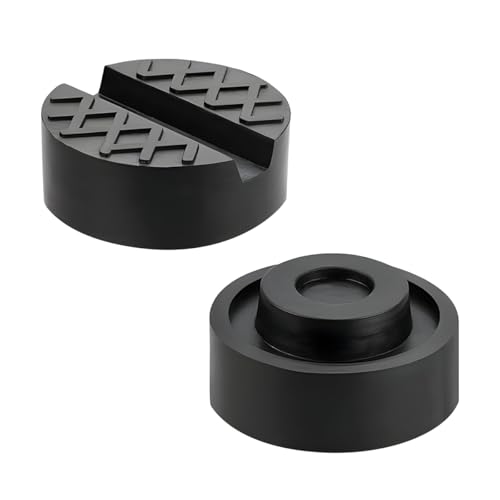 MUQIDA 2-Pack Slotted Rubber Jack Pads |
8.0/10 | Buy | |
 Yesland 4.8-Inch Floor Jack Saddle (2-Pack) |
8.0/10 | Buy |
Seven Sparta 4-Piece Rubber Jack Pad Set
Designed to shield pinch welds and frame rails, this four-piece rubber adapter set prevents undercarriage scratches and metal bending during maintenance. With a 3-ton capacity, it balances rigid support with enough cushion for compatible floor jacks and stands.
Pros
- Durable rubber rated for 3-ton loads
- Grooved design shields pinch welds and frame rails
- Includes four pads in two adapter styles
- Prevents scratches to painted chassis components
Cons
- Incompatible with Torin T42002 jack stands
- Noticeable initial rubber smell requiring ventilation
Yesland 3-Inch Jack Pad Adapters (6-Pack)
Designed to protect vehicle pinch welds during maintenance, these dense rubber pads offer reliable cushioning and grip on floor jacks. The six-pack provides versatile coverage for DIY mechanics working with standard car lifts and stands.
Pros
- Dense rubber prevents pinch weld crushing and paint damage
- Deep 3/8-inch slot fits standard vehicle frame seams
- Anti-slip surface provides stable contact while lifting
- Six-pack offers plenty of spares for multiple stands
- Compatible with a wide range of floor jacks
Cons
- Fixed groove depth may not suit extra-deep seams
- Square shape may not seat flat in small round cups
- Rubber surface can degrade under sustained high tonnage
MUQIDA 2-Pack Slotted Rubber Jack Pads
Designed to cushion vehicle pinch welds during maintenance, these slotted rubber adapters prevent frame rail distortion and undercarriage scraping. The compact, textured discs drop directly onto most standard floor jack saddles for quick protection.
Pros
- Protects pinch welds from bending and coating damage
- Textured surface increases grip on vehicle lift points
- Requires no installation beyond placing onto the saddle
- Compact and lightweight for easy toolbox storage
Cons
- Fixed 0.63-inch groove cannot accommodate extra-wide pinch welds
- Small 2.56-inch diameter may slide inside oversized jack cups
Yesland 4.8-Inch Floor Jack Saddle (2-Pack)
Built to replace worn lift pads, this two-pack from Yesland equips hydraulic jacks with a wide 4.8-inch rubber-cushioned surface and a sturdy 4-ton rating. The 1-1/8-inch stem provides a secure drop-in fit for compatible jacks while safeguarding vehicle undercarriages against marring.
Pros
- Robust 4-ton load rating for trucks and cars
- Protective rubber coating prevents slippage and scratches
- Wide diameter distributes lifting pressure effectively
- Two-pack provides an immediate spare replacement saddle
Cons
- Incompatible with jacks requiring stems other than 1-1/8 inches
- Rubber surface can experience wear under frequent heavy contact
Understanding Floor Jack Stability, Saddle Physics, and Rubber Perch Safety
A hydraulic floor jack can indeed tip over when paired with a rubber perch adapter, but the failure rarely stems from the rubber material alone. Instead, tip-over events occur when lateral shear forces, improper saddle seating, or restricted caster movement overwhelm the friction between the rubber pad and the vehicle chassis. A floor jack arm does not lift straight upward in a purely vertical vector; it travels in a fixed arc that pulls the jack forward as the arm rises. If the jack casters bind on rough concrete or the rubber pad allows the pinch weld to slide off-center, the entire assembly can tilt, slip, or tip over under load.
Vehicle weight creates massive downward pressure that should theoretically compress a rubber perch tightly into the steel saddle cup. Problems arise when the rubber puck deflects unevenly, lacks sufficient shore hardness, or exceeds safe vertical dimensions. When a rubber adapter acts like an unstable pivot rather than a solid interface, even a minor lateral shift can displace the vehicle balance point. Evaluating how floor jacks move, how rubber compounds behave under tonnage, and how pinch welds seat inside slotted pucks helps you prevent dangerous garage accidents.
The Geometry of Trolley Jack Arc Travel and Caster Binding
Standard hydraulic trolley jacks feature a rigid lift arm that pivots around a central frame pin. As the hydraulic ram pushes the arm upward, the saddle travels along a radial arc rather than a vertical plumb line. To keep the saddle positioned directly beneath the factory lift point, the entire steel frame of the floor jack must roll forward on its front steel wheels and rear swivel casters. If cracked concrete, gravel, tools, or floor debris prevent the wheels from rolling smoothly, the lifting arm will pull backward against the vehicle chassis.
When caster rolling is blocked, the horizontal tension transferred through the saddle increases dramatically. A bare steel saddle might scratch or slide slightly under such tension, but a high-friction rubber pad grips the chassis tightly and resists sliding. This intense grip forces the entire jack chassis to tilt onto its front wheels or causes the rubber pad to roll over its outer edge. Regular cleaning of garage floors and routine lubrication of caster ball bearings ensure that your service jack rolls freely with every stroke of the pump handle.
Rubber Compound Durometer and Lateral Shearing Under Tonnage
Rubber perch adapters range from rigid vulcanized rubber blocks to softer synthetic polymer moldings. In automotive lifting, material firmness, measured by durometer hardness, dictates whether an adapter maintains structural integrity or squishes flat under load. Quality options like the Yesland universal floor jack rubber pad and Seven Sparta jack pads utilize dense, heavy-duty rubber engineered to absorb direct compression without splitting. If an operator installs an excessively soft or hollow rubber pad, the localized weight of the vehicle corner can crush one side of the pad prematurely.
Uneven compression generates dangerous angular deflection at the saddle contact zone. When one side of a rubber disc collapses more than the other, the vehicle pinch weld tilts out of level, creating an angled plane. Vehicle weight then exerts a lateral shear vector down that slope, pushing the top of the rubber pad sideways relative to the jack saddle dish. If this lateral force overcomes the pad’s tear resistance, the rubber can shear in half, causing the car to drop suddenly and throwing the floor jack off balance.
Pinch Weld Groove Depth and Slot Misalignment Dangers
Many unibody vehicles feature raised sheet metal pinch welds along the rocker panels that act as primary factory lifting points. Slotted rubber pads, such as the POLYHNIA pinch weld jack pad with its deep dual-groove layout, are designed to straddle this metal seam so the load bears evenly on the reinforced chassis base. If a user selects an adapter with a groove that is too shallow, the vehicle’s entire corner weight rests exclusively on the razor-thin edge of the pinch weld. This narrow contact creates an unstable knife-edge balance point that can tilt or roll under minor vibration.
Conversely, using a groove that is excessively wide allows the pinch weld to tilt sideways inside the channel before engaging the bottom surface. If the weld leans against the inner rubber wall, it produces a lever effect that tries to peel the rubber pad out of the steel saddle cup. Always measure the height and thickness of your vehicle’s pinch weld flange before choosing an adapter. The seam should sit squarely within the groove so the surrounding flat shoulders of the rubber pad support the reinforced floor structure on either side.
Stack Height and Amplified Center of Gravity Hazards
Adding aftermarket extensions or thick rubber pads on top of an existing metal saddle increases the total stack height of the lifting interface. While extra height helps bridge the gap on tall crossovers or SUVs, it also elongates the mechanical lever arm acting on the saddle pivot pin. A standard floor jack saddle cup sits flush with the lift arm to minimize tipping moments. Adding a two-inch or three-inch stack of flexible rubber raises the load point significantly above the saddle’s lateral support perimeter.
A higher center of gravity makes the entire lifting setup far more susceptible to side-to-side wobble. If you need dedicated height rather than simple pinch weld cushioning, replacing the entire saddle assembly is far safer than stacking loose rubber pucks. The Yesland floor jack saddle with rubber pad provides an integrated alloy steel saddle with a dedicated stem that locks directly into the jack arm. This direct mechanical connection prevents the adapter from shifting independently while keeping the rubber protective layer securely bonded to a rigid cast platform.
Saddle Dish Flange Containment and Pad Diameter Sizing
Most hydraulic garage jacks incorporate a circular saddle dish surrounded by raised metal teeth or a perimeter steel retention lip. This steel perimeter acts as a physical containment barrier designed to trap the lift point or adapter inside the dish. When choosing a disc adapter, such as the GeeWatom universal floor jack rubber pad with its four-inch diameter, you must verify that the pad matches the interior dimensions of your saddle. If a rubber puck is significantly larger than the saddle dish, its outer edges will hang over the steel rim without solid vertical support.
An overhanging rubber pad creates a dangerous cantilever ledge beneath the car. If the vehicle lift point contacts the overhanging edge rather than the dead center of the pad, downward pressure will flip the rubber disc out of the saddle dish like a lever. Conversely, a pad that is much too small can slide back and forth across a large saddle basin during elevation. The most secure arrangement features a rubber pad that fits snugly inside the metal perimeter lip, preventing lateral migration in every direction.
Vehicle Rolling Tendencies and Mandatory Wheel Chocking
A floor jack cannot stabilize a vehicle against longitudinal rolling while an axle is elevated off the ground. When raising the front wheels of a rear-wheel-drive car or the rear wheels of a front-wheel-drive model, the parked drivetrain gears cannot lock the unlifted tires. Even minor ground slopes or vehicle suspension shifts can cause the free-rolling axle to move, pulling the elevated chassis away from the jack saddle. Implementing proper methods to stop lifting equipment from sliding and locking vehicle movement begins with heavy-duty rubber wheel chocks.
Always wedge solid wheel chocks tightly in front of and behind the tires remaining in contact with the ground before operating the jack pump handle. If the car rolls even two inches while balanced on a rubber perch, the high-friction rubber surface refuses to slip, pulling the extended lift arm sideways. Floor jack frames are narrow and engineered primarily for vertical load bearing, making them highly vulnerable to lateral rollover forces. Chocking the non-lifted axle completely eliminates longitudinal rolling momentum, keeping the lifting arm perfectly vertical and aligned.
Garage Floor Surface Integrity and Driveway Limitations
Operating a hydraulic floor jack requires a hard, flat, and level concrete slab to ensure that front wheels and casters function properly. Asphalt driveways, gravel paths, and cracked concrete represent severe hazards when lifting multi-ton vehicles with flexible saddle adapters. On warm days, residential asphalt softens under the extreme point-load pressure exerted by small steel casters, causing one side of the jack to sink into the pavement. This uneven sinking instantly introduces a steep tilt angle across the saddle assembly, increasing tip-over hazards.
Cracked or uneven concrete joints present similar dangers by snagging the jack wheels as the lift arm swings through its elevation arc. When front wheels hit an expansion joint, the frame stops moving while the lift arm continues upward, twisting the saddle against the vehicle pinch weld. When servicing vehicles outside a formal garage bay, avoid angled inclines or single-side lifts that introduce diagonal chassis twist. Reviewing the risks of lifting a car on one side shows how lateral weight transfer destabilizes hydraulic equipment.
Step-by-Step Execution for Safe Elevation with Rubber Adapters
Executing a safe lift begins with parking the vehicle on flat concrete, engaging the parking brake, and placing wheel chocks around the grounded tires. Inspect your rubber perch adapter, such as the MUQIDA trolley floor jack disk, for signs of wear, oil contamination, or structural cracking before use. Position the floor jack so the saddle aligns squarely with the factory pinch weld notch or reinforced subframe crossmember. Center the rubber pad within the metal saddle cup, ensuring the pinch weld flange slides cleanly into the adapter groove without binding on the slot walls.
Pump the jack handle slowly until the rubber perch makes light contact with the vehicle undercarriage, then pause to inspect alignment. Confirm that the pinch weld is seated deeply in the channel and that the rubber disc remains flat against the steel saddle base. As you continue pumping, observe the jack frame to ensure its front rollers creep forward across the concrete floor as the lift arm rises. If you observe the jack frame tilting onto two wheels or the rubber pad bulging severely on one side, lower the vehicle immediately to reposition the equipment.
Once the car reaches the desired working height, immediately slide mechanical jack stands under designated structural support points. Never rely on the hydraulic floor jack, whether equipped with a rubber perch or a bare steel saddle, as a static holding mechanism for vehicle weight. Carefully rotate the floor jack release valve to lower the vehicle onto the jack stands until the mechanical pawls bear the full load. Leave the floor jack in light contact as a secondary backup, but ensure the static weight rests entirely on rated mechanical steel stands.
Jack Stand Saddle Adapters vs Floor Jack Perch Discs
Many automotive pad kits provide multiple adapter profiles designed for distinct pieces of shop equipment. Multi-piece bundles like the Seven Sparta jack pad set include both circular flat-bottom discs and curved saddle covers with deep underside recesses. Using a pad designed for a V-shaped jack stand top on a flat hydraulic floor jack saddle creates extreme instability. The raised bottom contours of a jack stand pad will rock across a flat floor jack dish, preventing the adapter from sitting flush.
Always match the specific underside geometry of your rubber perch to the mounting platform you intend to use. Floor jack adapters require a flat base or a dedicated circular centering plug that drops directly into the saddle dish hole. Jack stand pads feature molded underside channels that wrap securely around the curved steel horns of a support stand saddle. Swapping these designs or forcing a curved pad onto a flat jack surface introduces an unstable pivot point that invites premature slippage.
Signs of Degraded, Fatigued, or Contaminated Rubber Perches
Rubber saddle pads are consumable garage accessories that degrade over time through mechanical compression and chemical exposure. Regularly inspect your pads for split seams along the bottom of the pinch weld slot, which indicates that metal flanges have cut through the rubber core. Exposure to automotive fluids such as engine oil, brake fluid, or hydraulic jack oil breaks down synthetic elastomers, making the rubber soft, gummy, and slippery. A chemically softened pad can slide right out of the saddle dish under modest lateral loads.
Permanent deformation is another clear warning sign that a rubber perch has reached the end of its reliable service life. If an adapter retains a pronounced curve or shows crushed sidewalls after being unloaded, its internal molecular bonding has failed. Discard any rubber pad that displays deep tears, missing chunks, or oily saturation to prevent catastrophic failure during your next maintenance session. Replacing worn rubber pads with fresh, heavy-duty vulcanized units is an inexpensive step that protects both your chassis panels and your personal safety.
Calculating Dynamic Load Sizing and Axle Weight Distribution
Selecting appropriate lifting gear requires understanding how vehicle curb weight translates into actual lifting tonnage. When raising one corner or a single axle of an automobile, the floor jack supports roughly fifty to sixty percent of the gross vehicle weight rather than the total mass. For a four-thousand-pound midsize sedan, elevating the front end places approximately two thousand to two thousand four hundred pounds of force on the jack saddle. Using a floor jack and rubber perch rated for at least two to three tons provides a necessary safety margin that prevents structural overload.
Never exceed the working load limit marked on your rubber adapter or your hydraulic floor jack. High-capacity rubber pads, such as those rated up to four or five tons, feature dense composite blends engineered to resist crushing under heavy trucks and full-size SUVs. Exceeding capacity limits causes even high-grade rubber to deform radically, shifting the vehicle center of gravity and raising the risk of equipment tipping. Matching rated lifting capacity to your vehicle axle load ensures that flexible rubber perches remain safe, rigid, and reliable under heavy garage duty cycles.
Maintaining garage safety when using a rubber perch adapter requires continuous attention to equipment alignment, caster mobility, and load centering. A rubber perch will not cause your floor jack to tip over as long as the pad fits snugly within the metal saddle dish and the jack rolls freely on a level concrete floor. By chocking grounded wheels, aligning pinch welds squarely within adapter slots, and transferring vehicle weight onto mechanical jack stands immediately, you eliminate dangerous lateral shear forces. Take time to inspect your lifting setup before raising vehicle weight, ensuring a secure and damage-free workspace for every automotive repair.
About the author
Hank O'Hop writes about automotive tools, hands-on repairs, and the challenges of maintaining and improving project cars. His published work covers workshop equipment, engine hoists, power tools, and garage upgrades, offering practical insights for readers who prefer to understand their equipment before putting it to work.