
Are Bottle Jacks Better Than Scissor Jacks: Practical Guide for 2026
Understand if are bottle jacks better than scissor jacks for emergency roadside tire changes and garage maintenance in this November 2026 lifting equipment guide.
 By Mike Bumbeck
Updated October 10, 2026


A sudden flat tire on a dark highway shoulder instantly puts your emergency equipment to the test. Drivers often find that their factory lifting tools feel flimsy or awkward when trying to elevate a heavy wheel assembly. Choosing the right roadside lifting solution requires balancing collapsed clearance, lifting stroke, and overall weight capacity. Equipping your vehicle with reliable dedicated car lifting equipment makes unexpected repairs faster and considerably safer.
Motorists frequently ask whether are bottle jacks better than scissor jacks when upgrading their emergency travel kits. Hydraulic bottle jacks deliver immense vertical lifting power with minimal physical effort, while mechanical scissor jacks offer ultra-low starting profiles that slide under flat tires effortlessly. The optimal choice depends entirely on your vehicle ride height, unibody contact points, and available trunk space. Understanding how each tool manages corner weight ensures you never end up stranded with a jack that cannot fit beneath your vehicle frame.
| Award | Product | BJL Score About BJL ScoreThe BJL Score is our own rating from 0 to 10, based on performance, design and build, ease of use, and value. It reflects independent research and is never influenced by manufacturers, retailers, or affiliate commissions. Learn more › | |
|---|---|---|---|
| Best Overall |
VEVOR 4-Ton Hydraulic Bottle Jack
|
9.1/10 | Buy |
| Best Value |
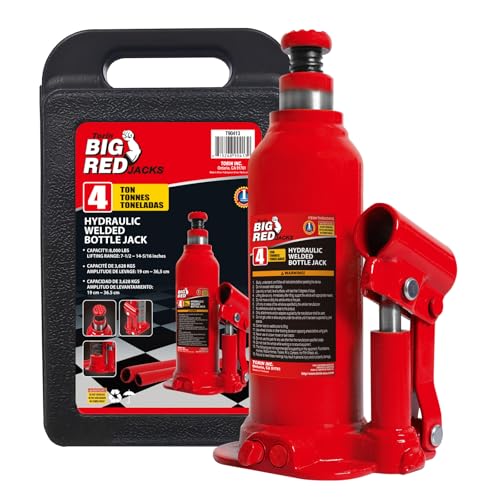 BIG RED 4-Ton Hydraulic Bottle Jack |
9.1/10 | Buy |
| Best Premium |
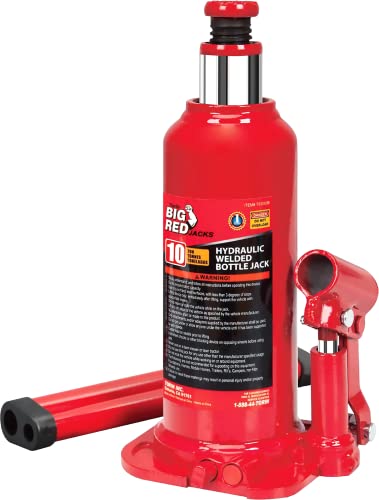 BIG RED T91003B Torin 10-Ton Hydraulic Welded |
9.1/10 | Buy |
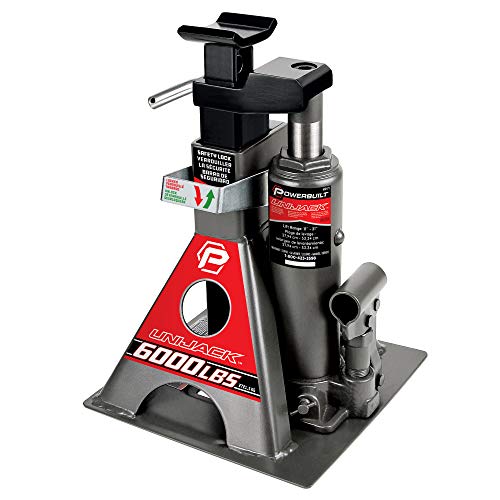 Powerbuilt 3-Ton Unijack All-in-One Hydraulic |
8.9/10 | Buy | |
|
BIG RED 10-Ton Welded Hydraulic Bottle Jack
|
8.1/10 | Buy | |
| Best Budget |
 DNA Motoring 1.5-Ton Scissor Jack |
7.8/10 | Buy |
VEVOR 4-Ton Hydraulic Bottle Jack
Delivering an 8,818.5-pound (4-ton) lifting capacity with a 7.64-inch collapsed to 14.92-inch extended height range, this compact VEVOR hydraulic bottle jack features a leak-resistant welded body and multi-directional operation. Weighing just 7.05 pounds, it provides dependable vertical and horizontal pushing capability for light trucks, SUVs, passenger cars, and roadside emergency kits.
Pros
- Lightweight 7.05-pound welded build makes it exceptionally portable for emergency roadside storage
- Certified multi-directional capability allows vertical lifting as well as horizontal pushing and spreading tasks
- Welded body construction significantly reduces oil weepage risks compared to traditional tie-rod cylinders
- Factory overload relief valve protects the internal hydraulic circuit from excessive pressure buildup
Cons
- Collapsed height of 7.64 inches may struggle to slide beneath low axles when a vehicle tire is completely flat to the rim
- Four-ton capacity is strictly suited for passenger cars, light SUVs, and light-duty trucks, lacking the margin needed for loaded commercial rigs
- Relatively compact 4.02 x 3.94-inch base plate requires solid, level ground or supplemental cribbing pads on soft shoulder gravel
BIG RED 4-Ton Hydraulic Bottle Jack
Built from drop forged alloyed steel with a welded leak-free frame, this compact jack reliably lifts loads up to 8,000 pounds. An adjustable screw-top extension and included blow mold carrying case make it a practical tool for roadside tire changes and garage maintenance.
Pros
- Welded alloy steel build minimizes leak risks
- Screw-top extension offers adaptable starting heights
- Meets ASME safety standards for peace of mind
- Compact 6.22-pound frame stores easily in vehicles
Cons
- Minimum 7.5-inch height does not fit low-clearance cars
- Manual pump operation requires repeated physical effort
BIG RED T91003B Torin 10-Ton Hydraulic Welded
With a 10-ton (20,000 lb) lifting capacity and an 8-13/16-inch to 17-5/8-inch working range, the BIG RED T91003B features an all-welded drop-forged steel body that minimizes fluid weeping during vehicle storage. It is an ideal manual hydraulic lifting tool for 3/4-ton and 1-ton truck owners, trailer haulers, and farm mechanics needing dependable vertical axle lifting power.
Pros
- High 10-ton (20,000 lb) capacity provides ample lifting headroom for heavy pickup truck axles and loaded trailers
- All-welded alloy steel construction resists oil leakage far better than traditional threaded tie-rod assemblies
- Adjustable top extension screw bridges height gaps quickly before engaging the hydraulic stroke
- Certified compliance with ASME PASE safety standards ensures dependable factory-reviewed performance
Cons
- The 8-13/16-inch minimum collapsed height may not clear low-slung trailer axles during a completely flat tire blowout
- Lacks an integrated carrying handle, requiring operators to carry the jack directly by its cylinder body
- Manual hand-pump operation requires firm physical pumping effort when lifting near the maximum 20,000-pound load limit
Powerbuilt 3-Ton Unijack All-in-One Hydraulic
The Powerbuilt 620471 Unijack integrates a hydraulic bottle jack and a mechanical ratcheting jack stand into a single unit, eliminating the danger of hydraulic pressure bleed-off. With a 6,000-pound capacity, an 11 to 21-inch lift range, and a wide steel base, it provides dependable single-point lifting and static holding for trucks and SUVs.
Pros
- Combines hydraulic bottle jack lifting and mechanical jack stand safety into one single-point tool
- Physical ratcheting safety lock prevents accidental vehicle drops caused by hydraulic pressure bleed-off
- Wide 9.88 x 9.75-inch base provides excellent stability on garage concrete and level paved surfaces
- Tall 21-inch maximum extension delivers ample working clearance for high-clearance trucks and SUVs
- Meets ANSI standards for portable automotive service equipment and includes a 1-year factory warranty
Cons
- Minimum collapsed height of 11 inches makes it unusable on low-clearance sedans and sports cars
- At 22.66 pounds per single unit, it is significantly heavier than standard individual mechanical jack stands
- Sold as an individual unit rather than a pair, requiring separate purchases if supporting an entire axle
BIG RED 10-Ton Welded Hydraulic Bottle Jack
The BIG RED TAM91003B delivers 10 tons (20,000 lbs) of hydraulic lifting power with an 8-13/16 inch to 17-5/8 inch operating range and an all-welded leak-resistant steel body. Its adjustable extension screw and serrated saddle make it well-suited for heavy pickup axles, trailer maintenance, and structural sill leveling.
Pros
- Drop-forged steel base with all-welded construction resists oil leaks during transport better than threaded tie-rod jacks
- Generous 10-ton capacity easily handles heavy-duty truck axle lifting, equipment trailers, and residential structural leveling
- Adjustable extension screw minimizes wasted hydraulic stroke before contacting the lifting point
- Integrated bypass and overload valves protect internal hydraulic seals against over-extension
Cons
- Minimum collapsed height of 8-13/16 inches may not fit under dropped axles with completely flat tires without prior cribbing
- Compact base footprint requires wide timber or a steel plate when used on soft soil, gravel, or warm asphalt to avoid sinking
- Manual hand pumping requires physical effort and patience when elevating loads near maximum rated capacity
DNA Motoring 1.5-Ton Scissor Jack
Built for roadside tire emergencies, this compact steel scissor jack lifts up to 3,306 pounds using an included ratchet wrench. Its low 4-inch minimum clearance and sub-6-pound weight make it a practical trunk companion for sedans and small passenger cars.
Pros
- Low 4-inch starting height accommodates low-clearance vehicles
- Included ratchet wrench eases manual cranking effort
- Lightweight build ensures effortless storage and portability
- 360-degree saddle easily matches factory jack points
Cons
- 1.5-ton limit excludes heavy trucks and full-size SUVs
- Must be paired with vehicle stands before underbody work
- Manual scissor mechanism is slower than hydraulic alternatives
Comparing Bottle Jacks and Scissor Jacks for Roadside and Garage Lifting
Deciding between a hydraulic bottle jack and a mechanical scissor jack comes down to a direct tradeoff between vertical clearance and raw lifting power. Hydraulic bottle jacks generate tremendous lifting force in a compact vertical cylinder, but their tall resting stature prevents them from sliding under many vehicles with flat tires. Mechanical scissor jacks fold down into an ultra-low profile to fit beneath deflated wheel rims, yet they require substantial physical exertion to operate. Neither design is universally superior for every driver, so matching the tool to your specific vehicle chassis and emergency needs is essential.
Mechanical Principles: Hydraulic Fluid Force Versus Mechanical Screw Leverage
Hydraulic bottle jacks rely on fluid dynamics to multiply human effort into thousands of pounds of lifting thrust. Pumping the handle forces hydraulic oil through an internal check valve into a main cylinder, smoothly driving the central ram upward against heavy chassis components. Units like the BIG RED 4 Ton and the heavy-duty BIG RED T91003B Torin Hydraulic Welded Bottle Jack utilize welded drop-forged steel cylinders and built-in bypass valves to handle massive weight safely. Because hydraulic fluid does the heavy lifting, the user experiences very little physical resistance regardless of how heavy the vehicle corner happens to be.
Mechanical scissor jacks function on an entirely different mechanical concept centered around an Acme-threaded horizontal lead screw. Turning the drive screw pulls opposing pivot points together, which forces the diamond-shaped stamped steel arms to articulate upward. The DNA Motoring Scissor Jack for Car 1.5 Ton demonstrates this approach with a central drive shaft and a dedicated ratcheting handle designed to speed up rotation. However, mechanical leverage in a scissor jack varies dramatically depending on the angle of the arms. Cranking effort is intensely high during the first two inches of elevation because the nearly flat arms offer minimal initial mechanical advantage.
Minimum Collapsed Height and Flat-Tire Ground Clearance
Ground clearance changes drastically when a tire loses all air pressure and the vehicle rests directly on its wheel rim. A sedan or compact crossover that normally boasts six inches of rocker clearance may drop down to three or four inches during a complete blowout. Under these low-clearance conditions, most bottle jacks cannot physically fit beneath the factory lift points. The DNA Motoring Scissor Jack for Car 1.5 Ton collapses down to a compact four-inch starting height, allowing it to slide beneath lowered pinch welds where bulkier tools cannot reach.
Standard hydraulic bottle jacks require substantial vertical clearance before lifting can even begin. For example, the BIG RED 4 Ton bottle jack features a minimum collapsed height of 7.5 inches, while the VEVOR Hydraulic Bottle Jack 4 Ton requires 7.64 inches of clearance. Even more substantial units, such as the Powerbuilt 3 Ton, Bottle Jack and Jack Stands combo, need a generous eleven inches of starting clearance beneath the chassis. If you drive a passenger car, sports coupe, or low minivan, attempting to slide an eight-inch bottle jack under a flat corner on the roadside will leave you completely stuck.
Working Load Limits and Single-Corner Weight Calculations
Many drivers make the mistake of choosing a jack based entirely on the total Gross Vehicle Weight Rating of their automobile. When changing a single flat tire, the jack only supports one corner of the chassis, which typically accounts for roughly 25 to 35 percent of the curb weight. A passenger sedan weighing 3,500 pounds places less than 1,200 pounds of load onto a single corner lift point. A quality scissor jack rated for 1.5 tons, such as the DNA Motoring model, easily handles passenger vehicles with plenty of working margin.
Commercial trucks, full-size SUVs, and loaded work vans demand far more lifting capacity than standard passenger vehicles. For these heavy platforms, hydraulic bottle jacks offer immense strength in a portable package. The BIG RED 10 Ton Torin Welded Hydraulic Car Bottle Jack and the BIG RED T91003B provide 20,000 pounds of lifting capacity, making them suitable for farm machinery, loaded trailers, and heavy pickups. This massive capacity headroom guarantees that heavy commercial vehicles and loaded utility beds will not stress or deform the lifting mechanism.
Lift Stroke, Extension Screws, and Overcoming Suspension Droop
Lifting an SUV or four-wheel-drive truck requires significantly more vertical travel than elevating a rigid passenger car. Long-travel off-road suspensions exhibit dramatic droop, meaning the wheel remains on the pavement while the chassis rises several inches into the air. If your jack exhausts its vertical stroke before the tire lifts off the ground, completing a tire change becomes impossible. Scissor jacks generally top out around fifteen inches of total height, which can fall short on lifted trucks and full-size SUVs with deep suspension articulation.
Hydraulic bottle jacks solve suspension droop challenges by pairing hydraulic ram stroke with threaded mechanical screw-top extensions. Models like the VEVOR Hydraulic Bottle Jack 4 Ton and the BIG RED 4 Ton feature heat-treated serrated saddles mounted on adjustable threaded shafts that spin outward prior to pumping. This allows you to bridge empty space beneath high truck frame rails before engaging hydraulic pressure. Specialized equipment like the Powerbuilt 3 Ton, Bottle Jack and Jack Stands unit achieves an impressive maximum height of 21 inches, easily overcoming deep suspension travel on pickups and vans.
Base Stability, Ground Contact, and Roadside Surface Hazards
Emergency tire changes rarely take place on smooth garage concrete, forcing drivers to stage equipment on uneven asphalt, loose gravel, or soft highway shoulders. Mechanical scissor jacks distribute downward pressure across a broad, flat stamped steel base plate that resists sinking and tipping. The elongated base of the DNA Motoring Scissor Jack helps maintain balance during the lifting arc, though firm ground is still required. Any lateral shift during lifting can bend lightweight scissor arms, making careful positioning critical.
Traditional bottle jacks concentrate immense downward force onto a relatively compact footprint, which creates serious sinking hazards on soft road shoulders. On a hot summer day, a narrow steel bottle jack base can easily punch directly into softened asphalt under the weight of a heavy truck. Exploring sturdy garage vehicle lifting systems highlights how vital broad foundational support is for vehicle safety. Units like the Powerbuilt 3 Ton Unijack address this hazard directly by incorporating a wide, reinforced base perimeter that distributes load weight across soft surfaces and off-road terrain.
Lift Point Interfaces: Unibody Pinch Welds Versus Solid Axle Rails
Modern passenger vehicles rely on unibody construction featuring narrow pinch weld seams located along the rocker panels. Scissor jack saddles are engineered specifically to accommodate these seams, often incorporating a notched or slotted profile that cradles the reinforced flange without crushing adjacent bodywork. The DNA Motoring scissor jack utilizes a rotatable support head that aligns smoothly with factory unibody lifting tabs. Placing an improper saddle against a delicate pinch weld can bend sheet metal, crack rocker moldings, and damage exterior paint.
Hydraulic bottle jacks feature small, circular saddles with serrated surfaces designed to bite into rigid cast iron and heavy steel. These saddles work exceptionally well on solid rear axle tubes, leaf spring perches, and boxed truck frame rails found on body-on-frame platforms. However, placing a small circular bottle jack saddle directly against a thin unibody pinch weld will quickly crush the metal flange flat against the floor pan. Unless you use a specialized pinch weld adapter pad, bottle jacks should never be applied directly to modern unibody lift seams.
Storage Constraints, Vehicle Compartments, and Leak Prevention
Roadside emergency tools must stow securely inside the vehicle without consuming excessive trunk space or creating safety hazards during travel. Mechanical scissor jacks feature an ultra-flat folded profile that fits directly inside factory spare tire wells, under trunk floor panels, or within small under-seat compartments. Because scissor jacks contain no fluids or pressurized chambers, they can be stored in any orientation, upside down or on their side, without any risk of fluid leakage. This makes them exceptionally convenient for daily commuters and small sedans where trunk space is limited.
Hydraulic bottle jacks require thoughtful storage management because they contain hydraulic oil that can leak if seals degrade or valves loosen. Models like the BIG RED 4 Ton mitigate this issue by including a custom blow-mold carrying case that keeps the jack upright and catches potential drips. Storing a hydraulic jack horizontally inside a trunk can allow air to enter the hydraulic chamber, requiring manual bleeding before the jack can build pressure. Drivers carrying bottle jacks must secure them in an upright position and inspect the release valve periodically to prevent messy fluid spills inside vehicle carpet.
Maintenance Demands: Hydraulic Seals Versus Acme Lead Screw Care
Long-term reliability differs considerably between pressurized hydraulic systems and mechanical screw assemblies. A mechanical scissor jack requires routine thread maintenance to prevent frictional binding, galling, and metal wear under heavy load. The Acme-threaded lead screw should be cleaned of road grit, road salt, and dirt, followed by a generous coating of extreme-pressure white lithium or moly grease. Operating a dry, unlubricated scissor jack under a vehicle can cause the central trunnion nut to strip its threads, leading to sudden mechanical failure.
Hydraulic bottle jacks avoid thread wear issues but demand periodic inspection of internal seals, o-rings, and oil levels. Welded cylinder designs, such as those found on the BIG RED and VEVOR models, significantly reduce the chance of external fluid weeping compared to older two-piece screw-together jacks. However, prolonged storage in hot vehicle trunks can cause rubber seals to dry out over several years, leading to pressure loss when the pump is cycled. Checking hydraulic fluid levels and cycling the pump once or twice a year ensures that your hydraulic jack will hold pressure during a real roadside emergency.
Practical Roadside Verdict: Matching the Jack to Your Vehicle Profile
Selecting between these two emergency lifting tools ultimately depends on vehicle ground clearance, suspension travel, and chassis structure. For low-profile sedans, hatchbacks, passenger minivans, and small crossover vehicles, a scissor jack remains the undisputed practical choice due to its low starting height and pinch weld compatibility. It slides beneath deflated tires effortlessly and stows away neatly inside compact spare tire compartments without fluid leakage concerns. Trying to force a tall bottle jack under a modern unibody car with a flat tire will almost always end in frustration.
For lifted trucks, full-size SUVs, heavy commercial vans, and travel trailers, a heavy-duty hydraulic bottle jack provides superior lifting performance and unmatched safety margins. The hydraulic mechanical advantage eliminates the intense physical strain of turning a manual crank under multi-ton vehicle loads. Adjustable screw-top extensions and tall lift ranges overcome suspension droop, allowing you to elevate heavy wheels completely off the pavement with ease. Regardless of which tool you select, always engage your parking brake, chock diagonally opposing wheels, work on firm level ground, and never place your body beneath a vehicle supported only by a jack.
About the author
Mike Bumbeck is an automotive journalist and hands-on product evaluator with a long-standing interest in classic vehicles, motorcycles, and practical garage equipment. His work brings a grounded perspective to automotive tools, maintenance products, and the details that matter when choosing gear for real-world use.