
How to Stop Car Ramps From Sliding: Practical Safety Guide for 2026
Learn how to stop car ramps from sliding on smooth concrete or epoxy garage floors with proven traction tips and safety guidance for October 2026.
 By Hank O'Hop
Updated October 10, 2026

Driving a vehicle onto service ramps inside a home garage should be a simple, routine task before tackling an oil change or an underbody inspection. However, smooth troweled concrete and slick polyaspartic floor coatings often cause plastic or steel ramps to shoot forward the moment tires make contact. Understanding how to stop car ramps from sliding is critical for preventing bumper gouging, sudden vehicle drops, and frustrating setup delays. By examining friction dynamics and tire engagement angles, home mechanics can stabilize their equipment safely before turning a single wrench.
When drive wheels push unanchored equipment across slick surfaces, vehicle momentum works directly against the ramp structure instead of climbing it. Implementing reliable solutions like anti-skid rubber friction pads, textured floor underlays, and proper approach alignment eliminates dangerous ramp kick-out during staging. In addition to securing ramp bases, DIYers should always follow proven protocols for shop lifting safety practices to ensure total stability under the chassis. A disciplined approach to drive-on mechanics keeps your workspace secure and protects both the vehicle valence and the shop floor.
Top Products
| Award | Product | BJL Score About BJL ScoreThe BJL Score is our own rating from 0 to 10, based on performance, design and build, ease of use, and value. It reflects independent research and is never influenced by manufacturers, retailers, or affiliate commissions. Learn more › | |
|---|---|---|---|
| Best Value |
Race Ramps FlatStoppers Tire Saver Storage Ramps
|
8.6/10 | Buy |
| Best Overall |
 Race Ramps FlatStoppers 14-Inch Tire Saver Storage |
9.2/10 | Buy |
| Best Premium |
 Race Ramps 16-Inch FlatStoppers Car Tire Savers |
8.8/10 | Buy |
 OranLite 18,000 lb Vehicle Capacity Service Ramps |
8.3/10 | Buy | |
| Best Budget |
 Race Ramps Pro Stop Rubber Parking Guides |
8.4/10 | Buy |
Race Ramps FlatStoppers Tire Saver Storage Ramps
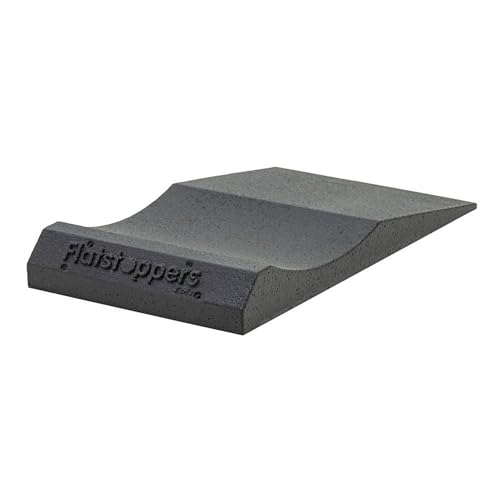
The Race Ramps FlatStoppers are solid high-density foam storage pads engineered to prevent flat spots on parked sports cars, collector vehicles, and seasonal rides by distributing weight across a 1.25-inch concave cradle. Rated at 6,000 pounds per four-ramp set, they are an ideal garage accessory for drivers storing low-clearance vehicles over the winter.
Pros
- Cradles tire curvature to help eliminate flat spotting during long-term seasonal or winter storage
- Gentle 8.9-degree approach slope clears low-clearance front bumpers and aerodynamic splitters
- Non-skid base helps reduce sliding on polished concrete and sealed epoxy garage floors
- Weighs only about 2 pounds per pad for easy positioning and repositioning around the garage
- Supports up to 6,000 pounds total vehicle weight across the four included storage pads
Cons
- Provides only a 1.25-inch lift, meaning these are strictly tire-saving storage pads rather than service ramps for oil changes or undercarriage access
- Manufacturer recommends fitment for tires up to 8 inches wide, which can result in sidewall overhang on wide rear performance tires (such as 275mm or wider setups)
- Solid foam blocks do not nest inside one another, requiring dedicated shelf or floor space when not under a vehicle
Race Ramps FlatStoppers 14-Inch Tire Saver Storage
Engineered to protect performance rubber and vintage tire compounds during seasonal parking, this 4-pack of Race Ramps FlatStoppers cradles tires up to 12 inches wide to prevent flat spotting. With an 8.9-degree approach angle and a 6,000-pound set rating, they are an ideal storage accessory for sports car owners and collector vehicle enthusiasts.
Pros
- Effectively preserves tire shape and prevents costly flat spots on performance rubber during extended seasonal parking
- Gentle 8.9-degree approach angle clears low-slung splitters on sports cars and lowered collector vehicles
- Patented solid high-density foam construction is exceptionally lightweight yet supports up to 6,000 pounds across all four units
- Non-skid base coating stays in place on smooth concrete and will not damage or mark epoxy garage floor surfaces
- Generous 14-inch platform width supports wide tires up to 12 inches without side overhang
Cons
- Engineered strictly as a tire preservation cradle with a 1.25-inch lift, providing no working room for undercarriage oil changes or repairs
- Total 6,000-pound capacity across the 4-pack (1,500 pounds per ramp) excludes heavy-duty pickup trucks and large commercial SUVs
- Requires smooth, deliberate throttle modulation when driving onto all four low cradles simultaneously
Race Ramps 16-Inch FlatStoppers Car Tire Savers
Race Ramps FlatStoppers are solid high-density foam drive-on tire cradles engineered to prevent flat spots on vehicles in long-term or seasonal storage. With a 6,000-pound total capacity and support for tires up to 14 inches wide, they are ideal for sports car owners and classic car collectors looking to preserve performance rubber without floor jacks.
Pros
- 100% solid lightweight high-density foam construction prevents floor damage and resists slipping on epoxy.
- Supports tires up to 14 inches wide, accommodating wide performance and track rubber.
- Extremely lightweight at just 3.5 pounds per ramp, allowing quick positioning and easy wall or shelf storage.
- 6,000-pound vehicle weight capacity provides solid structural support for sports cars, sedans, and light vehicles.
Cons
- Designed strictly as parking tire savers rather than service ramps, providing no vertical lift for oil changes or underbody maintenance.
- Stated 6,000-pound vehicle capacity may not accommodate heavy full-size diesel trucks, large commercial SUVs, or heavy electric vehicles.
- Requires careful drive-on vehicle placement and steady throttle modulation to settle centered in the tire cradles.
OranLite 18,000 lb Vehicle Capacity Service Ramps
The OranLite heavy lift service ramp pair provides a dependable 6-inch elevation and a wide 13-inch tire channel rated to support vehicles up to 18,000 lbs. Built from high-impact plastic with an internal center support system and double wheel stoppers, these lightweight yellow ramps are an ideal pick for DIY truck, SUV, and passenger car owners tackling garage oil changes.
Pros
- Wide 13-inch tire track comfortably fits broad light-truck and SUV tires
- Solid 6-inch lift height offers practical torso and tool working room for fluid maintenance
- Molded double wheel stoppers provide added driver confidence during vehicle ascent
- High-visibility yellow resin makes ramp positioning easy to see from the driver seat
Cons
- Fixed 35-inch ramp length may create too steep of an approach angle for lowered sports cars with low front splitters
- Manufacturer explicitly restricts use to smooth, level concrete and forbids dirt, gravel, or sloped driveways
- Lightweight plastic construction can scoot forward on slick or dusty epoxy floors if tires are not mounted smoothly
Race Ramps Pro Stop Rubber Parking Guides
The Race Ramps Pro Stop Rubber Parking Guide set delivers heavy-duty vehicle positioning using resilient rubber derived from semi-truck tires to prevent garage wall impacts and protect low front splitters. Featuring an interlocking modular design and pre-drilled mounting holes, these 3-inch wheel blocks are ideal for DIY mechanics, sports car drivers, and trailer owners seeking consistent parking alignment.
Pros
- Durable rubber construction sourced from semi-truck tires handles repeated vehicle contact without cracking.
- Interconnecting design allows multiple blocks to lock together for wider sports car tires and truck tracks.
- Low 3-inch profile offers reliable tactile feedback without scraping low-hanging front splitters or bumpers.
- Pre-drilled mounting holes enable secure anchoring to concrete floors or trailer decking.
Cons
- Designed strictly as a parking guide and wheel stop, not as an elevating service ramp for underbody maintenance.
- Freestanding placement on dusty or slick epoxy floors may slide under brisk vehicle approach if not bolted down.
- Mounting hardware and floor anchors are not included in the package.
Preventing Car Ramp Slippage: Engineering Principles, Friction Control, and Safe Drive-On Execution
Securing portable automotive ramps against unintentional movement requires understanding how vehicle weight, drive configurations, and floor coatings interact during the initial approach. A ramp that slips forward does not just delay an oil change; it risks crushing body valences, damaging floor coatings, or high-centering the chassis. Mastering how to stop car ramps from sliding demands a combination of surface preparation, friction management, and disciplined throttle control.
The Physics of Ramp Kick-Out: Why Service Ramps Slide Across Concrete
Automotive ramps slide when the horizontal force applied by the rolling tire exceeds the static frictional resistance between the ramp base and the shop floor. When a tire first touches the ramp incline, it imparts both a downward vertical load and a forward lateral thrust. Until the vehicle tire fully climbs onto the incline surface, the vertical downward force is minimal. Without sufficient downward weight pressing the ramp into the concrete, that forward lateral thrust easily pushes the lightweight structure away from the car.
Static friction relies directly on the coefficient of friction multiplied by the normal force acting perpendicular to the floor. When a car sits on flat ground and nudges the ramp edge, the normal force on the ramp is near zero. Consequently, even a slight rolling resistance or tire nudge breaks whatever initial grip exists. The ramp then transitions into kinetic friction, which is significantly lower than static friction, causing the ramp to shoot forward across the garage floor.
Surface Friction Dynamics: Epoxy Coatings, Sealed Slabs, and Dust Contamination
Residential garage floors present dramatically different friction coefficients depending on their finishing method and cleanliness. Standard brushed outdoor concrete provides high mechanical interlocking because its microscopic surface profile bites into rubber footpads. In contrast, smooth-troweled interior concrete, polyaspartic coatings, and glossy epoxy sealers provide exceptionally low frictional resistance. A ramp base that grips outdoor concrete effortlessly can slide like a hockey puck on slick garage epoxy.
Dust, road grime, and spilled motor oil further compromise traction by creating an unbonded lubricating layer between the ramp and the floor slab. Fine concrete dust acts like microscopic ball bearings beneath smooth plastic or painted metal bases. Before setting any service equipment in place, technicians should thoroughly sweep and degrease the contact area. Ensuring a completely dry and clean floor restores the maximum potential coefficient of friction for the ramp foundation.
Drive-Wheel Dynamics: Front-Wheel Drive Pull Versus Rear-Wheel Drive Push
A vehicle powertrain layout significantly dictates whether car ramps will stay planted or kick forward during the approach. In a front-wheel-drive vehicle, the front tires are powered and actively pull the vehicle up the incline plane. As the powered front tire grips the ramp face, tire rotation pulls the ramp downward and backward under the wheel, naturally wedging it in place. This climbing traction generally reduces the likelihood of forward ramp movement once the tire begins its ascent.
Rear-wheel-drive vehicles present the exact opposite mechanical challenge when mounting front service ramps. In this configuration, the rear drive wheels propel the entire vehicle forward, pushing unpowered, passive front tires into the ramp inclines. Because passive front wheels do not rotate under their own power, they act like rigid wedges pushing directly against the ramp face. This lateral shoving force readily kicks unanchored ramps forward until the front tires successfully roll over the lower approach threshold.
Mechanical Anti-Skid Solutions: Rubber Pads, Grip Mats, and Tether Strap Systems
DIY mechanics rely on several proven mechanical methods to physically lock ramps to the floor before driving up. One of the most effective garage techniques involves using thick rubber friction mats placed directly beneath each ramp base. Heavy recycled rubber conveyor belting or stall mats generate immense friction against smooth concrete, resisting lateral displacement. When selecting equipment, products featuring wide rubber footprints or full-contact bases provide superior grip over narrow plastic contact points.
Another ingenious, highly reliable mechanical trick is the drive-on tether strap or carpet runner method. With this setup, a durable strap or strip of carpet is fastened to the bottom of the ramp and extended forward onto the approach floor. As the car approaches, the vehicle front tires drive onto the extended strap before ever touching the ramp incline. The heavy downward curb weight of the car pins the strap flat against the floor, mechanically preventing the ramp from scooting away.
For home mechanics who frequently maintain fleet vehicles or multiple family cars, comparing portable tools with heavy-duty garage lifting setups provides helpful perspective on long-term workshop stability. Permanent or semi-portable lifts eliminate drive-on skid risks entirely by anchoring lifting posts directly to structural concrete. However, for everyday DIY fluid changes where portable gear remains ideal, high-traction rubber stop pads deliver outstanding stability at a fraction of the footprint.
Pre-Ascent Vehicle Alignment and Bumper Clearance Verification
Improper approach alignment is a common yet overlooked cause of ramp slippage. If the steering wheel is slightly cocked or the ramps are angled unevenly, the tires strike the incline at an oblique angle. This uneven contact generates diagonal sideways thrust that easily twists the ramp out of square. Drivers should always center their steering wheel completely and align both ramps parallel to the vehicle centerline before moving forward.
Low ground clearance and aggressive front overhangs can also shove ramps forward before the tires ever touch the climbing tread. If a low front air dam, bumper valence, or sports car splitter contacts the ramp incline first, it acts as a mechanical plow. The vehicle approach angle, calculated as arctan(Front Ground Clearance / Front Overhang Distance), must always exceed the ramp incline angle. If the bumper strikes the ramp face first, the ramp will slide forward regardless of rubber footpads or floor cleanliness.
Throttle Modulation, Spotter Guidance, and Controlled Ascent Mechanics
Aggressive throttle input is a primary trigger for ramp kick-out and dangerous overshooting accidents. When a driver revs the engine and abruptly dumps the clutch or stabs the accelerator, sudden torque breaks tire grip. Spinning tires immediately fling lightweight plastic or stamped steel ramps backward or sideways across the garage. A controlled ascent demands steady, progressive throttle modulation combined with smooth two-foot braking in automatic transmissions.
Using an attentive spotter positioned safely to the side of the vehicle dramatically improves driving precision. The driver cannot see the lower lip of the ramp or the front tire contact patch from behind the steering wheel. A spotter provides clear hand signals, confirming when the tires make initial contact, when they begin climbing, and when they seat into the wheel cradle. Never position a spotter directly in front of or behind the vehicle path while the car is in motion.
Material Construction and Base Architecture: Solid Foam Versus Hollow Polymer Grids
The underlying structural material and base architecture of a service ramp fundamentally affect its traction behavior on garage floors. Hollow injection-molded polymer ramps often rely on a thin outer perimeter and small isolated rubber pegs for grip. If one rubber foot pops out or wears away, slick bare plastic contacts the concrete, leading to sudden slip failures. Products like the OranLite 2 Pack – 35″ L x 13″ W x 8″ H Inch Yellow heavy lift truck ramps combat this with substantial 13-inch widths, integrated support systems, and internal structural grids.
In contrast, high-density solid composite foam designs, such as those engineered by RACE RAMPS, distribute vehicle load continuously across their entire footprint. Because the underside is completely solid rather than honeycombed, the contact patch against the floor is massive. Race Ramps uses an exclusive manufacturing process with a textured non-skid base that clings to epoxy and polished concrete without scratching finishes. This expanded contact area maximizes frictional surface area, virtually eliminating the scooting tendencies common to hollow plastic shells.
Integrating Rubber Parking Stops and Storage Guides for Accurate Vehicle Positioning
Securing rolling stock and maintaining exact alignment during garage parking often involves specialized rubber vehicle stops. The RACE RAMPS Set of 2 Parking Guides demonstrates how heavy recycled semi-truck rubber stays firmly planted on smooth concrete. Featuring an interconnecting design and pre-drilled mounting holes, these rubber blocks serve as heavy-duty positioners that resist skidding even during daily residential parking. Heavy rubber blocks can also act as temporary staging stops behind service ramps to brace equipment during pre-alignment checks.
For seasonal storage where vehicles remain stationary for months, long-term stability and tire preservation become paramount. Standard service ramps elevate vehicles for mechanical access, but concave tire storage pads protect rubber compounds while resting in place. Products like the Race Ramps FlatStoppers Foam Tire Saver Storage, available in wide 14-inch versions, evenly disperse vehicle weight across a 1.25-inch lift. These solid foam pads feature non-skid bases that prevent sliding during drive-on staging while stopping flat spots during winter vehicle storage.
For specialized sports cars or wide-body builds with wider performance tires, choosing properly scaled cradles ensures full tread support. The Race Ramps 16″ W FlatStoppers Tire Savers accommodates tire widths up to 14 inches, while the Race Ramps FlatStoppers Tire Saver Ramps provides a 10-inch width for narrower footprints. Both designs share lightweight 100 percent solid foam builds that resist sliding across garage floors without causing surface scuffing. Matching platform track width to tire section width prevents sidewall rollover and keeps vehicles firmly centered in their cradles.
Mandatory Safety Redundancy: Wheel Chocks, Parking Brakes, and Backup Jack Stands
Ascending onto ramps safely is only the first half of a secure maintenance setup; redundant secondary supports must follow immediately. The moment the tires settle into the top platform cradles, the driver must firmly engage the emergency parking brake. Automatic transmissions must be shifted fully into Park, while manual transmissions should be left locked in first gear or reverse. These mechanical locks prevent the vehicle from rolling backward off the ramp incline when the driver steps out.
Before crawling beneath the chassis, technicians must wedge heavy-duty rubber wheel chocks tightly behind the grounded tires resting on the shop floor. Chocking both sides of the grounded axle prevents forward or backward rolling motion should the vehicle experience inadvertent driveline slack. For shop owners exploring comprehensive lifting options, reviewing dedicated vehicle shop equipment highlights how commercial facilities integrate redundant mechanical safety locks. In home garages, placing backup jack stands under structural unibody pinch welds or frame rails provides vital life-safety protection beneath the vehicle.
Post-Service Roll-Down Procedures and Floor Maintenance Protocols
Descending from service ramps requires just as much care and friction control as the initial drive-on process. As the vehicle rolls down the incline, gravity pulls the car backward while braking friction applies forward thrust onto the ramp structure. If the driver stabs the brake pedal aggressively halfway down the incline, the ramp can kick out forward, leaving the chassis dropped onto the floor. Roll down slowly in a controlled, continuous motion using gentle pedal pressure until all four tires rest flat on concrete.
Maintaining equipment integrity and clean floor conditions ensures dependable traction for every subsequent service session. Inspect ramp rubber feet regularly to verify that anti-skid pads have not torn, detached, or gathered oily road sludge. Storing composite or plastic ramps away from direct ultraviolet sunlight prevents polymer embrittlement and maintains flexibility in non-skid base coatings. A clean garage floor combined with well-maintained equipment guarantees a stable, predictable, and slip-free lifting platform every time.
About the author
Hank O'Hop writes about automotive tools, hands-on repairs, and the challenges of maintaining and improving project cars. His published work covers workshop equipment, engine hoists, power tools, and garage upgrades, offering practical insights for readers who prefer to understand their equipment before putting it to work.